
In the 21st century, particularly in the era of Artificial Intelligence (AI), research has become easier and more accessible. The process of conducting research has changed considerably. With a myriad of AI tools, researchers can review literature and collect and analyse data within a few weeks. These tools save time and effort and, in turn, help researchers become more creative and innovative. AI in scientific research is beneficial for several reasons, including helping to maintain high standards of quality; it must nevertheless be used ethically. This paper examines how postgraduate students use AI to facilitate access to research resources while mitigating the risk of overreliance on machines. The study employed a mixed-methods approach, using a semi-structured questionnaire administered to master’s students at Ibn Khaldoun University of Tiaret, Algeria (N = 16). The research design is informed by the Technology Acceptance Model (TAM). The findings indicate that students perceive AI as a useful tool for proofreading and generating ideas, while also expressing concerns about overreliance, diminishing critical thinking, and the ethics of its use. None of the participants had received formal training in the use of AI for research. The findings therefore point to an urgent need to train students to use AI responsibly and to ensure the ethical and effective integration of AI in higher education.
____________________
Journal of Digital Pedagogy – ISSN 3008 – 2021
2026, Vol. 5, No. 1, pp. 146-158
https://doi.org/10.61071/JDP.2694
HTML | PDF
____________________
1. Introduction
The emergence of AI has initiated a new perspective in conducting scientific research. Thus, scientific research is undergoing massive transformations due to rapid progress in AI technology; AI has revolutionized scientific research across all fields. This paper explores how AI has revolutionized the field of scientific research. AI-generated systems and tools enable data analysis, interpretation, and conclusion-drawing, yet integrating AI-generated results raises critical questions about the trustworthiness of AI outputs and ethical considerations in ongoing scientific research.
AI has emerged as a fundamental tool that has reshaped many fields, revolutionizing scientific research and methodological practices. Therefore, by investigating AI’s impact on scientific research and knowledge production, this study explores how AI-generated systems and tools are employed, integrated, and used to enhance the practice and quality of scientific research. Nevertheless, this study seeks to uncover the challenges imposed by the overuse of AI tools and the regulatory disciplines using “a questionnaire” as a data collection tool.
In the higher education context, postgraduate students are at the core of this tremendous shift. Their use of AI is often inadequately guided by institutional policies and formal training. This study examines the impact of AI on postgraduate students’ research practices at Ibn Khaldoun University of Tiaret, Algeria. By analysing students’ responses through an exploratory questionnaire, this paper identifies a critical gap in institutional training. Finally, the paper proposes actionable policies to integrate AI safely into higher education.
2. A General Overview of Artificial Intelligence
During the 1980s, the emergence of the diversification movement, or Machine Learning, marked a shift in programming approaches by connecting the process of acquiring and extracting knowledge with its application in machines, including enabling functions such as machine vision and movement. The renewed interest in artificial intelligence was partly fulfilled by the success of expert systems that aimed to enhance the decision-making abilities of highly skilled individuals. Subsequent efforts focused on encoding this expertise into formats that AI software could process, often using techniques like decision trees (Sternberg & Barry, 2017, p. 7). Furthermore, artificial intelligence has been defined simply by AI expert Kurzweil as the field dedicated to designing and creating systems capable of emulating human cognitive abilities, including learning, reasoning, and problem-solving (Al-Fadli, 2018, p. 147).
Artificial Intelligence (AI) is a multidisciplinary technology field that involves developing systems capable of perceiving, reasoning, processing, learning, and acting intelligently. AI can be defined from multiple perspectives (Russell & Norvig, 2021, as cited in Latreche & Kadem, 2025):
Figure 1
Four Approaches to Defining Artificial Intelligence
| Thinking Humanly Defines intelligence by the thought processes themselves: a system is intelligent when its internal reasoning reproduces the way people actually think. Claims are tested against evidence from cognitive psychology and from introspective accounts of human reasoning. Associated definitions: Haugeland (1985); Bellman (1978). | Thinking Rationally Defines intelligence as reasoning that conforms to formal laws of thought. Correctness is judged against logic: a system is intelligent when the inferences it draws are valid ones, irrespective of whether people reason that way. Associated definitions: Charniak and McDermott (1985); Winston (1992). |
| Acting Humanly Defines intelligence by observable behaviour measured against human performance: a system is intelligent when what it does cannot be distinguished from what a person would do, as in the Turing test. Associated definitions: Kurzweil (1990); Rich and Knight (1991). | Acting Rationally Defines intelligence as acting so as to achieve the best expected outcome given what is known. The unit of analysis is the agent, and the standard is the quality of its actions rather than the manner of its reasoning. Associated definitions: Poole et al. (1998); Nilsson (1998). |
Note. The two columns contrast human performance with rationality as the standard of success; the two rows contrast reasoning processes with observable behaviour. Adapted from the four-way distinction discussed in Russell and Norvig (2021).
Artificial intelligence refers to the emulation of human intelligence in machines designed to think and learn similarly to humans (Bostrom, 2014, p. 27). It includes human-like, rational thinking, that integrates intelligence with empirical scientific methods and engineering principles to build effective systems adaptable to a wide range of industries and institutions.
AI tools perform tasks systematically, combining machine performance with human thinking and intelligence. These tasks include learning, problem-solving, pattern recognition, decision-making, and language processing. In this vein, Latreche and Kadem, (2025) summarise that “AI can be classified in to narrow or weak AI, which is designed for specific tasks, and general or strong AI, which can understand, learn, and apply knowledge across a wide range of activities”. AI technologies include: Machine Learning (ML), Natural Language Processing (NLP), Computer Vision, Robotics, Expert Systems, and Neural Networks. These tools are developing and being applied in many domains such as industry, education, finance, manufacturing, media, and healthcare.
Today, Artificial Intelligence is defined as a branch of engineering that implements new emerging concepts and solutions to resolve complex problems. It is marked by emerging and developed technologies that may one day enable computers and machine technology to be as intelligent and as critical as humans (Hamet & Tremblay, 2017, p. 02).
2.1 The role of AI tools in enhancing scientific research methodologies
The world has experienced rapid socio-cultural and technological transformation across all domains of life, and scientific research is no exception. In this vein, technology has become a core driver of investigation, influencing research methods and how information is accessed; therefore, it has mainly improved traditional research methodologies. Major challenges in traditional research methodologies include managing big data and information complexity; consequently, AI technologies bridge this gap by providing tools to manage and extract relevant information from large datasets (Saaida & Magash, 2024). Yet, they highlight that overreliance on AI technologies requires careful assessment and control of their applicability and the bias they may introduce in processing information (Saaida & Magash, 2024, p.7). In social sciences research, AI tools save time and effort and support the analysis of large volumes of qualitative data, such as interview transcripts, documents, social media posts, and audio or video recordings. They can condense such material into concise and accurate summaries, classify the themes of open-ended survey questions systematically, convert recordings into written text, and, through coding, extract specific themes and reveal sentiments and emotions that might otherwise go unnoticed. AI tools also support quantitative data analysis, including statistical measures, coding, and structured data, through software such as SPSS and Excel AI. They can generate statistical analyses automatically, speeding up the processing of large datasets and allowing qualitative themes to be compared with quantitative results.
2.2 Integration of AI in the Technology Acceptance Model (TAM)
The Technology Acceptance Model (TAM) is one of the most widely used theoretical frameworks for explaining and predicting user acceptance of technology (Feng et al., 2021; Lee et al., 2003). Davis (1989) developed this model from the Theory of Reasoned Action (TRA) (Fishbein & Ajzen, 1975), a general socio-psychological theory of behaviour. Two core cognitive constructs govern it:
- Perceived Usefulness (PU): the degree to which a user believes a technology will enhance and optimize job performance and improve output workflow quality (Holden & Karsh, 2010).
- Perceived Ease of Use (PEOU) refers to users’ expectations that the target technology requires little physical and mental effort (Scherer & Teo, 2019).
These constructs affect students’ Attitudes Toward Using (ATU), which in turn influences their AI deployment. However, TAM also considers variables such as formal training, institutional conditions, and perceived shortcomings. This paper employs this model to analyse students’ use of AI in research methodology.
2.3 Ethical concerns in AI-oriented Research
Crucial ethical considerations have emerged with the integration of AI generated systems in scientific research. The growing reliance on AI systems for analysis and decision-making raises issues of responsibility and transparency. In this vein, researchers must control outcomes and ensure appropriate safeguards prevent biased or misleading results to keep pace with rapid advances in this field and determine the importance of clear ethical guidelines for AI use in scientific work (Ghassan & Kamak, 2025). The following ethical concerns summarise the abovementioned view:
- Algorithmic Bias: Bias remains one of the major challenges in AI. Because many models are trained on historical datasets, they may unintentionally reproduce data inequalities or distort research findings. So, researchers should scrutinize training data and adopt measures that minimise bias.
- Transparency and Responsibility: Trust in AI-supported research depends on openness, which means scholars should provide full information about the data, algorithms, and procedures used in their AI tools, strengthening the reliability of their work and allowing others to review or replicate the findings.
- Extending Access to Knowledge: By broadening access to scientific information, AI improves the availability of research through shared, retrievable knowledge. However, AI’s potential can only be realized if digital inequalities are addressed and researchers everywhere have the necessary tools and training.
- Reducing the Digital Gap: Maximizing the benefits of AI in enhancing research requires tackling disparities in technological access. Providing adequate infrastructure, training, and support worldwide can help ensure that all researchers benefit equally. Institutional partnerships can play a central role in achieving this goal.
2.4 Challenges in Applying AI to Research
Despite its significance, implementing AI in scientific research faces several challenges, including concerns over data privacy, the need for interdisciplinary collaboration, and potential impacts on employment in research (Saaida & Magash, 2024).
- Data Privacy: The growing use of AI to analyse sensitive information highlights privacy and data security concerns. Researchers must consider ethical issues related to data collection and use to maintain transparency.
- Interdisciplinary Collaboration: Integrating AI successfully requires cooperation across multiple disciplines. Experts from diverse fields need to work together to design AI tools that meet the specific needs and standards of research across various fields. This collaborative approach encourages innovation and creativity and ensures that AI systems account for the complexities of each domain (Saaida & Kamak, 2024).
- Employment and Job Roles: The integration of AI introduces concerns about potential job displacement for researchers. However, AI should be viewed as a complement to human work, enhancing ability and creativity rather than replacing them. Researchers can focus on roles that demand creativity, critical thinking, and ethical judgment, adapting their work to leverage AI effectively (Saaida, 2021; Saaida & Magash, 2024).
3. Methodology
This section discusses the practical aspects of the paper. We used an exploratory design to collect qualitative and quantitative data within a single framework. We chose this approach to build a comprehensive, multidimensional understanding of the research problem. This questionnaire was designed to provide a comprehensive understanding of students’ use of AI in undertaking the journey of writing/ conducting research by postgraduate students.
3.1 Research Design
This paper employs an exploratory, mixed-methods research design. It combines both qualitative and quantitative approaches. The quantitative part is used to collect structural, statistical data presented as percentages and consensus on the use of AI in the writing process. The qualitative strand, by contrast, aims to capture nuanced, subjective, and contextual insights. The questionnaire’s open-ended questions collect students’ personal experiences, hidden apprehensions, and perspectives on ethical guidelines and potential shifts in cognitive thinking.
Combining these two paradigms helps fully understand how students use AI tools. In addition, the present research sheds light on how and why AI tools influence contemporary research.
3.2. Participants and Sampling
The participants involved in the study are master’s students at Tiaret University, Algeria. We used convenience sampling to collect data. The total number of participants was (N=16). The questionnaire was distributed to 40 master’s students. We administered the questionnaire in a Google Classroom dedicated to master’s students, and 16 participants completed the questionnaire, yielding response rate of 40%.
3.3. Instrument and Procedure
We collected data using a semi-structured questionnaire developed by the authors to meet the objectives of this study. For validity, the questionnaire was piloted with a small group of students (n=5) and then reviewed before full deployment. The five students who participated in the pilot study were excluded from the final sample. Students could select multiple answers, which explain why percentages exceed 100%. The authors analysed qualitative and quantitative data using content analysis.
3.4 Ethical Consideration
The questionnaire was distributed in the department where the authors teach. Therefore, and according to faculty procedures, formal consent was not required for this study. Participants were informed that participation is anonymous and voluntarily.
3.5 Research Questions
Given rapid change, technological advancement, and the immense volume of global information generated through AI tools, scientific research increasingly redefines traditional principles to keep pace with emerging scientific paradigms that process large databases through AI technologies. In light of these transformations, this study seeks to address the following research questions:
- How do postgraduate students use AI tools during the research process?
- What are the challenges and opportunities of using AI in scientific research?
3.6 Research Objectives
The objectives of this paper are:
- To shed light on the practices of using AI in scientific research.
- To reveal the benefits/opportunities and challenges of using AI in research
- To propose recommendations to use AI to conduct research responsibly
3.7 Significance of the Study
The significance of the present study stems from the importance of integrating AI technologies into scientific research. Its scientific value and significance lie in the practical outcomes it involves. From both theoretical and applied perspectives, this study endeavours to generate findings that can be effectively applied to scientific research methodology. The study’s scientific contribution lies in its focus on a significant, pressing contemporary issue: the integration of AI, which has emerged from rapid technological advancements reshaping research processes, data analysis, and the interpretation of findings. Nevertheless, by analysing the use of AI tools in scientific research, this research addresses the challenges and opportunities associated with their applicability. This study contextualises the findings within Algeria by examining their implementation and integration in Algerian scientific research.
4. Results
In this section, we interpret data collected from students on their perceptions, opinions, and the limitations of AI integration in research. To understand their ideas, we comprehensively divide this section into two strands: quantitative and qualitative. In the quantitative part, we gathered data from the questionnaire’s closed-ended questions, allowing students to select multiple answers. The findings are presented in frequencies and percentages. In the qualitative part, we gathered data from the open-ended questions. We employed a thematic analysis approach. We refined students’ responses by removing repetition and redundancy, then categorised them based on explicit semantic keywords. We then conducted thematic analysis within each corresponding conceptual cluster. For example, statements mentioning concepts like ‘fast’, ‘speed’, and ‘rapid’ were coded under the heading ‘Time efficiency and Speed’. Statements that included concepts like ‘framework’, ‘structure’, and ‘guidance’ were categorised under ‘Academic Guidance and Structural Organization’. The same rule is applied to students’ concerns and expectations. By synthesizing the two streams, we capture students’ experience from all standpoints. The data is presented in sections as follows:
Section one: Demographic Information
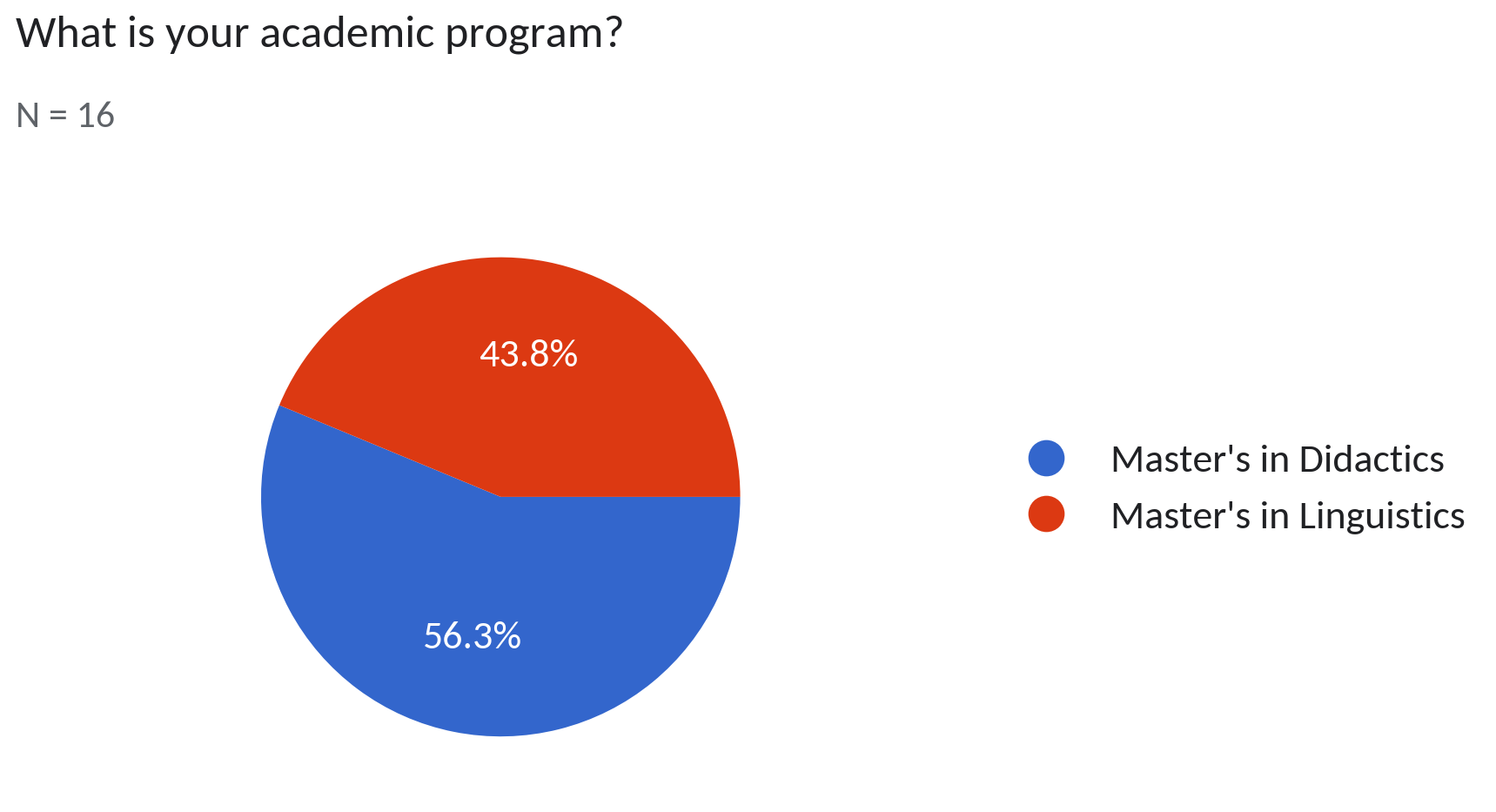
The first question addresses students’ majors. Interestingly, more students are enrolled in the Didactics major (56,3%) than in Linguistics (43,8%), as shown in the following figure.
Figure 2
Population of the Study
The second question asks how many years have passed since graduation. The main purpose of this question is to check whether they graduated during the AI surge in the past 4 years and whether they used AI to write their master’s papers. We eliminated all answers indicating graduation more than 5 years ago.
Section two: Awareness and use of AI
All participants (n=16; 100%) reported being familiar with AI tools in scientific research. We proposed a list of AI tools used for writing and refining research, as well as tools devoted to data collection and analysis. Overall, the findings indicate that students depend on AI mainly for writing and grammar correction, while their use of AI tools in the research process is limited.
The data showed that Grammarly (n=13; 81,3%), followed by ChatGPT (n=8; 50%) and QuillBot (n=7; 43,8%), are the most frequently used tools among students. This pattern highlights a strong emphasis on improving grammar, paraphrasing, and overall production quality. On the other hand, tools designed specifically for research were used far less: Zotero (n=4; 25%) and Turnitin (n=4; 25%), while ResearchRabbit was not used at all (n=0; 0%). Other general-purpose assistants were also reported infrequently: DeepSeek (n=3; 18.8%), Gemini (n=2; 12.5%), and Perplexity (n=1; 6.3%). This suggests that students are more familiar with general-purpose AI writing assistants than with specialized academic research tools, which may indicate a knowledge gap or limited exposure to these resources. All the percentages are presented in the table below:
Table 1
The Use of AI by Students
| AI Tools Used | Frequency | Percentage |
| ChatGPT | 8 | 50% |
| Grammarly | 13 | 81,3% |
| QuillBot | 7 | 43,8% |
| Turnitin | 4 | 25% |
| ResearchRabbit | 0 | 00% |
| Zotero | 4 | 25% |
| DeepSeek | 3 | 18,8% |
| Perplexity | 1 | 6,3% |
| Gemini | 2 | 12,5% |
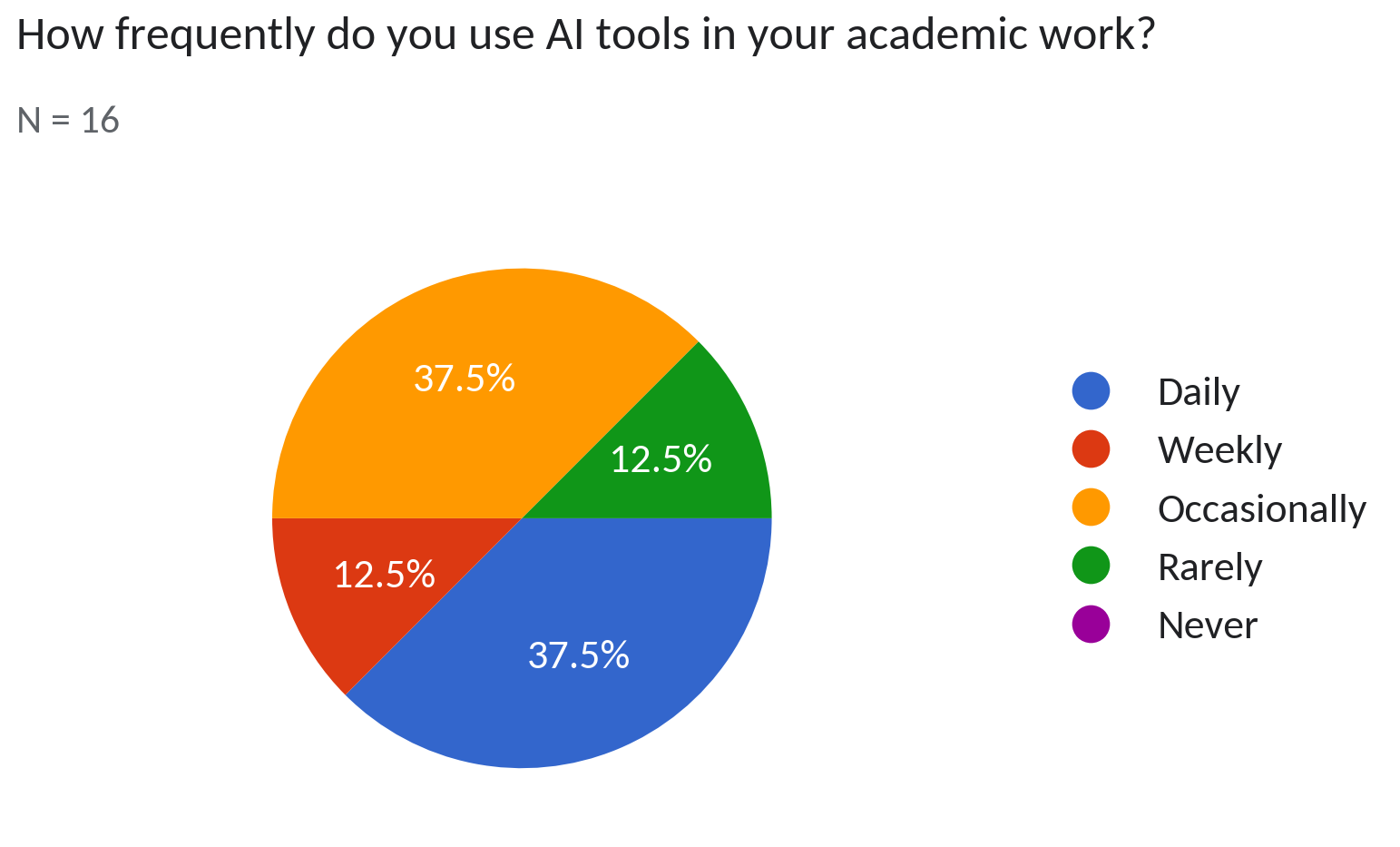
Regarding AI use frequency, some respondents use AI tools daily (37,5%) or occasionally (37,5%), while others (12,5%) use AI tools weekly or rarely. Subsequently, all the participants use AI tools at different frequencies, and these tools have become a regular part of students’ academic workflow. AI is perceived as a helpful supplement rather than an enduring prerequisite.
Figure 3
Frequency of Using AI
Section three: Perception of AI in Research
In this section, we used a rating scale to measure students’ attitudes and perceptions of using AI in scientific research. We proposed five premises, and then we checked whether students agreed or disagreed with them.
Figure 4
Students’ Perception towards the Use of AI
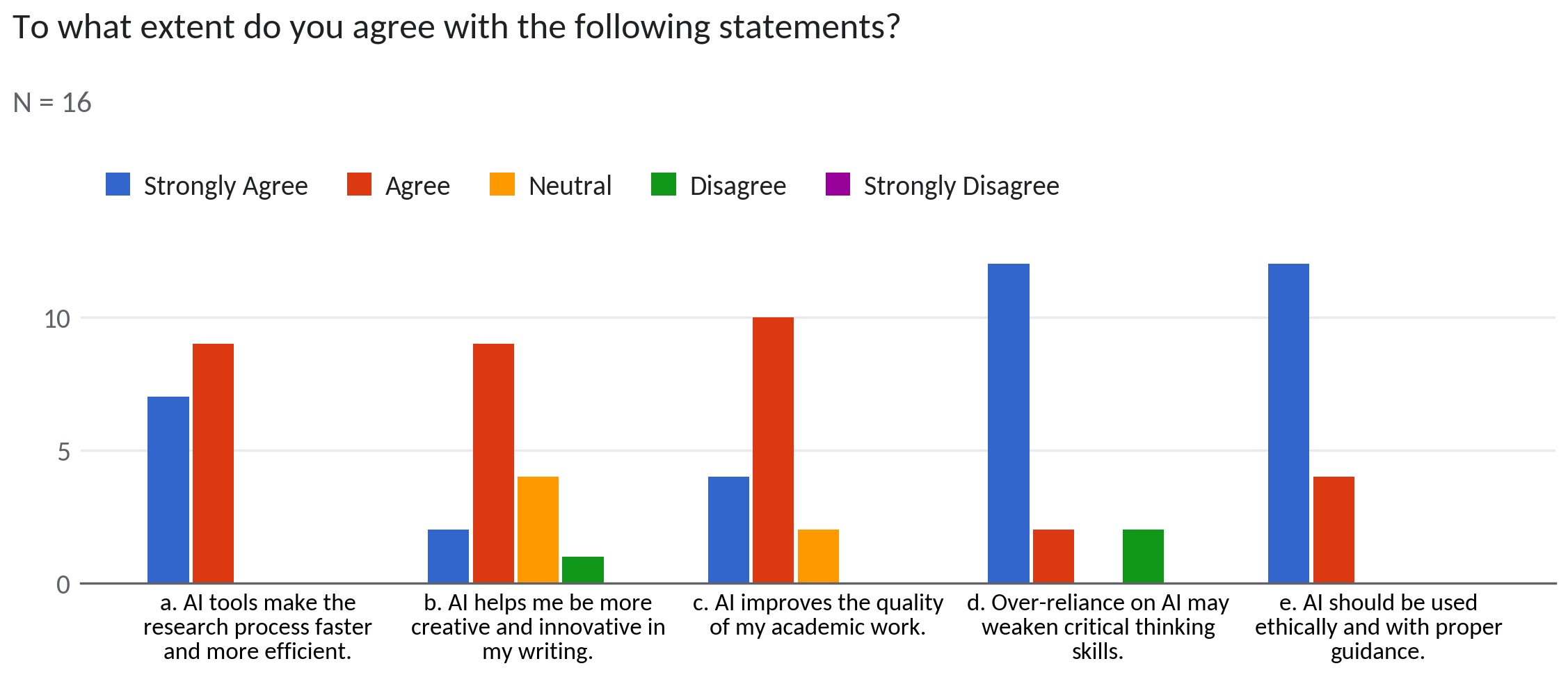
From the data in the figure above, we found substantial agreement that AI tools improve research efficiency and save time, with 7 students strongly agreeing (43,8%) and 9 students agreeing (56,3%). For statement B, respondents believed that AI helps them be more creative and innovative in writing, with 11 students strongly agreeing or agreeing (68,8%). In contrast, 4 students remained neutral (25%), and only one student disagreed. Moreover, students strongly agree that AI improves the quality of their academic work. Regarding statement ‘C’, 10 students agreed (62,5%) and 4 students strongly agreed (25%), while 2 students remained neutral. However, there is a considerable apprehension about the potential negative impact of over-reliance on machines, as 12 students strongly agreed (75%) that these AI-generated tools weaken their critical thinking skills. In comparison, 2 students agreed, and 2 students disagreed. Finally, all the respondents strongly agreed or agreed that AI should be used ethically and with proper guidance.
Section four: Practices and Training Needs
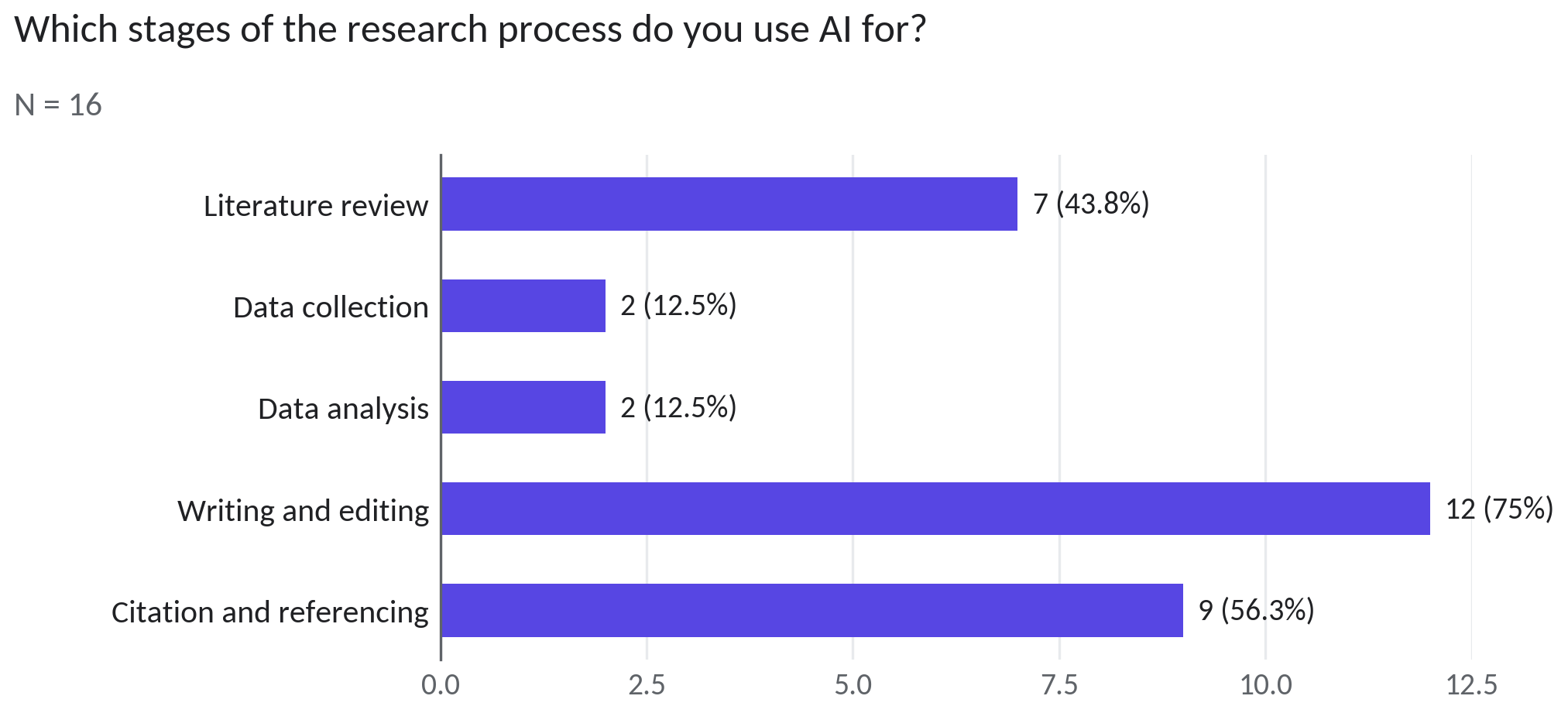
In terms of research activities, students use AI mostly for writing and editing (n=12; 75%), followed by citation and referencing (n=9; 56,3%) and literature review (n=7; 43,8%). These results show that AI helps students improve written output, organize references, and understand background information. However, AI rarely supports data collection (n=2; 12,5%) and data analysis (n=2; 12,5%), showing that students still rely on traditional methods for these core research components.
Figure 5
Students’ Use of AI
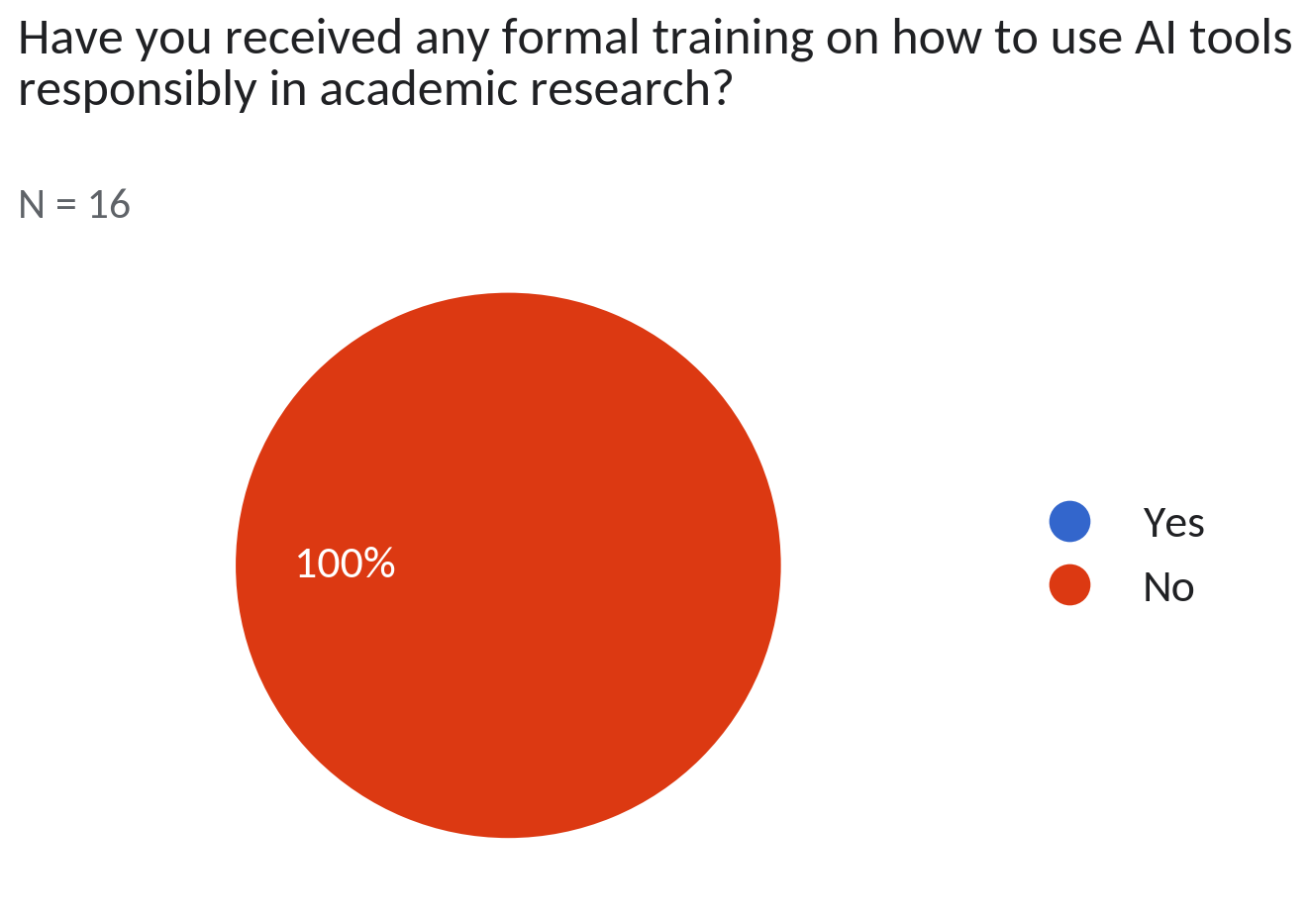
Strikingly, students use AI to write, edit, and refine their research papers, yet all the participants (n=16; 100%) stated that they have not received any training on how to use AI to write research papers.
Figure 6
Students’ Training
In the following section, we present students’ opinions on the benefits, concerns, and expectations about using AI in scientific research.
Table 2
Students’ Opinions about the Benefits of Using AI
| Students | Benefits of using AI |
| Student 1 | I think it would be better if we used it for the minimum help just to know the beginning of doing something but not relying on it completely |
| Student 2 | There are many benefits of using it but the most important one that it helps us do it rapidly |
| Student 3 | The most important one is time efficiency among others like easier research, and having a broader sight of the research topic. |
| Student 4 | Removing ambiguity .. moving faster . Giving new insights |
| Student 5 | It helps at all levels, writing, editing, proofreading, and suggesting new terms and even in terms of guidance it helps a lot. |
| Student 6 | Nothing but being more accurate |
| Student 7 | It makes research writing easier and more creative |
| Student 8 | It helps students untrained in Research Methodology get their work done in the short time period provided. |
| Student 9 | Improve writing skills, academic guidance |
| Student 10 | I use it to understand difficult concept |
| Student 11 | Save time in some routine tasks. |
| Student 12 | It helps mainly organize one’s frame of thought by providing suggestions and thoughtful directions. |
| Student 13 | Facilitate the process |
| Student 14 | It helps you understand your topic more .it also provides guidance. |
| Student 15 | It’s beneficial for finding research sources faster |
| Student 16 | It can be helpful and beneficial in every step of the research process, it can help improve ideas, draft, check and assess. |
Thematic Analysis for Students’ Opinions
Students’ responses shed light on the role of AI-generated tools in facilitating the process of conducting research, which can be grouped into three main headings:
- Time Efficiency and Speed: Students highlighted AI’s ability to speed up the research process, making it more manageable and feasible. Time efficiency and convenience are the most dominant and frequently cited answers (S2, 3, 4, 8, 11, 13, 15).
- Academic Guidance and Structural Organization: AI serves as a conceptual guide that helps students to structure their thinking and to understand the bigger picture. AI helps students organize their thoughts and guides those who lack a background in research methodology, as cited in (S5, 9, 10, 16).
- Insight and Creativity: AI helps students to remove ambiguity by giving new insights. Therefore, AI enhances creativity and contributes to creative thinking, and this is according to (S4, 7)
Table 3
Students’ Concerns about Using AI
| Students | Concerns of using AI |
| Student 1 | That it may sometimes mislead us |
| Student 2 | It may sometimes mislead you (I do believe that it is not accurate 100%) |
| Student 3 | It can hinder the learning process. |
| Student 4 | Well using AI and completely depending on it isn’t really a good thing . |
| Student 5 | Weakens our ability to write a correct passage |
| Student 6 | It makes my writing skill weak. |
| Student 7 | To avoid plagiarism |
| Student 8 | It might hinder students writing abilities, analytical, and critical thinking. |
| Student 9 | I fear false data or information, because it makes mistakes and provide us with knowledge that is incorrect. That’s why we should always double check. |
| Student 10 | The overuse will make you empty… |
| Student 11 | Falsified information |
| Student 12 | overreliance of these tools may erode one’s critical thinking abilities by rendering their thought process automatic, blank, and rigid |
| Student 13 | In writing skills |
| Student 14 | Sometimes give wrong and unreliable info especially in citations |
| Student 15 | I don’t encourage students to rely on it |
| Student 16 | I think the easy access to these tools will create a lazy and an ignorant class of researchers. |
Thematic Analysis for Students’ Concerns
Students’ answers highlight their awareness of the risks accompanied by over-reliance on machines. Students’ concerns can be categorised into three main themes:
- Inaccuracy and Invalidity of Information: Students (S1, 2, 9, 10, 11, 14) claimed that AI may provide falsified information, misleading citations, or unreliable data.
- Critical Thinking Deterioration: Some students (S3, 4, 5, 8, 13) stated that an overreliance on AI in research methodology causes a decline in their abilities to conduct research, specifically in writing skills, critical thinking, and analytical abilities.
- Over-reliance and Academic Laziness: Students (S12, 15, 16) argued that AI can make them dependent and passive. Consequently, this may lead to intellectual emptiness and laziness due to reduced reading and research.
Table 4
Students’ Expectations
| Students | Students’ expectations about the use of AI |
| Student 1 | It would be better if they tell us about how to use it through training and seminars |
| Student 2 | Effective Training on how to use AI tools academically |
| Student 3 | Learning more about prompts |
| Student 4 | I don’t really have a clue about that. |
| Student 5 | How to avoid depending on it completely. In other words, how to make it an assistant instead of doing the whole work |
| Student 6 | Formal training. |
| Student 7 | A dedicated module about how to use AI in writing responsibly and ethically |
| Student 8 | We need training in how to use these platforms in an effective way and profit as well from the options it has to support us. Most of us know only asking and receiving responses, we are not familiar with the other options it provides. Extensive training and workshops by experts are needed at all levels. |
| Student 9 | None |
| Student 10 | Administrations provide us with paid versions to detect plagiarism and AI generated texts |
| Student 11 | Paid versions to detect plagiarism and AI generated texts |
| Student 12 | How to use it ethically and consciously and when does it exactly stop helping and starts taking over the research process |
| Student 13 | For me that is needless, but surely some AI tools are put into better use when fully understood, like claude, which is full of surprises. But these tools get updated literally every day, it will be a waste of time to have any training about them |
| Student 14 | A dedicated module about how to use AI in writing responsibly and ethically |
| Student 15 | I didn’t quite get that honestly but I think it is when I’m preparing my lessons |
| Student 16 | I want clear guidelines and training to use AI in research |
Thematic Analysis of Students’ Expectations and Solutions
Students’ responses fall under three main headings:
- Formal training: Some students (S1, 2, 3, 6, 8, 16) asked for formal training from teachers or AI experts to successfully integrate AI into research methodology and learn appropriate prompt engineering.
- Dedicated Modules: Students (S7, 14) expressed a need for a module on using AI responsibly and ethically.
- Responsible use: Students (S5, 7, 12, 14) believe that they need to use AI consciously and with balance.
5. Discussion
The findings suggest that students perceived AI tools as useful for various tasks such as writing, editing, and literature review. From a TAM perspective, these results relate primarily to the construct of Perceived Usefulness (PU), which refers to the degree to which users believe that technology improves their performance. The questionnaire of the current study did not include items to measure Perceived Ease of Use (PEOU). Therefore, we cannot draw conclusions regarding this construct.
According to the Technology Acceptance Model (TAM) perspective, the findings suggest that there is a minor deployment of AI in data collection and data analysis that students still use traditional methodologies for core empirical tasks. This preference for traditional methods is mainly due to training deficits in using AI tools.
The responses indicate that AI is integrated into research workflows; however, students mainly use it for superficial editing. In addition, the lack of formal training has raised serious issues, including fear of over-reliance on AI and ethical concerns. These findings suggest that formal institutional AI training is needed to help students become active and proficient academic researchers.
These findings are consistent with previous studies. Similar to the observations of Saaida and Magash (2024), students mainly perceive AI as a tool that increases efficiency, facilitates access to information, and supports academic work. At the same time, the concerns expressed by participants regarding overreliance, reduced critical thinking, and the reliability of AI-generated information reflect the ethical and methodological challenges identified in earlier research. Therefore, the current findings reinforce the argument that AI should be integrated into research through guided and responsible use rather than unrestricted dependence.
In conclusion, the data indicate that students give importance to the use of AI in enhancing the quality and efficiency of their academic writing; however, they do not fully exploit AI’s potential in deeper stages of research design, data collection, and data analysis. While AI adoption is widespread, it is mostly used for shallow-level writing assistance rather than advanced research support. These findings imply a need for increased training and awareness of academic-focused AI tools, and for their ethical and effective use in writing research papers.
6. Recommendations
For the present research and for future guidelines, we recommend the following:
- Make training mandatory for students, such as a module entitled “AI in Research Methodology”.
- Establish clear academic guidelines defining acceptable and unacceptable AI use in master’s dissertations.
- Integrate cross-checking mechanisms for AI-generated content to reduce reliance on machines.
7. Limitations
During the writing process of this paper, we faced several inherent limitations. First, the sample size is relatively small, and the study was conducted at one institution, which limits the generalizability of the findings across Algerian universities. Second, the data collection relies only on a self-reported questionnaire, which may be subject to participant bias. Finally, the present research is primarily descriptive; future research should include inferential statistics to examine the correlations between variables.
8. Conclusion
The academic scene is passing through a paradigm shift due to AI. Nowadays, AI offers compelling solutions and tools for writing research papers, from research skeletons to editing and refining the whole work. Students should be trained to use AI tools responsibly rather than rely completely on the machine. AI offers significant advantages in broadening perspectives, creativity, and efficiency, but it should serve as a supportive tool rather than a substitute for human intelligence. Finally, a set of attributes must always remain firmly in the researcher’s hands: critical evaluation, nuanced argumentation, and ethical responsibility.
Acknowledgement
We thank the students who took part in this research. We appreciate their time in completing the questionnaire. Their contribution was a real help.
AI Tools Declaration
We, the authors of the present paper, declare that we used an AI tool (Gemini chatbot) only during the conceptualization and drafting phases to brainstorm and refine ideas. AI tools were not used to collect data or for empirical data analysis.
References
Al-Fadli, S. (2018). The Mechanism of Human Mind (éd. 01). Egypt: Asir Al-Kutub.
Bostrom, N. (2014). Superintelligence: Paths, Dangers, Strategies. Oxford University Press.
Davis, F. D. (1989). Perceived Usefulness, Perceived Ease of Use, and User Acceptance of Information Technology. MIS Quarterly, 13(3), 319–340. https://doi.org/10.2307/249008
Feng, G. C., Su, X., Lin, Z., He, Y., Luo, N., & Zhang, Y. (2021). Determinants of Technology Acceptance: Two Model-Based Meta-Analytic Reviews. Journalism & Mass Communication Quarterly, 98(1), 83–104. https://doi.org/10.1177/1077699020952400
Fishbein, M., & Ajzen, I. (1975). Belief, attitude, intention and behaviour: An introduction to theory and research . Addison-Wesley
Ghassan, R., & Kamak, R. (2025). Scientific Research in the Age of AI. Scientific Research, 186–192. https://www.researchgate.net/publication/388803373_Scientific_Research_in_the_Age_of_AI
Hamet, P., & Tremblay, J. (2017). Artificial Intelligence in Medicine. Metabolism, 69, S36-S40. https://doi.org/10.1016/j.metabol.2017.01.011
Holden, R. J., & Karsh, B.-T. (2010). The Technology Acceptance Model: Its past and its future in health care. Journal of Biomedical Informatics, 43(1), 159–172. https://doi.org/10.1016/j.jbi.2009.07.002
Latreche, K &Kadem, D. (2025). The Impact of Artificial Intelligence Technologies on Television Media Content Production: A Field Study on a Sample of Communication Practitioners at the Algerian Public Television Institution. The journal of El-Ryssala for studies and research in humanities.10 (02). pp. 361-386. https://asjp.cerist.dz/en/article/269968
Lee, Y., Kozar, K. A., & Larsen, K. R. T. (2003). The Technology Acceptance Model: Past, Present, and Future. Communications of the Association for Information Systems, 12. https://doi.org/10.17705/1CAIS.01250
Russell, S., & Norvig, P. (2021). Artificial Intelligence: A Modern Approach (4th ed.). Pearson.
Saaida, M., & Kamak, R. (2024). AI-Driven Revolution: Transforming Research in Higher Education. https://doi.org/10.5281/ZENODO.14757277
Saaida, M. (2021). Problems of Scientific Research in the Arab World. International Journal of Research, 8, 100–105. https://doi.org/10.5281/ZENODO.6191681
Saaida, M. & Magash, T. (2024). Introduction to New Trends in Scientific Research. 1–11. https://doi.org/10.5281/zenodo.14757446
Saaida, M.(2023). Rethinking the Humanities in the Digital Age: New Approaches and Methodologies. https://www.researchgate.net/publication/372559482
Scherer, R., & Teo, T. (2019). Unpacking teachers’ intentions to integrate technology: A meta-analysis. Educational Research Review, 27, 90–109. https://doi.org/10.1016/j.edurev.2019.03.001
Sternberg, R. J., & Barry, K. (2017). Cambridge Handbook of Intelligence (ed. 01). (D. Suleiman, trad.) Al-Riyadh: King Fahd National Library.
____________________
Authors’ Biographies
Narimane Miloudi
narimane.miloudi@univ-tiaret.dz – corresponding author
Ibn Khaldoun University of Tiaret, Algeria
 https://orcid.org/0000-0003-4285-5704
Dr. Narimane Miloudi holds a Ph.D. in Applied Linguistics from Manouba University, Tunisia, and is an Associate Professor at Ibn Khaldoun University of Tiaret, Algeria. Her work focuses on applied linguistics and on the development of teaching methodologies in higher education.
Imen Ratoul
Ibn Khaldoun University of Tiaret, Algeria
https://orcid.org/0009-0000-7324-8451
Dr. Imen Ratoul is an Associate Professor of English Language at Ibn Khaldoun University of Tiaret, Algeria. Her teaching and research interests include sociolinguistics, discourse analysis, gender studies, writing skills, and research methodology. She teaches at undergraduate and postgraduate levels and supervises master’s dissertations.
____________________
Received: 28.07.2026. Accepted: 7.10.2026
© Narimane Miloudi & Imen Ratoul, 2026. This open access article is distributed under the terms of the Creative Commons Attribution Licence CC BY, which permits unrestricted use, distribution, and reproduction in any medium, provided the original author and source are credited:
Citation:
Miloudi, N. & Ratoul, I. (2026). Towards the Integration of AI in Research: The Case of Tiaret University. Journal of Digital Pedagogy, 5(1) 146-158. Bucharest: Institute for Education. https://doi.org/10.61071/JDP.2694