
The study examines how in-service teachers’ competence in emerging digital technologies developed through an ICT-focused professional development program implemented within Tanzania’s secondary education context. Rather than treating digital tools as neutral or universal technologies, the study situates teacher competence within the institutional, infrastructural, and school-level conditions that shape educational technology use in Tanzania. Using a retrospective pre–post survey design, the study collected data from 881 teachers who rated their perceived competence before and after training across multiple digital-teaching and Computer Science-related competency domains. The study computed pre-training competence, post-training competence, and mean gain scores, and conducted descriptive comparisons by gender and region. Findings indicate a substantial increase in perceived competence following the training. The average competence score increased from 2.80 (SD = 0.74) before training to 4.34 (SD = 0.53) after training, corresponding to an average gain of +1.54 points (SD = 0.60) and a very large standardized paired change (Cohen’s dz = 2.56). Gains were evident across regions and gender groups, with female respondents reporting larger descriptive gains than male respondents. Exploratory regression results showed that baseline competence was the strongest predictor of gain, while laptop or desktop ownership was positively associated with gains in emerging competence, digital ethics, and internet safety.
Qualitative findings, however, show that local school realities strongly condition the translation of training into classroom practice, including shortages of computers, projectors, routers, computer laboratories, electricity, reliable internet, and institutional support. The study therefore contributes to educational technology research by showing that teacher digital competence in low-resource contexts is not only a matter of skills acquisition but also a situated outcome shaped by infrastructure, policy, institutional culture, and local implementation constraints.
____________________
Journal of Digital Pedagogy – ISSN 3008 – 2021
2026, Vol. 5, No. 1, pp. 69-95
https://doi.org/10.61071/JDP.2682
HTML | PDF
____________________
1. Introduction
The rapid digitization of education systems has significantly reshaped the concept of effective teaching (Chiu, 2023; Falloon, 2020; Mufidah & Lutfi, 2025; Nugumanova & Yakovenko, 2025). Beyond basic computer literacy, teachers are increasingly expected to make sound instructional decisions in technology-rich classrooms, support students’ learning through online and blended modalities, and uphold professional responsibilities related to data privacy, digital safety, and ethical use of technology (Chiu, 2023; Falloon, 2020; Gómez-Trigueros, 2023; Jiang, 2023; Mufidah & Lutfi, 2025). These expectations are intensifying as new tools, particularly generative Artificial Intelligence (AI) applications, become widely available and influence lesson design, assessment practices, student support, and school administration (Bower et al., 2024; Chiu, 2023; Falloon, 2020; Mao et al., 2023). In many contexts, the pace of technological change has outpaced capacity building, leaving teachers to adopt tools opportunistically rather than strategically, and sometimes without adequate guidance on safety, ethics, or responsible use (Alzahrani, 2024; Asubiojo, 2025; Falloon, 2020; Fernández-Batanero et al., 2020; Gómez-Trigueros, 2023; Parta et al., 2025; Sulaimanova & Egamberdieva, 2025).
In Tanzania, these global shifts are unfolding within a secondary education system marked by ambitious curriculum and digital transformation priorities, but also by uneven school-level infrastructure. The Secondary Education Quality Improvement Program (SEQUIP) has created an important policy and implementation platform to strengthen teacher capacity, improve learning conditions, and expand technology use in secondary education. However, teachers’ ability to use emerging digital tools is shaped by localized realities, including differences in regional connectivity, electricity access, availability of computer laboratories, school leadership support, teacher workload, language practices, and institutional rules governing learners’ use of digital devices. Therefore, evaluating ICT teacher professional development in Tanzania requires more than measuring overall gains in digital competence. It requires examining how teachers interpret, adapt, and attempt to apply digital tools within their schools’ cultural, infrastructural, and institutional ecosystem.
For this study, situated digital teacher competence refers to teachers’ capacity to use digital technologies pedagogically, ethically, and adaptively within the specific infrastructural, institutional, cultural, linguistic, and policy conditions of their schools. It therefore extends beyond technical skill acquisition to include teachers’ ability to make context-sensitive decisions about when, how, and with what resources to meaningfully integrate digital tools into classroom practice.
While a growing body of research has detailed the promise of digital technologies to improve learning outcomes, the equitable benefits depend heavily on teacher competence (Azimkhan et al., 2025; Falloon, 2020; Mufidah & Lutfi, 2025; Parta et al., 2025; Sulaimanova & Egamberdieva, 2025). Teachers function as gatekeepers for classroom technology use, they select tools, set norms, design learning tasks, and model appropriate digital behavior (Falloon, 2020; Fernández-Batanero et al., 2020a; Jiang, 2023; Mufidah & Lutfi, 2025; Nugumanova & Yakovenko, 2025). When teachers have limited competence in emerging digital areas, such as AI-assisted teaching workflows, information verification, online safety, digital ethics, and technology integration, they can unintentionally introduce new risks (Asubiojo, 2025; Falloon, 2020; Gómez-Trigueros, 2023; Li, 2022; Luik & Požogina, 2025; Parta et al., 2025; Zhang, 2025). These risks include exposure to harmful or inappropriate content, concerns about academic integrity, privacy violations, algorithmic bias, overreliance on automated systems, and widening inequities between schools with varying levels of access to devices, connectivity, and support (Asubiojo, 2025; Falloon, 2020; Gómez-Trigueros, 2023; Li, 2022; Luik & Požogina, 2025; Parta et al., 2025; Zhang, 2025). Consequently, education stakeholders increasingly recognize teacher professional development as a central lever for enabling effective and responsible digital transformation (Alzahrani, 2024; Chiu, 2023; Falloon, 2020; Fernández-Batanero et al., 2020; Mufidah & Lutfi, 2025; Sulaimanova & Egamberdieva, 2025).
At the same time, digital competence is no longer a single skill set; contemporary frameworks treat it as a multidimensional construct that blends technical proficiency with pedagogical decision‑making and ethical judgment (Fernández-Batanero et al., 2020; Mcgarr & McDonagh, 2020; Novella-García & Cloquell-Lozano, 2021; Torres-Hernández & Gallego-Arrufat, 2022). For instance, competence in AI tool use is not only about operating a chatbot or productivity application; it also involves understanding appropriate use cases, prompting and evaluation strategies, limitations such as hallucinations, and responsible classroom policies (Z. Ahmad et al., 2025; Al-Abdullatif, 2025; Chee et al., 2024; Chiu et al., 2024; Delcker et al., 2024). Similarly, competence in digital ethics and online safety extends beyond knowing rules; it encompasses practical classroom routines for privacy protection, safe communication, cyberbullying prevention, identity management, and teaching students to evaluate online information critically (Al-Abdullatif, 2025; Mcgarr & McDonagh, 2020; Novella-García & Cloquell-Lozano, 2021; Romero-Tena et al., 2020; S. et al., 2025; Torres-Hernández & Gallego-Arrufat, 2022). The expanded view underscores the need for professional learning that explicitly addresses emerging competencies rather than assuming they will develop indirectly through general ICT exposure (Abisheva et al., 2024; Amemasor et al., 2025; Elsayary, 2023; Fernández-Batanero et al., 2020; Raza & Akhter, 2024; Yafie et al., 2024).
Despite substantial investment in teacher ICT training globally, evaluation evidence often lags behind implementation. Many programs report participation counts or satisfaction metrics but provide limited empirical evidence of skill development, particularly in emerging domains such as AI use and digital ethics (Abisheva et al., 2024; Amemasor et al., 2025; Elsayary, 2023; Fernández-Batanero et al., 2020; Raza & Akhter, 2024). Where impact is assessed, studies frequently rely on cross-sectional perceptions or post-only designs that cannot capture change attributable to training (Abisheva et al., 2024; Amemasor et al., 2025; Elsayary, 2023; Romero-Tena et al., 2020; Torres et al., 2025). In service‑delivery environments where teachers come from diverse backgrounds and teach in schools with varying infrastructure, rigorous measurement is especially important for identifying who benefits, which competencies improve most, and where additional support is needed (Abisheva et al., 2024; Amemasor et al., 2025; Elsayary, 2023; Romero-Tena et al., 2020; Torres et al., 2025). This is not just a research concern; it is a policy concern, because professional development budgets are finite and should be directed toward interventions that evidently strengthen teacher capability (Abisheva et al., 2024; Amemasor et al., 2025; Ash et al., 2025; Elsayary, 2023; Fernández-Batanero et al., 2020; Raza & Akhter, 2024).
The study responds to this gap by examining teachers’ perceived competence gains in emerging digital domains following a structured ICT professional development program implemented in Tanzania. The study goes beyond evaluating whether teachers improved their ability to use digital tools. It also examines how such competence gains are situated within the realities of Tanzanian secondary schools, where access to computers, projectors, electricity, internet connectivity, computer laboratories, and institutional support varies significantly. By linking competence gains with teachers’ open-ended reflections on implementation barriers, the study positions educational technology as a locally mediated practice rather than a universal technical intervention.
Methodologically, the paper employs a retrospective pre–post approach commonly used in professional development evaluation to mitigate limitations of conventional self-assessment (Chasteen & Chattergoon, 2020; Drennan & Hyde, 2008; Geldhof et al., 2018; Kaushal, 2016; Lyons et al., 2022; Rohs, 1999; Thomas et al., 2018). In many trainings, participants initially overestimate their competence because they lack a clear understanding of what mastery entails; after training, their internal standards shift as they learn what the competency actually requires (Chasteen & Chattergoon, 2020; Geldhof et al., 2018; Howard, 1980; Kaushal, 2016; Lyons et al., 2022; Rohs, 1999). Retrospective pre–post measurement addresses this “response-shift bias” by asking participants to rate both their pre-training and post-training competence using a consistent post-training frame of reference (Chasteen & Chattergoon, 2020; Drennan & Hyde, 2008; Geldhof et al., 2018; Howard, 1980; Kaushal, 2016; Lyons et al., 2022; Sibthorp et al., 2007). The approach is increasingly used in training evaluation research as a pragmatic means of estimating perceived change when objective performance tests are not feasible at scale(Chasteen & Chattergoon, 2020; Drennan & Hyde, 2008; Kaushal, 2016; Lyons et al., 2022; Sibthorp et al., 2007; Thomas et al., 2018).
This study contributes in three ways. First, it provides evidence of perceived teacher competence growth in emerging digital domains, including AI tool use, online safety, digital ethics, multimedia content creation, and technology-supported pedagogy. Second, it demonstrates how a large-scale retrospective pre–post evaluation can be used to assess competence gains among in-service teachers in a realistic implementation environment where direct classroom observations are difficult to conduct at scale. Third, and most importantly for this paper, it situates those gains within Tanzania’s regional and school-level ecosystem by examining how infrastructure, institutional readiness, teacher attitudes, school rules, and resource scarcity mediate the practical meaning of educational technology. In this sense, the study contributes not only to teacher professional development evaluation but also to understanding how digital technologies become usable, constrained, or reinterpreted within specific educational contexts.
Accordingly, the study addresses the following guiding questions. First, to what extent did teachers report improvements in AI tool competence, digital ethics understanding, internet safety skills, and broader ICT-related pedagogical competencies following the training? Second, how did reported competence gains vary by gender and region? Third, how did teachers describe the school-level conditions likely to support or constrain the implementation of these digital competencies after returning to their schools? Fourth, what do these patterns suggest about the design of culturally and infrastructure-sensitive teacher professional development in Tanzania?
By centring emerging digital competencies and evaluating them through a pre–post training lens, the paper strengthens the evidence base on teacher digital competence growth in the AI era and offers actionable insights for training providers, school leaders, and policymakers seeking to build educator readiness for a rapidly evolving digital learning environment.
2. Literature Review
Research on teacher digital competence has expanded substantially over the past two decades, moving from a narrow focus on operational computer skills toward broader competence frameworks that include pedagogical decision-making, collaboration, content creation, communication, and responsible participation in digital environments (Basilotta-Gómez-Pablos et al., 2022; Falloon, 2020; Kiryakova & Kozhuharova, 2024). Early conceptualizations emphasized “ICT literacy” and the ability to use productivity tools, but contemporary perspectives treat digital competence as a multidimensional construct that supports teaching, learning design, assessment, and professional practice (Basilotta-Gómez-Pablos et al., 2022; Falloon, 2020; Fernández-Batanero et al., 2020; Kiryakova & Kozhuharova, 2024). In the European context, the DigComp and DigCompEdu frameworks have been particularly influential in articulating progressive proficiency levels across technical, pedagogical, and ethical domains, highlighting that effective integration requires not only how to use tools, but why, when, and with what safeguards (Basilotta-Gómez-Pablos et al., 2022; Cabero-Almenara et al., 2020; Caena & Redecker, 2019; Kiryakova & Kozhuharova, 2024; Miguel-Revilla et al., 2019).
A parallel strand of knowledge frames teacher competence through the Technological Pedagogical Content Knowledge (TPACK) model, which argues that effective technology integration occurs when teachers can blend knowledge of subject matter, pedagogy, and technology in context-sensitive ways (Althubyani, 2024; Falloon, 2020; Miguel-Revilla et al., 2019; Voogt et al., 2013). TPACK has been widely applied in teacher education and professional development research to explain why simply providing devices or teaching software functions often fails to translate into improved instruction (Adipat, 2021; Adipat et al., 2023; Çebi et al., 2022; Falloon, 2020; Miguel-Revilla et al., 2019; Voogt et al., 2013). Together, DigCompEdu- and TPACK-aligned studies converge on a key point: teacher digital readiness is not static, and competence requirements evolve as technologies and learning modalities change(Ahmad, 2025; Azimkhan et al., 2025; Basilotta-Gómez-Pablos et al., 2022; Caena & Redecker, 2019; Falloon, 2020; Fernández-Batanero et al., 2020; González-Medina et al., 2025; Mwapwele et al., 2019).
Although digital competence frameworks help define what teachers should know and be able to do, they do not fully explain how digital tools become meaningful in specific cultural, institutional, and infrastructural settings. Frameworks such as DigCompEdu provide a structured account of educators’ digital competence, while TPACK emphasizes the situated interaction of technology, pedagogy, and content knowledge; however, both are primarily conceptual and do not fully capture the realities that shape technology use in low-resource school environments (Redecker, 2017; Mishra & Koehler, 2006). In such settings, local conditions often mediate educational technology, including electricity availability, internet connectivity, school leadership priorities, teacher workload, language practices, device ownership, and the presence or absence of computer laboratories. As a result, the same digital tool may function very differently across contexts. For example, platforms such as Google Classroom or other learning management systems may support blended learning effectively in well-connected schools but become difficult to use where internet access is weak or routers are unavailable. Likewise, interactive tools such as Kahoot and Mentimeter may enhance learner engagement where smartphones, projectors, and stable electricity are available, but may remain largely demonstrative where teachers and learners lack access to devices. This context-sensitive perspective is especially important in African and other developing-country settings, where infrastructure constraints continue to shape ICT integration in schools. UNESCO has emphasized that access to technology, governance and regulation, and teacher preparation are core system-level conditions for successful educational technology implementation, while also noting the major inequalities in access to electricity and digital infrastructure, especially in rural sub-Saharan Africa (UNESCO, 2023a, 2023b). Related evidence from sub-Saharan Africa further shows that the availability of computers, connectivity, electricity, and technical support strongly influences whether digital training is translated into classroom practice (UNESCO Institute for Statistics, 2015). Therefore, evaluating teacher digital competence should not be separated from the ecological conditions under which teachers are expected to apply that competence. This study adopts that situated perspective by analysing not only reported gains in teacher competence, but also the implementation challenges teachers anticipated when returning to their schools.
The arrival of accessible AI systems, especially generative AI, has accelerated the need to expand what counts as essential teacher digital competence (Dhiman et al., 2025; Dringó-Horváth et al., 2025). Recent literature emphasizes that teachers increasingly require AI literacy to use tools productively while also addressing risks such as hallucinated outputs, embedded biases, opaque decision-making, data privacy concerns, and the reshaping of assessment practices (Abimbola et al., 2024; Azman & Tümkaya, 2025; Bing & Leong, 2025; Dhiman et al., 2025; Gupta et al., 2025; Hakimi et al., 2021; Luo, 2025). AI tools in education are often discussed in relation to lesson planning support, differentiation, feedback generation, and administrative efficiency, but researchers also warn that uncritical adoption may amplify inequities and undermine learning goals if teachers lack the ability to evaluate outputs and establish appropriate classroom norms (Abimbola et al., 2024; Azman & Tümkaya, 2025; Chan, 2023; Dringó-Horváth et al., 2025; Gupta et al., 2025; Luo, 2025; Onesi-Ozigagun et al., 2024).
Nonetheless, digital ethics research in education stresses professional responsibilities related to privacy, consent, intellectual property, academic integrity, fairness, transparency, and accountability (Abimbola et al., 2024; Azman & Tümkaya, 2025; Dhiman et al., 2025; Dringó-Horváth et al., 2025; Gupta et al., 2025; Luo, 2025; Onesi-Ozigagun et al., 2024). Meanwhile, online safety research highlights risks beyond cybersecurity, including harassment, exposure to inappropriate content, misinformation, and digital well-being (Ayyash et al., 2024; Chiner et al., 2025; Hakimi et al., 2021; Martin et al., 2022). These concerns are heightened in school settings where students may have uneven digital resilience and where teachers are expected to act as first-line protectors and role models (Ayyash et al., 2024; Chiner et al., 2025; Hakimi et al., 2021; Martin et al., 2022). The literature increasingly treats these areas as interconnected: for example, AI-assisted learning activities raise new questions about data governance and acceptable use; safety practices depend on teachers’ understanding of platform policies and digital footprints (Ayyash et al., 2024; Chiner et al., 2025; Hakimi et al., 2021; Martin et al., 2022); and ethical decision-making depends on both technical knowledge and institutional norms (Abimbola et al., 2024; Azman & Tümkaya, 2025; Bing & Leong, 2025; Dhiman et al., 2025; Gupta et al., 2025; Hakimi et al., 2021;. Nguyen et al., 2022).
Teacher Professional Development Effectiveness
A robust body of Professional Development (PD) research indicates that teacher learning is most likely when PD is sustained, practice-oriented, aligned with classroom realities, and supported through follow-up coaching or communities of practice (Avci et al., 2019; Bendtsen et al., 2021; Desimone & Garet, 2015; Milton et al., 2025; Peeters & Masterson, 2024). Technology-focused PD studies similarly show that programs emphasizing hands-on tasks, classroom-embedded implementation, and reflective practice outperform short, tool-centred workshops (Avci et al., 2019; Elsayary, 2023; Gunter & Reeves, 2017; Sari et al., 2021). Importantly, research suggests that competence gains are often domain-specific: teachers may improve in using a particular platform yet remain uncertain about deeper issues like data privacy or ethical constraints (Fernández-Batanero et al., 2020; Masoumi & Noroozi, 2023; Novella-García & Cloquell-Lozano, 2021; Torres-Hernández & Gallego-Arrufat, 2022).
Within ICT PD, evaluation studies commonly document improvements in teachers’ confidence and self-efficacy, which are meaningful because they influence adoption behaviour, experimentation, and persistence (Avci et al., 2019; Elsayary, 2023; Gunter & Reeves, 2017; Sari et al., 2021). However, scholars also caution that confidence is not the same as competence (Ahadi et al., 2021; Fernández-Batanero et al., 2020; Novella-García & Cloquell-Lozano, 2021). Therefore, some studies include performance-based assessments or classroom observations; others rely on well-structured self-report instruments as pragmatic measures at scale (Ahadi et al., 2021; Avci et al., 2019; Desimone & Garet, 2015; Elsayary, 2023). The balance between feasibility and rigor remains a recurring theme, particularly in large programs where collecting direct performance evidence is costly (Ahadi et al., 2021; Desimone & Garet, 2015; Elsayary, 2023b).
A consistent conclusion across ICT-in-education research is that training does not operate in a vacuum. Teachers’ ability to translate training into practice depends on school infrastructure, such as device availability, connectivity, technical support, and leadership expectations (Chifla-Villón et al., 2025; Derder et al., 2023; Rawal, 2024; Tupag & Ubayubay, 2025). Studies in low-resource or unevenly resourced environments emphasize that “access gaps” become “usage gaps” and eventually “outcome gaps” if teachers cannot practice newly learned skills in authentic settings (Amirova et al., 2023; Chikodi & Abike, 2025; Derder et al., 2023; Rawal, 2024; Torres-Hernández & Gallego-Arrufat, 2022). Context also interacts with prior experience: teachers with stronger baseline digital exposure may show quicker uptake of advanced tools (including AI), while those with limited baseline access may make substantial gains but still remain below proficiency thresholds necessary for confident classroom use (Amirova et al., 2023; Beardsley et al., 2021; Chifla-Villón et al., 2025; P, 2025; Yao & Wang, 2024).
This contextual literature is especially relevant for safety and ethics competencies. Teachers may understand best practices in principle, but struggle to implement them in schools that lack secure systems, clear policies, or dedicated safeguarding structures (Chiner et al., 2025c; Georgiev, 2025; Novella-García & Cloquell-Lozano, 2021; Torres-Hernández & Gallego-Arrufat, 2022). Conversely, strong institutional norms and policy guidance amplify the effect of training by making responsible practice the default (Chiu et al., 2024; Elsayary, 2023b; Novella-García & Cloquell-Lozano, 2021; Rawal, 2024; Torres-Hernández & Gallego-Arrufat, 2022).
Furthermore, training evaluation in education frequently uses pre–post designs to estimate changes in knowledge, attitudes, and skills (Bhanji et al., 2012; Hoogstraten, 1982; Moore & Tananis, 2009). Traditional pretests can suffer from response-shift bias when participants’ understanding of a construct changes during training, leading them to reassess what “competent” means (Bhanji et al., 2012; Drennan & Hyde, 2008; Moore & Tananis, 2009; Sprangers & Hoogstraten, 1989). In response, the literature describes the retrospective pre–post method as a practical alternative: after training, participants rate both their current competence and their perceived competence “before” training using the same internal standard (Drennan & Hyde, 2008; Hill, 2020; Hoogstraten, 1982; Little et al., 2019; Moore & Tananis, 2009). This can reduce response-shift bias and is widely used in professional training evaluations where objective assessments are unavailable (Bhanji et al., 2012; Hill, 2020; Moore & Tananis, 2009; Robinson & Doueck, 1994).
Retrospective measures are influenced by social desirability, recall bias, or participants’ desire to show improvement (Bhanji et al., 2012; Chasteen & Chattergoon, 2020; Geldhof et al., 2018; Hill, 2020; Little et al., 2019; Sprangers & Hoogstraten, 1989; Young, 2016). Nonetheless, when carefully designed, using clear items, consistent scales, anonymity assurances, and triangulation where possible, retrospective pre–post designs provide useful evidence about perceived competence growth, especially for multi‑domain constructs like digital competence(Geldhof et al., 2018; Hill, 2020; Hwalek et al., 2024). In the context of emerging competencies (AI use, ethics, safety), where many teachers may have limited prior conceptual clarity, retrospective designs can be particularly informative because participants often recalibrate their understanding of what responsible and safe use entails as training progresses(Celik, 2022; Chiu et al., 2024; Chiu et al., 2024; Han, 2025; Wykowski & Starks, 2024).
However, despite rapid interest in AI in education, empirical studies that quantify changes in teachers’ competence with AI tools, especially in terms of ethics and safety, remain limited relative to the pace of adoption (Celik, 2022; Chiu et al., 2024; Chiu et al., 2024b; Han, 2025). Much of the current literature is descriptive (perceptions, concerns, intentions) or focuses on higher education contexts, with fewer studies evaluating structured training interventions for school teachers across multiple digital competence domains (Chiu et al., 2024; Chiu et al., 2024b; Han, 2025). Additionally, ethics and safety are sometimes treated as add-on topics rather than as measurable competence areas with pre– and post–change trajectories (Celik, 2022; Chiu et al., 2024a; Wykowski & Starks, 2024).
This study builds on the established PD and digital competence literature by treating AI tool use, digital ethics, and safety as core, measurable competencies and by examining how these domains shift following a training intervention using a pre–post evaluation approach (Chiu et al., 2024; Chiu et al., 2024a; Wykowski & Starks, 2024). By positioning these competencies within the broader ecosystem of teacher digital skills, the study speaks to a growing consensus in the literature: that effective digital transformation in education requires not only proficiency with tools, but also ethical and safety competencies to use them responsibly in real classrooms (Celik, 2022; Chiu et al., 2024; Chiu et al., 2024a; Han, 2025; Wykowski & Starks, 2024).
3. Methodology
Study design
The study used a training evaluation design, with a retrospective pre–post survey administered immediately after an in-service ICT-focused professional development program. In a retrospective pre–post approach, participants provide two ratings at the same time: their perceived competence before training (recalled using their updated understanding after completing the program) and their perceived competence after training. The design is commonly used in professional development evaluations to reduce response-shift bias, which can occur when participants initially overestimate their skills due to limited familiarity with the domain and later recalibrate their self-assessments after training. The design enables estimation of within-participant perceived change across multiple competency domains, with particular focus on emerging digital competencies related to AI tool use, digital ethics, and online safety.
The training was implemented within the Tanzanian secondary education context as part of broader efforts to strengthen teachers’ readiness for digital pedagogy and Computer Science teaching. Participants came from schools that differed in regional location, infrastructure, access to electricity, availability of computer laboratories, number of functioning computers, and internet connectivity. These contextual differences are central to interpreting the findings because digital competence is not applied in a vacuum. The study therefore treats the training as both a professional development intervention and a situated educational technology initiative operating within Tanzania’s institutional and infrastructural realities.
The professional development program was designed to strengthen teachers’ capacity to teach and work effectively in technology-enabled school settings. Training content addressed both foundational and applied ICT competencies relevant to classroom practice, including instructional planning and delivery using digital tools, online collaboration, content creation, and responsible technology use. The evaluation instrument further included items assessing participants’ perceptions of training quality (e.g., clarity of objectives, organization, instructional materials, time allocation, opportunities for interaction, and adequacy of facilities). These items were treated as indicators of the perceived quality of the training’s implementation.
Study participants
The ICT professional development program targeted 917 in-service secondary school teachers. Of these, 881 teachers completed usable retrospective pre–post competence ratings and were included in the final analytic sample, representing a 96% response rate. Participants reported core demographic and professional characteristics, including gender, age, highest educational level, region or Local Government Authority of teaching station, teaching experience, years teaching Computer Science, and subjects taught. The survey also captured contextual indicators of digital readiness and access, including the presence of a computer laboratory, the number of functioning computers, and ownership of personal digital devices such as smartphones, tablets, laptops, and desktops. Participation was voluntary, and we analysed data anonymously.
Data collection
Data were collected using a survey questionnaire that captured participants’ demographic and professional background variables, as well as information about their teaching context. Multi-response questions (e.g., subjects taught) were recorded as separate binary indicators.
These items were used descriptively to characterize participants’ experience of the training and to support interpretation of the program implementation context. These items were used descriptively to characterize participants’ experience of the training. The 20 competence-domain items and the training-quality items were developed specifically for this evaluation rather than adopted as a previously validated psychometric instrument. Item development followed the program objectives, training modules, and expected competencies for ICT-supported teaching, Computer Science instruction, online learning, multimedia content development, AI tool use, digital ethics, and internet safety. The training and evaluation team reviewed the items for face and content relevance before deployment. Accordingly, interpret the findings as evidence of perceived competence gains aligned with program content, not as scores from a standardized external competence instrument.
In addition to closed-ended competence ratings, the survey included open-ended questions that asked participants to describe challenges experienced during the training and challenges anticipated when returning to their schools to teach Computer Science and train other teachers. These qualitative responses helped interpret the local implementation environment, including infrastructure gaps, internet connectivity, electricity, device availability, school rules, teacher readiness, and other institutional constraints. The study did not include direct classroom observations, formal lesson-plan analysis, or independent scoring of teacher-created artefacts during this evaluation phase. Therefore, the qualitative data contextualize perceived competence and implementation readiness rather than support claims of verified classroom-level behavioural change.
The core outcomes were 20 competence domains, each measured twice via retrospective pre- and post-ratings. Items were administered on a five-point rating scale, with higher values indicating greater competence. Competence domains covered a broad range of teacher digital skills, including communication and collaboration tools, digital content creation, online teaching, professional development via online platforms, hardware knowledge, and responsible digital practice. The primary outcomes of interest were the competencies aligned with emerging digital competence, operationalized as, (1) AI tool use for education, represented by an item assessing participants’ ability to use AI tools (e.g., ChatGPT) in educational contexts, (2) digital ethics, represented by an item assessing understanding of ethical issues in digital/technology use and, (3) online safety, represented by an item assessing internet safety and/or safe online practices (as defined in the survey instrument). These outcomes were analysed both individually and in relation to the broader set of competence domains to assess whether emerging competencies improved to the same extent as more established ICT skills.
Data were exported from the survey platform to a spreadsheet and analysed using reproducible statistical workflows. Prior to analysis, the dataset was screened for duplicate entries and out-of-range values, patterns of missing data across key variables, and internal consistency of the retrospective pre–post item blocks (matching the “before” and “after” versions of each competence domain). Competence items were coded such that higher values indicate higher competence. Any non-numeric responses in Likert fields were treated as missing and excluded from analyses requiring numeric inputs. Descriptive statistics were computed on available cases; in sensitivity analyses, results were compared under listwise and pairwise deletion to assess the stability of conclusions.
Data analysis
The study examined participant characteristics and contextual indicators (e.g., device ownership, school ICT resources) to describe the sample and interpret training outcomes in context. Training quality items were assessed using means and medians, along with measures of dispersion, to provide a high-level assessment of perceived program implementation. For each competence domain, including AI tool use, ethics, and safety, a change score was computed at the individual level using:

Positive values indicate perceived improvement following training. The primary estimates reported were:
- mean (and/or median) pre, post, and change for each target domain
- distributional summaries of change (e.g., proportion improved, unchanged, decreased)
- ranking of domains by average change to identify where the training appeared to produce the largest perceived gains
Because the competence items are ordinal Likert measures, the analysis used paired comparisons appropriate for within-participant designs. In practice, results were examined using both paired-samples t-tests (commonly used and robust in large samples for approximate interval Likert scales) and Wilcoxon signed-rank tests (nonparametric robustness check). Effect sizes were reported to complement statistical significance, given the large sample size. Where paired t-tests were used, Cohen’s ԁ for paired samples was computed as

where is the mean change and is the standard deviation of the change scores.
Open-ended responses were analysed thematically to identify recurrent contextual and implementation-related constraints. Responses were first read to identify repeated terms and issues, then grouped into broader themes, including ICT facility shortages, weak internet and bandwidth limitations, electricity and power infrastructure, lack of computer laboratories, limited student and teacher access to devices, teacher resistance or readiness, time constraints, school-level policy restrictions on device use, and parental or community support. Selected participant quotations were retained to illustrate these themes. Because most responses were short survey statements rather than interview transcripts, the analysis focused on thematic salience and contextual interpretation rather than in-depth narrative reconstruction.
To explore factors associated with greater improvement in emerging digital competencies, exploratory linear regression models were estimated. Four outcomes were modelled: overall emerging competence gain, AI tool-use gain, digital ethics gain, and internet safety gain. Candidate predictors included gender, age group, teaching experience, years teaching Computer Science, highest education level, region, council type, computer laboratory availability, number of functioning computers, personal ownership of smartphones or tablets, ownership of laptops or desktops, and whether ICT was included in pre-service teacher training. Linear regression was used for interpretability and HC3 robust standard errors were applied to reduce sensitivity to heteroscedasticity.
Because gain scores were computed as post-training competence minus retrospective pre-training competence, models that regress gain scores on baseline competence may be affected by mathematical coupling. Specifically, the baseline score is part of the gain-score calculation, which can mechanically produce a negative baseline coefficient and inflate explained variance. Therefore, baseline coefficients in the gain-score models are interpreted cautiously and are not treated as independent evidence of a pure catch-up effect. To assess robustness, supplementary models were estimated using post-training competence as the dependent variable while including baseline competence and the same teacher and context variables as covariates. However, the evaluation relies primarily on teachers’ self-reported retrospective competence ratings. Although this design is appropriate for estimating perceived change and reducing response-shift bias, it does not provide direct behavioural evidence of classroom implementation. The study therefore does not claim that competence gains automatically translated into observed classroom practice, improved lesson quality, or student learning outcomes. Instead, the findings reflect changes in perceived competence, confidence, and implementation readiness. Future evaluation phases should include direct behavioural measures, such as classroom observations, lesson-plan analysis, digital artifact rubrics, or follow-up school visits. To reduce overinterpretation, the analysis emphasizes effect sizes, item-level patterns, qualitative implementation barriers, and contextual interpretation rather than p-values alone.
4. Findings
The findings are based on participant-assessed competence scores on a 1–5 scale, captured retrospectively after training across a set of digital/ICT instructional competency statements. For each respondent, overall pre- and post-scores and a gain score (gain = post − pre) were computed. Descriptive analyses are presented both overall and by key characteristics, alongside item-level patterns and a structured synthesis of open-ended responses focusing on AI tool use, digital ethics, and safety. The final analytic sample for the pre–post competence outcome was N = 881.
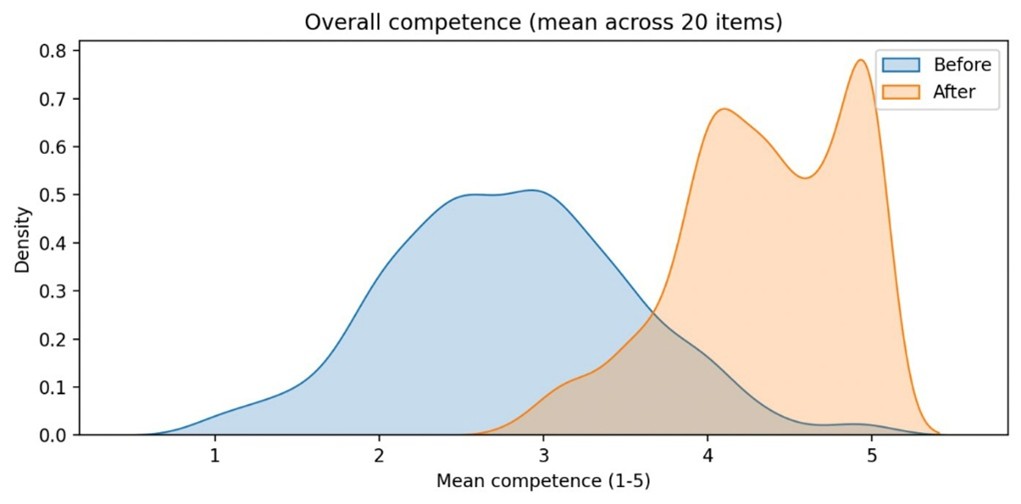
As shown in Table 1, teachers reported a substantial increase in perceived competence following the training. The mean pre-training score was 2.80 (SD = 0.74), and the mean post-training score was 4.34 (SD = 0.53), corresponding to an average gain of +1.54 points (SD = 0.60) on the 1–5 scale. The magnitude indicates a shift from approximately moderate baseline competence to, on average, high post-training competence. To contextualize the size of change within individuals, the standardized paired change (Cohen’s dz) was 2.56, indicating a very large pre–post shift in competence.
Table 1
Change in Teachers’ Digital Competence
| N | Pre mean | Pre SD | Post mean | Post SD | Mean gain | Gain SD | Cohen’s dz |
| 881 | 2.80 | 0.74 | 4.34 | 0.53 | 1.54 | 0.60 | 2.56 |
Figure 1
Overall Competence Gain
Moreover, item-level results show that gains were broad-based across the competence statements, rather than concentrated in a single skill area. Figure 2 shows the highest average gains. Across individual competence items, perceived improvements were positive across both foundational and applied digital domains. However, gain size varied by item. Some competencies showed comparatively smaller gains because participants reported relatively higher baseline competence before training, leaving less room for improvement. For example, collaboration tools such as Kahoot and Mentimeter had relatively high pre-training means and therefore showed smaller absolute gains than lower-baseline competencies. Substantial gains were also recorded in internet safety skills, indicating that teachers felt markedly better prepared to navigate and manage online risks in their teaching practice after the training.
Figure 2
Mean Gain Distribution Across Knowledge Items
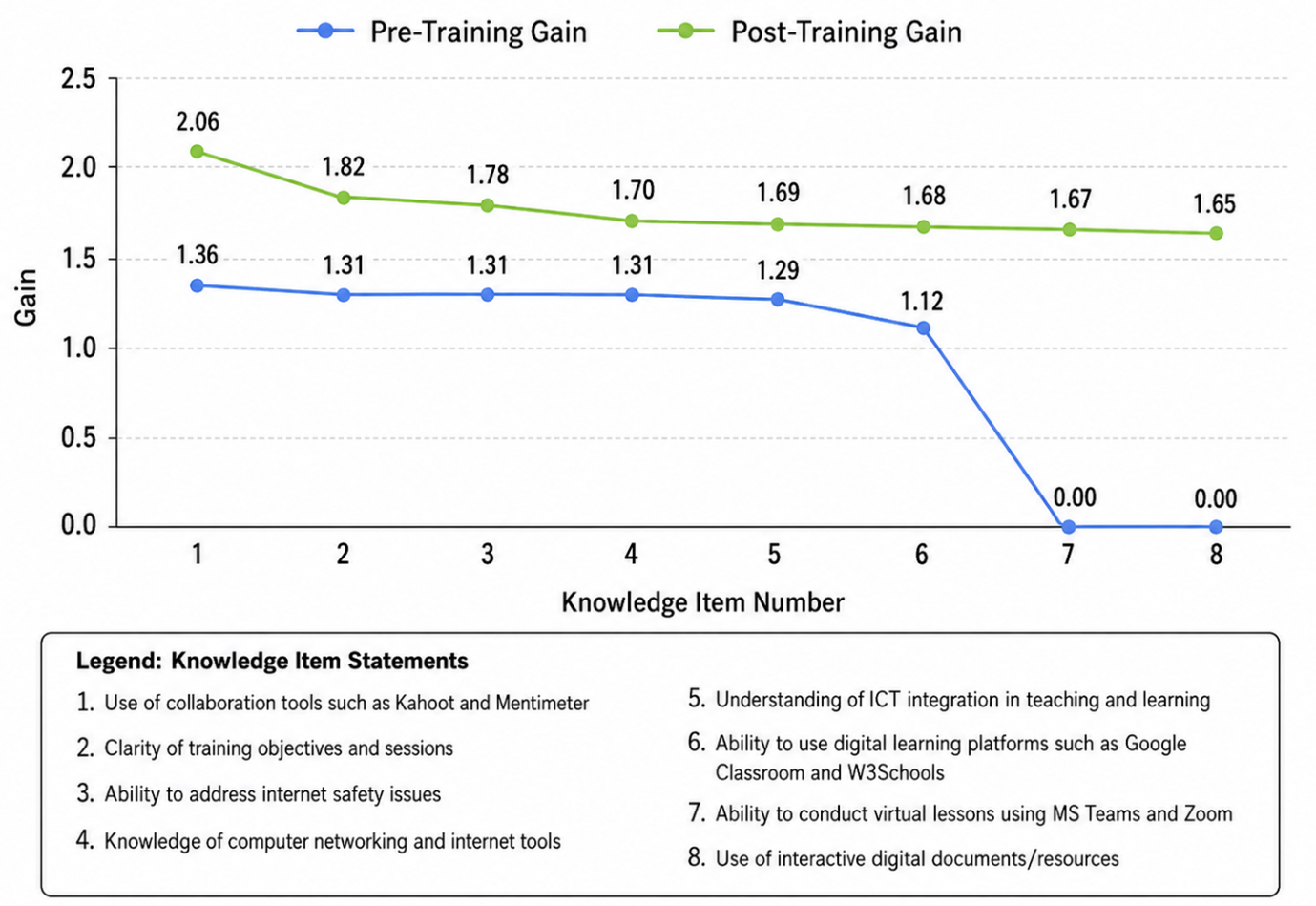
Competence in using digital learning platforms, particularly Google Classroom and W3Schools, also increased sharply, suggesting that participants left the program more confident in delivering and managing instruction in these environments. Taken together, these item-level results reinforce the overall pattern observed in the scale scores: the training was most impactful in strengthening concrete, tool-based competencies that teachers can immediately apply in lesson delivery, assessment, and classroom interaction, especially in collaborative digital activities, online safety, and using structured learning platforms.
These items reflect great improvement in practical, applied competencies (for example, competencies associated with delivering instruction using digital approaches and tools) and in training-aligned expectations and engagement. At the same time, even the lowest-gain items still showed positive improvement. Table 2 presents selected lower-ranked positive gains. These items still improved after training, but their gains were smaller than other domains, partly because their pre-training means were already relatively higher.
Table 2
Lowest-ranked Gains
| Competence item | N | Pre mean | Post mean | Mean gain |
| Use of collaboration tools such as Kahoot and Mentimeter | 881 | 3.52 | 4.64 | 1.12 |
| Clarity of training objectives and sessions | 881 | 3.14 | 4.43 | 1.29 |
| Ability to use interactive digital documents/resources | 881 | 3.04 | 4.36 | 1.31 |
| Knowledge of computer networking and internet tools | 881 | 3.14 | 4.45 | 1.31 |
| Ability to conduct virtual lessons using MS Teams and Zoom | 881 | 3.07 | 4.38 | 1.31 |
| Understanding of ICT integration in teaching and learning | 881 | 2.87 | 4.23 | 1.36 |
Differences in Knowledge Gains by Gender
When disaggregated by gender, both groups show clear improvements (Figure 3), with female respondents reporting a larger average gain than male respondents. Female teachers had an average gain of +1.78 (SD = 0.61) compared with +1.51 (SD = 0.59) among male teachers.
Figure 3
Knowledge Gains by Gender
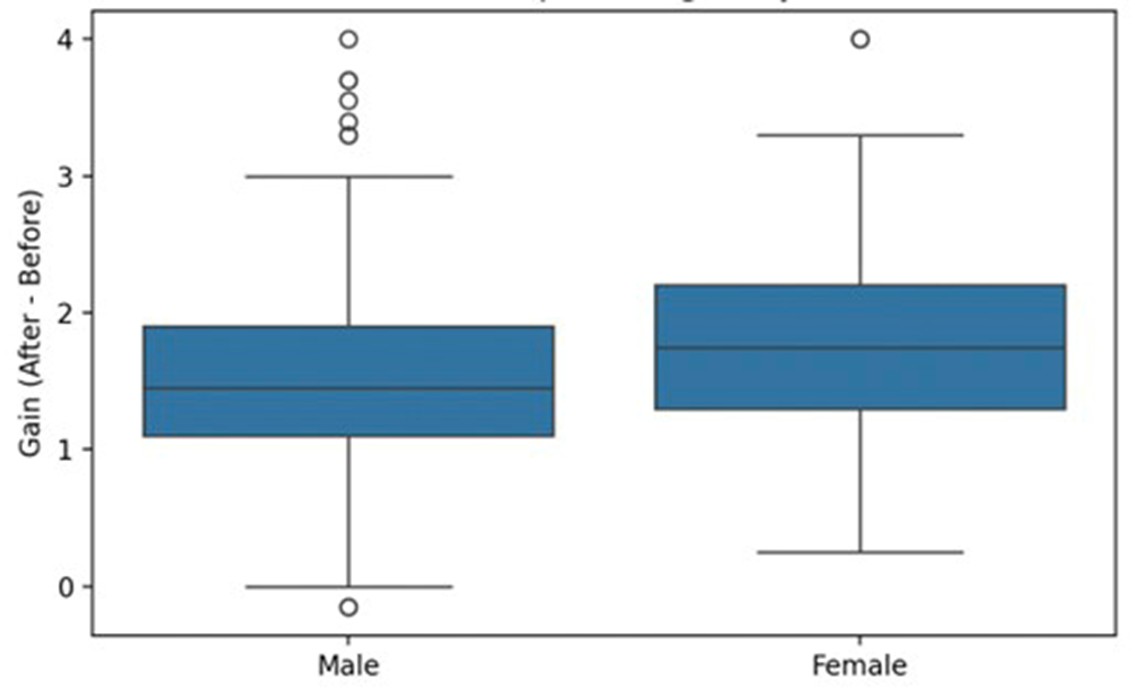
Notably, female teachers also had a lower baseline pre-score (2.46 vs 2.84), consistent with a larger room for improvement and contributing to the higher average gain. These results should be interpreted as descriptive subgroup comparisons rather than adjusted estimates. They indicate that perceived training benefits were present across both gender groups, with female respondents reporting larger average gains. However, further adjusted analysis is needed to determine whether the observed gender difference remains after accounting for baseline competence, region, teaching experience, education level, and school-level ICT resources.
Regional Variation in Gains
Results show positive average gains across all regions represented in the dataset, with modest variation in the size of improvement (Figure 4). The highest mean gain was in Dar-es-salaam (+1.68), and the lowest was in Pwani (+1.46), with all regions showing substantial uplift.
Figure 4
Regional Variation in Gains: Regional Gain vs Sample Size
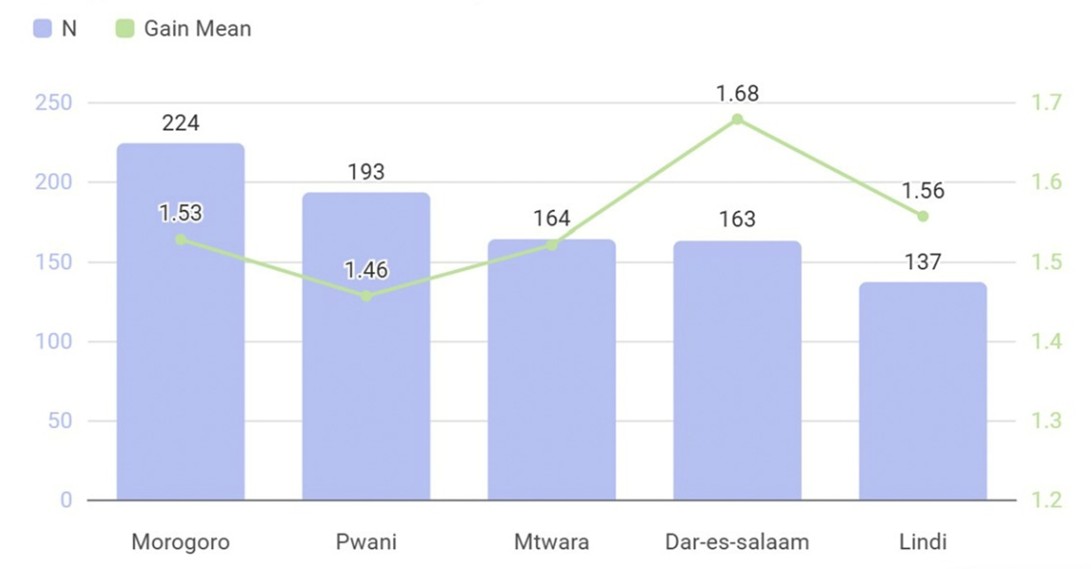
The standard deviations are similar across regions, suggesting comparable within-region variability in reported gains. In general, the regional results indicate that training-associated competence improvements were not isolated to a specific location and were broadly consistent across contexts.
Exploratory Regression Results
To examine factors associated with greater perceived gains in emerging digital competencies, exploratory linear regression models were estimated for four outcomes: overall emerging competence gain, AI tool-use gain, digital ethics gain, and internet safety gain. Each model controlled for the relevant baseline pre-training competence score to account for ceiling effects. After excluding implausible values in years teaching Computer Science, 875 cases were included in the regression analysis.
Table 3 presents the model-fit statistics. The models explained a substantial proportion of variance in perceived gains, with R² values ranging from 0.567 for internet safety gain to 0.730 for AI tool-use gain. The overall emerging competence gain model explained 63.3% of the variance in reported gain.
Table 3
Model Fit for Exploratory Regression Models
| Outcome model | N | R² | Adjusted R² | F-statistic | p-value |
| Emerging competence gain | 875 | 0.633 | 0.625 | 66.00 | < .001 |
| AI tool-use gain | 875 | 0.730 | 0.723 | 105.79 | < .001 |
| Digital ethics gain | 875 | 0.604 | 0.594 | 65.18 | < .001 |
| Internet safety gain | 875 | 0.567 | 0.557 | 42.90 | < .001 |
Across all gain-score models, baseline competence had a strong negative association with reported gain. This pattern is consistent with lower-baseline participants reporting larger improvements; however, it should not be interpreted solely as a substantive catch-up effect. Because gain was calculated as post-training competence minus pre-training competence, and the pre-training score was also included as a predictor, the negative baseline coefficient likely reflects a combination of ceiling effects, regression-to-the-mean, and mathematical coupling between the dependent variable and its baseline component. For this reason, the baseline coefficient is treated primarily as a statistical control and model diagnostic rather than as a standalone substantive finding. Female teachers reported significantly higher gains in AI tool-use competence than male teachers, while the gender effect for the overall emerging competence composite was positive but marginal. Personal laptop or desktop ownership was positively associated with gains in emerging competence, digital ethics, and internet safety. The age 50–60 category showed lower reported gains in some models relative to the 30–39 reference group. This result should be interpreted cautiously because the subgroup was small and may reflect differences in prior exposure, confidence with emerging tools, opportunities for practice, or ceiling and measurement effects rather than age alone. By contrast, region and number of functioning computers were not significant predictors after adjustment.
Table 4
Selected Predictors of Emerging Digital Competence Gains
| Predictor | Emerging competence gain | AI tool-use gain | Digital ethics gain | Internet safety gain |
| Baseline competence | -0.679*** | -0.783*** | -0.708*** | -0.606*** |
| Female teacher | 0.082† | 0.134* | 0.073 | 0.048 |
| Age 50–60 | -0.520** | -0.731** | -0.537† | -0.291† |
| Computer laboratory available | 0.054 | 0.010 | 0.077 | 0.083† |
| Functioning computers, log | -0.007 | -0.011 | -0.009 | 0.002 |
| Owns smartphone/tablet | 0.143 | 0.253 | 0.046 | 0.172 |
| Owns laptop/desktop | 0.110* | 0.091† | 0.141* | 0.118* |
| ICT included in pre-service training | 0.002 | -0.005 | 0.000 | 0.019 |
Note. Values are unstandardized coefficients. Models used HC3 robust standard errors and controlled for gender, age, teaching experience, years teaching Computer Science, highest education level, region, council type, school ICT resources, personal device ownership, and baseline competence. Reference categories were male teacher, age 30–39, Morogoro region, and District Council. †p < .10; *p < .05; **p < .01; ***p < .001.
The regression results refine the descriptive findings by showing that differences in reported gains were shaped more strongly by baseline competence and personal access to computing devices than by region. As a robustness check, supplementary models were estimated using post-training competence scores as the dependent variables while retaining baseline competence and the same teacher and context predictors. These models reduce the mathematical coupling problem inherent in gain-score models and provide a more conservative check on whether teacher and context variables remain associated with post-training competence. The negative baseline effect suggests that the training was especially beneficial for teachers who entered the program with lower confidence in emerging digital competencies. Laptop or desktop ownership also appears to be an important practical driver, suggesting that teachers with access to more capable personal computing devices may have had greater opportunity to practice, consolidate, and extend skills introduced during training.
AI Tool Use, Safety, and Digital Ethics
A targeted qualitative examination of open-ended response fields assessed whether participants spontaneously raised themes related to AI-specific tools, safety/security, digital ethics/privacy, and platform/tool references. The examination indicates that participants’ own framing, rather than the prevalence of these issues in the training itself, drives salience.
Across the open-text fields (Figure 5), AI-specific mentions were the most common focal theme, appearing in 61 distinct cells and corresponding to 61 unique respondents (6.92% of respondents).
Figure 5
Qualitative Data Focal Themes
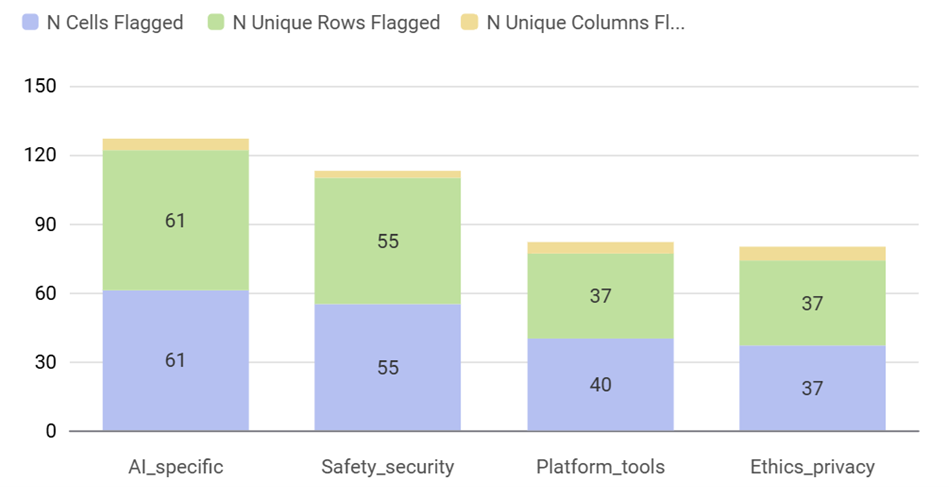
Safety/security mentions were similarly common (55 respondents, 6.24%). Ethics/privacy mentions were less frequent (37 respondents, 4.2%). Mentions of specific platforms/tools also appeared among 37 respondents (4.2%)
Generally, the findings suggest that when teachers chose to raise forward-looking issues in their own words, they were somewhat more likely to discuss AI tools and safety considerations than to explicitly discuss ethics/privacy. At the same time, the presence of ethics/privacy language, even at a lower frequency, indicates emerging awareness and concern within a subset of participants.
Ethics and privacy subthemes
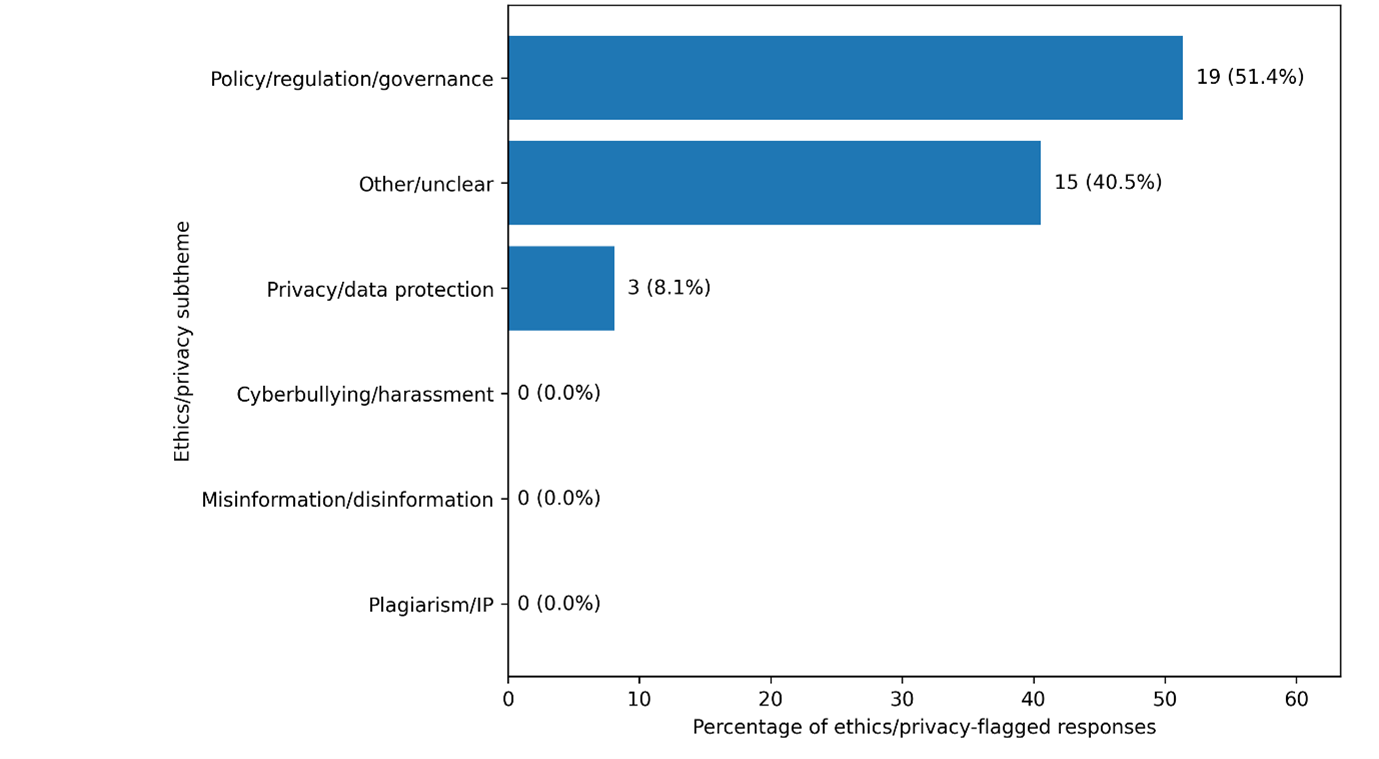
To tighten the interpretation of “ethics and privacy” mentions, the 37 flagged ethics and privacy text cells were reviewed and classified into a cleaner subtheme framework: privacy/data protection, plagiarism/IP, misinformation/disinformation, cyberbullying/harassment, and policy/regulation/governance, with an Other/unclear category retained for fragments too thin to classify confidently.
The subtheme counts show that (Figure 6) over half of the flagged ethics/privacy fragments aligned most closely with policy/regulation/governance language (51.4%), while explicit privacy/data protection references were less common (8.1%). A substantial proportion (40.5%) was categorized as Other/unclear due to limited context in short responses.
Figure 6
Ethics and Privacy Subthemes Classification
In general, the training evaluation shows a strong, consistent pattern of improvement in teachers’ assessed digital competence from pre to post, with a large mean gain and a very large standardized paired difference.
Gains were widespread across items, with variation consistent with baseline differences across competency statements. Improvements were observed across sex and across regions, with female respondents showing larger descriptive gains and regional means clustered within a relatively narrow band of large positive change
In open-ended responses, AI tool use and safety/security were slightly more salient than explicit ethics/privacy language, and ethics/privacy references, when present, most often took the form of governance-oriented framing rather than detailed privacy or academic integrity discussions
Contextual Implementation Challenges after Training
Open-ended responses show that the application of digital competence after training is likely to be shaped by the material and institutional conditions of teachers’ schools. The most frequently reported barrier was the shortage or absence of ICT facilities. Participants referred to “no computers,” “no projector,” “no computer laboratory,” “lack of ICT facilities,” and “shortage of digital tools.” Others reported that their schools had only one laptop or lacked the equipment needed to teach students and train fellow teachers. These responses indicate that digital tools such as LMS platforms, collaboration applications, AI tools, and multimedia authoring software cannot be understood merely as standard technologies introduced during training. Their educational value depends on whether schools have the minimum infrastructure needed to make them usable in daily teaching.
Internet connectivity and bandwidth limitations were also central concerns. Participants repeatedly referred to “lack of reliable network,” “internet problem,” “weak network,” “limited access to stable internet,” and “no router.” Some teachers indicated that their schools are located in areas with weak or absent mobile signal, while others reported that internet access was restricted to particular offices rather than available in teaching spaces. These responses suggest that online platforms such as Google Classroom, TIE-LMS, Zoom, Kahoot, Mentimeter, and AI-supported tools depend on regional connectivity and school-level network arrangements. In schools with weak bandwidth, teachers may use these tools only intermittently, through demonstrations, or via improvised mobile data access rather than as routine classroom technologies.
Electricity and physical classroom infrastructure further shaped teachers’ anticipated implementation capacity. Participants reported “no electricity supply in the school,” “electricity problem,” “lack of enough electrical wall switches,” and classrooms without electricity. One participant noted that computers and a projector had been received but remained unused because the school lacked electricity. This shows that device provision alone is insufficient. ICT integration requires a functional ecosystem, including power supply, charging points, secure rooms, computer laboratories, maintenance capacity, and reliable connectivity.
Participants also identified institutional and cultural barriers, including teacher readiness, resistance to change, limited time, school rules on student device use, and parental concerns. Some teachers anticipated that colleagues would resist ICT adoption or lack confidence in using computers, while others noted that students may not own smartphones, tablets, or laptops. Some responses also referred to school rules that restrict learners from using phones or digital devices. These findings suggest that school-level ICT implementation requires not only equipment but also leadership support, policy clarity, parental sensitization, and norms for safe and responsible device use.
Future studies should examine how teachers negotiate English-dominant software interfaces, Kiswahili classroom explanations, and local pedagogical practices when introducing emerging technologies. Taken together, the qualitative findings show that teachers’ post-training implementation capacity is not determined by competence alone, but by the interaction between competence, infrastructure, institutional rules, school culture, and regional access conditions.
5. Discussion
The central finding of this study is that ICT professional development can generate substantial perceived gains in teachers’ digital competence, but those gains acquire practical meaning only when interpreted within the Tanzanian school ecosystem in which teachers work. Participants reported moving from moderate baseline competence to high post-training competence, suggesting that the program achieved its immediate capacity-building objective. However, the qualitative findings show that competence alone does not guarantee classroom integration. Actual use of AI tools, LMS platforms, collaboration tools, multimedia applications, and online safety practices depends on school-level infrastructure, electricity, internet connectivity, device availability, teacher culture, leadership support, school rules, and regional access conditions.
This interpretation responds to the broader argument that educational technologies are not neutral tools that produce the same effects everywhere. In this study, tools such as Kahoot, Mentimeter, Zoom, Google Classroom, LMS platforms, and AI applications became meaningful through the conditions under which Tanzanian teachers could access, adapt, and implement them. A teacher trained to use an LMS, for example, may still be unable to apply it routinely in a school without reliable internet or a functioning computer laboratory. Similarly, multimedia and interactive tools may remain demonstration technologies where classrooms lack projectors, power supply, or learner devices. Therefore, the findings should be interpreted as evidence of competence development within a constrained implementation ecosystem, not as proof of automatic classroom transformation.
The standardized paired change of Cohen’s dz = 2.56 indicates a very large shift in self-reported competence. In professional development evaluation, the magnitude suggests participants perceived a substantial change in their knowledge and confidence after the training. However, this effect size should be interpreted cautiously because retrospective self-assessment designs often capture perceived recalibration as well as learning. Participants may rate their pre-training competence lower after they better understand the domain, while also rating post-training competence positively because the training was recent and salient. Therefore, the effect size is best understood as evidence of a very large perceived competence shift rather than objective proof of equivalent performance gains in classroom practice.
At the item level, gains were consistently positive, but not uniform. The highest-gain competencies tended to be the most “hands-on” and tool-mediated (for example, collaboration/interactive tools and internet safety–related skills), suggesting the program delivered concrete, actionable learning rather than abstract orientation. This aligns well with the rationale that teachers need practical capabilities they can immediately apply in lesson preparation, delivery, classroom management, and student engagement (Jeptepkeny & Keter, 2025; Langelaan et al., 2024; Lipka et al., 2025; Turbanada et al., 2025).
The item-level gains also show why a situated interpretation is necessary. Teacher training often presents collaboration tools, virtual learning tools, and multimedia platforms as transferable instructional technologies. However, their classroom value depends on local adaptation. In the Tanzanian school context reflected in the qualitative responses, teachers may need to use mobile phones as substitute devices, organize group-based demonstrations when computers are unavailable, prepare offline resources when bandwidth is weak, or negotiate with school leaders about when and how learners may use digital devices. Thus, the same tool can operate as an interactive classroom platform in one school, a teacher-preparation resource in another, and an aspirational technology in a school without electricity or computers.
Differences by respondent characteristics were present but did not destabilize the overall narrative. Female respondents showed larger descriptive gains than male respondents, but both groups reported strong improvement. Region-level gains clustered within a relatively narrow range, indicating that the program’s perceived impact was broadly distributed rather than concentrated in one location. Regarding the research question of whether training outcomes vary across groups, the most defensible interpretation is that subgroup differences are present descriptively, but the dominant story is one of across-the-board positive change (Jeptepkeny & Keter, 2025; Lipka et al., 2025; Qin & Liu, 2023).
The exploratory regression models require cautious interpretation. Baseline competence was strongly and negatively associated with reported gain across emerging competence outcomes, but this pattern partly reflects the structure of the gain-score model because gain was calculated as post-training competence minus pre-training competence. Therefore, the result should be interpreted as a combination of ceiling effects, possible regression-to-the-mean, and mathematical coupling, rather than as definitive evidence of a pure catch-up effect. Substantively, the finding still suggests that teachers who reported lower initial competence had more room to improve, but this interpretation should be treated cautiously and considered alongside post-score robustness models.
The regression results also show that personal laptop or desktop ownership was positively associated with gains in emerging competence, digital ethics, and internet safety. This finding reinforces the situated interpretation of digital teacher competence. Access to a personal computing device may allow teachers to practise beyond the training venue, experiment with tools, prepare digital materials, and consolidate new competencies. By contrast, the number of functioning school computers was not a significant predictor after adjustment, suggesting that infrastructure quality and usability may matter more than simple equipment counts. The significant female advantage in AI tool-use gain further suggests that structured ICT professional development may help reduce gender gaps in emerging technology readiness when women teachers are given access to practical and supportive training environments. The lower gains observed among teachers aged 50–60 should be interpreted with caution. The result may indicate that older teachers need more differentiated support, slower-paced practice, or follow-up mentoring when engaging with emerging digital tools. However, because this age group was small, the finding should not be generalized without further evidence.
Moreover, the qualitative results add an important hint to the competence gains. Open-ended responses contained some spontaneous discussion of AI, safety/security, and ethics/privacy, but at relatively low prevalence. The fact that a small minority of respondents volunteered these themes suggests that, while the training may have touched on these areas (and teachers may care about them), they are not yet deeply embedded in everyday language or routine professional concerns for many participants. Where ethics/privacy did appear, it most often took the form of general governance language (policy, regulation, responsible use) rather than detailed privacy practices, academic integrity norms, misinformation literacy, or cyberbullying safeguards (Aguilar-Cruz & Salas-Pilco, 2025; Alwaqdani, 2024; Brzovic, 2021). The pattern suggests that “ethics/privacy” is not yet a well-articulated domain for most teachers in this sample, even when they are actively discussing digital teaching (Aguilar-Cruz & Salas-Pilco, 2025; Alwaqdani, 2024). The governance-heavy subtheme pattern suggests that teachers may be waiting for formal guidance before acting confidently, or they may not yet have the vocabulary to describe the ethical dimensions of everyday classroom technology decisions (Aguilar-Cruz & Salas-Pilco, 2025; Alwaqdani, 2024; Brzovic, 2021).
The governance-oriented framing is important in the Tanzanian school context because responsible technology use depends not only on individual teacher awareness but also on school-level rules, national policy guidance, parental expectations, and institutional safeguards. Teachers may recognize that AI, online platforms, and digital communication require responsible use, but may still lack practical guidance on student data protection, acceptable use of smartphones, safe online communication, copyright, misinformation, and academic integrity. In schools where access to devices is shared, informal, or dependent on teachers’ personal phones and mobile bundles, ethical practice becomes especially complex. Therefore, future training should translate responsible-use principles into locally applicable routines that teachers can enact under constrained school conditions.
The practical implication is that future training should move beyond general messages (“use responsibly”) into specific teacher-facing routines and scenarios. Privacy/data protection can be operationalized through concrete classroom rules about student data, consent, and safe handling of device-based information. Plagiarism/IP can be taught through simple citation practices and classroom norms for using online materials. Misinformation can be linked to digital literacy tasks that students can practice. Cyberbullying/harassment can be addressed through reporting pathways and class agreements (Aguilar-Cruz & Salas-Pilco, 2025; Alwaqdani, 2024; Brzovic, 2021). Policy/regulation content becomes most useful when paired with “what this means on Monday morning in my classroom.”
The qualitative findings show that implementation is likely to be constrained by infrastructural conditions in teachers’ respective schools. Participants repeatedly identified a lack of ICT facilities as the most serious barrier to integrating ICT in teaching and learning, citing “no computers,” “no projector,” “no computer laboratory,” “lack of ICT facilities,” and “shortage of digital tools.” Some reported that their schools had only one laptop or none, while others emphasized the absence of projectors, printers, routers, smartboards, and computer laboratories. These findings reveal a clear gap between training outcomes and school readiness. Teachers may acquire the required digital competencies, but their ability to apply them depends on whether schools provide the minimum infrastructure needed for ICT-based teaching and learning.
Internet connectivity was also a recurring constraint both during training and in expected school-level implementation. Reports of “poor internet connection,” “lack of stable network,” and “unreliable internet connection” affected online demonstrations and practical sessions, with similar challenges anticipated in remote schools (Owen et al., 2020; Calatayud, 2025; Hunduma & Seyoum, 2023; Mangundu et al., 2025). These findings suggest that internet access is essential for successful ICT integration. Without reliable connectivity, teachers cannot fully use LMS platforms, online repositories, AI tools, collaborative applications, or cloud-based resources (Akram et al., 2022; Joshi & Khatiwada, 2024; Naaz, 2025).
Electricity and physical infrastructure further complicate translating training into practice. Some schools lack electricity or have an unstable supply, inadequate sockets, incomplete labs, and insufficient charging points (Moner-Girona et al., 2025; Kelly et al., 2023; Elom et al., 2024; Koima, 2023). Even when computers and projectors are present, they may be unusable without power, underscoring the interdependence among ICT tools, power, connectivity, and classroom readiness. Additional challenges include limited student access to devices, socio-economic constraints, parental support, and restrictive school rules around phones and digital tools. Since ICT integration often depends on safe, guided use of available devices (including smartphones), schools need clear policies on responsible device use, learner protection, supervision, and parental sensitization (Ofosu-Asare, 2024; Owen et al., 2020; Regli et al., 2026).
The program was associated with substantial self-reported gains in teachers’ perceived digital competence and implementation readiness (Nettey et al., 2024; Kibirige, 2023; Joshi & Khatiwada, 2024; Ofosu-Asare, 2024). Strong post-training gains indicate that teachers are capable of adopting ICT, multimedia, LMS, and AI tools when training is practical and relevant. However, repeated concerns about devices, internet, electricity, laboratories, teacher attitudes, and time indicate that professional development must be accompanied by school-level investment; training without infrastructure risks producing motivated teachers who cannot fully apply their skills (Bingimlas, 2009; Akram et al., 2022; Nettey et al., 2024; Kibirige, 2023; Mangundu et al., 2025; Mathebula et al., 2025; Ofosu-Asare, 2024).
Limitations
This study has few several limitations. First, the retrospective pre–post design reduces response-shift bias but remains dependent on teachers’ self-reported perceptions of competence. Participants may have overreported improvement because of social desirability, training satisfaction, or recalibration of their understanding of competence after exposure to new content. Second, the study did not include direct behavioural measures such as classroom observations, lesson-plan analysis, independent assessment of teacher-created digital artifacts, or student learning outcomes. Therefore, the findings should be interpreted as evidence of perceived competence gains and implementation readiness, not verified classroom transformation.
6. Program and Policy Recommendations
The evidence supports continuing and scaling ICT teacher professional development, but future programs should be designed as infrastructure-sensitive and context-responsive interventions.
First, training should be accompanied by minimum school-level ICT readiness packages, including functioning computers, projectors, routers or reliable connectivity options, electricity access, charging points, secure storage, and basic maintenance support. Second, the program should include low-infrastructure pedagogical strategies, such as offline lesson preparation, group-based device use, smartphone-supported demonstrations, downloadable LMS content, and locally adaptable multimedia resources. Third, responsible technology use should be taught through practical classroom scenarios rather than general policy statements. Teachers need routines for protecting student data, managing device use, addressing misinformation, preventing cyberbullying, using AI ethically, and guiding students in safe online behaviour. Fourth, school leaders should be engaged as implementation actors because teacher competence will not translate into sustained practice unless timetables, school rules, supervision systems, and peer-learning structures support ICT integration. Finally, gender-responsive support should be strengthened because female teachers showed strong gains but remain underrepresented in ICT-related training.
Recommendations for Future Evaluation
Future evaluations should pair retrospective competence ratings with direct behavioural evidence. At minimum, follow-up studies should include classroom observations, lesson-plan analysis, rubrics for teacher-created digital artifacts, and scenario-based assessments of AI, privacy, online safety, and digital ethics. A longitudinal design would also help determine whether competence gains are sustained after teachers return to schools with different levels of infrastructure. Qualitative interviews, focus groups, and school case studies should be added to examine how teachers adapt digital tools under local constraints, including weak bandwidth, lack of electricity, limited devices, school rules on phones, language practices, teacher resistance, and parental expectations. Such evidence would allow future research to move beyond perceived competence and provide stronger claims about actual pedagogical integration and culturally situated technology use.
References
Abimbola, C., Eden, C. A., Chisom, O. N., & Adeniyi, I. S. (2024). Integrating AI in education: Opportunities, challenges, and ethical considerations. Magna Scientia Advanced Research and Reviews. https://doi.org/10.30574/msarr.2024.10.2.0039
Abisheva, C., Aykenova, R., Idrissova, M., Umirzakova, L., Irgebaeva, N., Koldasbaeva, Z. Sh., Nossiyeva, N., Aipova, А., Doldinova, S., & Smoilov, S. (2024). Formation of Ethical Competences for AI Use in English Foreign Language Teachings. Qubahan Academic Journal. https://doi.org/10.48161/qaj.v4n4a1256
Adipat, S. (2021). Developing Technological Pedagogical Content Knowledge (TPACK) through Technology-Enhanced Content and Language-Integrated Learning (T-CLIL) Instruction. Education and Information Technologies, 26, 6461–6477. https://doi.org/10.1007/s10639-021-10648-3
Adipat, S., Chotikapanich, R., Laksana, K., Busayanon, K., Piatanom, P., Ausawasowan, A., & Elbasouni, I. (2023). Technological Pedagogical Content Knowledge for Professional Teacher Development. Academic Journal of Interdisciplinary Studies. https://doi.org/10.36941/ajis-2023-0015
Aguilar-Cruz, P., & Salas-Pilco, S. (2025). Teachers’ perceptions of artificial intelligence in Colombia: AI technological access, AI teacher professional development and AI ethical awareness. Technology, Pedagogy and Education, 34, 219–238. https://doi.org/10.1080/1475939x.2025.2451865
Ahadi, A., Bower, M., Lai, J., Singh, A., & Garrett, M. (2021). Evaluation of teacher professional learning workshops on the use of technology – a systematic review. Professional Development in Education, 50, 221–237. https://doi.org/10.1080/19415257.2021.2011773
Ahmad, K. (2025). Developing Digital Competence: Effective Strategies for Pre-Service Teacher. ACADEMIA International Journal for Social Sciences. https://doi.org/10.63056/acad.004.04.0978
Ahmad, Z., Sultana, A., Latheef, N. A., Siby, N., Sellami, A., & Abbasi, S. (2025). Measuring students’ AI competence: Development and validation of a multidimensional scale integrating educational psychology perspectives. Acta Psychologica, 259, 105446. https://doi.org/10.1016/j.actpsy.2025.105446
Akram, H., Abdelrady, A. H., Al-Adwan, A., & Ramzan, M. (2022). Teachers’ perceptions of technology integration in teaching-learning practices: A systematic review. Frontiers in Psychology, 13. https://doi.org/10.3389/fpsyg.2022.920317
Al-Abdullatif, A. (2025). Auditing AI Literacy Competency in K-12 Education: The Role of Awareness, Ethics, Evaluation, and Use in Human-Machine Cooperation. Syst., 13, 490. https://doi.org/10.3390/systems13060490
Althubyani, A. (2024). Digital Competence of Teachers and the Factors Affecting Their Competence Level: A Nationwide Mixed-Methods Study. Sustainability. https://doi.org/10.3390/su16072796
Alwaqdani, M. (2024). Investigating teachers’ perceptions of artificial intelligence tools in education: potential and difficulties. Education and Information Technologies, 30, 2737–2755. https://doi.org/10.1007/s10639-024-12903-9
Alzahrani, A. (2024). Unveiling the shadows: Beyond the hype of AI in education. Heliyon, 10. https://doi.org/10.1016/j.heliyon.2024.e30696
Amemasor, S. K., Oppong, S. O., Ghansah, B., Benuwa, B.-B., & Essel, D. (2025). A systematic review on the impact of teacher professional development on digital instructional integration and teaching practices. Frontiers in Education. https://doi.org/10.3389/feduc.2025.1541031
Amirova, A., Nurumov, K., Kasa, R., Akhmetzhanova, A., & Kuzekova, A. (2023). The impact of the digital divide on synchronous online teaching in Kazakhstan during COVID-19 school closures. 7. https://doi.org/10.3389/feduc.2022.1083651
Anil, A., & Jayakumar, M. (2020). ICT integration in education: The case of secondary schools in Kerala. PEOPLE: International Journal of Social Sciences. https://doi.org/10.20319/pijss.2019.43.19481962
Ash, T., Fisher, A., Maguire, S., Knox, J., & Garbacz, S. (2025). Evaluating diversity training in schools: A narrative review of different measurement approaches. Journal of School Psychology, 111, 101453. https://doi.org/10.1016/j.jsp.2025.101453
Asubiojo, O. R. (2025). Equipping Teachers for Instructional Effectiveness through Educational Technology Ethics in the Teaching and Learning of Basic Science and Technology in Ekiti State, Nigeria. International Journal of Education, Learning and Development. https://doi.org/10.37745/ijeld.2013/vol13n15064
Avci, Z., O’Dwyer, L., & Lawson, J. (2019). Designing effective professional development for technology integration in schools. J. Comput. Assist. Learn., 36, 160–177. https://doi.org/10.1111/jcal.12394
Ayyash, M., Alsboui, T., Alshaikh, O., Inuwa-Dutse, I., Khan, S., & Parkinson, S. (2024). Cybersecurity Education and Awareness Among Parents and Teachers: A Survey of Bahrain. IEEE Access, 12, 86596–86617. https://doi.org/10.1109/access.2024.3416045
Azimkhan, S., Abildinova, G., Khamzina, A., Karymsakova, A., & Karaca, C. (2025). Developing Teacher Digital Competence through Mobile and Interactive Technologies: A Systematic Review Using the TPACK Framework. Int. J. Eng. Pedagog., 15, 33–59. https://doi.org/10.3991/ijep.v15i3.51653
Azman, Ö., & Tümkaya, S. (2025). Navigating the ethical landscape of AI integration in education: Balancing innovation and responsibility. F1000Research. https://doi.org/10.12688/f1000research.160011.1
Basilotta-Gómez-Pablos, V., Matarranz, M., Casado-Aranda, L., & Otto, A. (2022). Teachers’ digital competencies in higher education: a systematic literature review. International Journal of Educational Technology in Higher Education, 19. https://doi.org/10.1186/s41239-021-00312-8
Beardsley, M., Albó, L., Aragón, P., & Leo, D. H. (2021). Emergency education effects on teacher abilities and motivation to use digital technologies. Br. J. Educ. Technol., 52, 1455–1477. https://doi.org/10.1111/bjet.13101
Bendtsen, M., Forsman, L., & Björklund, M. (2021). Exploring empowering practices for teachers’ sustainable continuing professional development. Educational Research, 64, 60–76. https://doi.org/10.1080/00131881.2021.2000338
Bhanji, F., Gottesman, R., De Grave, W., Steinert, Y., & Winer, L. (2012). The retrospective pre-post: a practical method to evaluate learning from an educational program. Academic Emergency Medicine : Official Journal of the Society for Academic Emergency Medicine, 19 2, 189–194. https://doi.org/10.1111/j.1553-2712.2011.01270.x
Bing, Z., & Leong, W. Y. (2025). Ethical Design of AI for Education and Learning Systems. ASM Science Journal. https://doi.org/10.32802/asmscj.2025.1917
Bingimlas, K. (2009). Barriers to the successful integration of ICT in teaching and learning environments: A review of the literature. Eurasia Journal of Mathematics, Science and Technology Education, 5, 235–245. https://doi.org/10.12973/ejmste/75275
Bloomfield, B., Fox, R., & Leif, E. (2024). Multi-Tiered Systems of Educator Professional Development: A Systematic Literature Review of Responsive, Tiered Professional Development Models. Journal of Positive Behavior Interventions, 26, 168–188. https://doi.org/10.1177/10983007231224028
Bower, M., Torrington, J., Lai, J., Petocz, P., & Alfano, M. (2024). How should we change teaching and assessment in response to increasingly powerful generative Artificial Intelligence? Outcomes of the ChatGPT teacher survey. Education and Information Technologies, 29, 15403–15439. https://doi.org/10.1007/s10639-023-12405-0
Brzovic, J. (2021). The impact of personal devices in the classroom. https://doi.org/10.25316/ir-15597
Cabero-Almenara, J., Gutiérrez-Castillo, J., Palacios-Rodríguez, A., & Barroso-Osuna, J. (2020). Development of the Teacher Digital Competence Validation of DigCompEdu Check-In Questionnaire in the University Context of Andalusia (Spain). Sustainability. https://doi.org/10.3390/su12156094
Caena, F., & Redecker, C. (2019). Aligning teacher competence frameworks to 21st century challenges: The case for the European Digital Competence Framework for Educators ( Digcompedu). European Journal of Education. https://doi.org/10.1111/ejed.12345
Calatayud, F. (2025). Bridging the digital divide: ICT integration in the public secondary school classrooms in San Mariano, Isabela. Pantao: International Journal of the Humanities and Social Sciences. https://doi.org/10.69651/pijhss0403380
Çebi, A., Özdemir, T. B., Reisoglu, I., & Çolak, C. (2022). From digital competences to technology integration: Re-formation of pre-service teachers’ knowledge and understanding. International Journal of Educational Research. https://doi.org/10.1016/j.ijer.2022.101965
Celik, I. (2022). Towards Intelligent-TPACK: An empirical study on teachers’ professional knowledge to ethically integrate artificial intelligence (AI)-based tools into education. Comput. Hum. Behav., 138, 107468. https://doi.org/10.1016/j.chb.2022.107468
Chan, C. (2023). A comprehensive AI policy education framework for university teaching and learning. International Journal of Educational Technology in Higher Education, 20. https://doi.org/10.1186/s41239-023-00408-3
Chasteen, S., & Chattergoon, R. (2020). A comparison study of pre/post-test and retrospective pre-test for measuring faculty attitude change. 93–98. https://doi.org/10.1119/perc.2019.pr.chasteen
Chee, H., Ahn, S., & Lee, J. (2024). A Competency Framework for AI Literacy: Variations by Different Learner Groups and an Implied Learning Pathway. British Journal of Educational Technology. https://doi.org/10.1111/bjet.13556
Chifla-Villón, M. R., Chifla-Villón, M. P., Suárez-Guartamber, E. M., & Guevara-Viejó, F. (2025). Multidimensional assessment and validation of digital competencies in university teacher education: a confirmatory factor analysis. Frontiers in Education. https://doi.org/10.3389/feduc.2025.1597095
Chikodi, A. K., & Abike, F. (2025). Correlation Between Availability Of Ict Infrastructure And Level Of Teacher Ict Training On Senior Secondary School Students’ Academic Engagement In Zaria Local Government Area Of Kaduna State. International Journal of Educational Research and Library Science. https://doi.org/10.70382/tijerls.v08i8.051
Chiner, E., Gómez‐Puerta, M., Mengual-Andrés, S., & Merma-Molina, G. (2025). Teacher and School Mediation for Online Risk Prevention and Management: Fostering Sustainable Education in the Digital Age. Sustainability. https://doi.org/10.3390/su17083711
Chiu, T. (2023). The impact of Generative AI (GenAI) on practices, policies and research direction in education: a case of ChatGPT and Midjourney. Interactive Learning Environments, 32, 6187–6203. https://doi.org/10.1080/10494820.2023.2253861
Chiu, T., Ahmad, Z., & Çoban, M. (2024). Development and validation of teacher artificial intelligence (AI) competence self-efficacy (TAICS) scale. Education and Information Technologies, 30, 6667–6685. https://doi.org/10.1007/s10639-024-13094-z
Chiu, T., Falloon, G., Song, Y., Wong, V. W. L., Zhao, L., & Ismailov, M. (2024). A self-determination theory approach to teacher digital competence development. Comput. Educ., 214, 105017. https://doi.org/10.1016/j.compedu.2024.105017
Delcker, J., Heil, J., & Ifenthaler, D. (2024). Evidence-based development of an instrument for the assessment of teachers’ self-perceptions of their artificial intelligence competence. Educational Technology Research and Development, 73, 115–133. https://doi.org/10.1007/s11423-024-10418-1
Derder, A., Sudaria, R., & Paglinawan, J. (2023). Digital Infrastructure on Teaching Effectiveness of Public-School Teachers. American Journal of Education and Practice. https://doi.org/10.47672/ajep.1719
Desimone, L., & Garet, M. (2015). Best Practices in Teachers’ Professional Development in the United States. 7, 252–263. https://doi.org/10.25115/psye.v7i3.515
Dhiman, T., Chauhan, V., Kumar, A., Vasantha, M., & Kumar, A. (2025). Ethical Crossroads: Navigating Data Privacy, Bias, Accountability and Sustainability in AI-Driven Education. Open Access Journal of Multidisciplinary Research. https://doi.org/10.47760/oajmr.2025.v01i03.007
Drennan, J., & Hyde, A. (2008). Controlling response shift bias: the use of the retrospective pre‐test design in the evaluation of a master’s program. Assessment & Evaluation in Higher Education, 33, 699–709. https://doi.org/10.1080/02602930701773026
Dringó-Horváth, I., Rajki, Z., & Nagy, J. (2025). University Teachers’ Digital Competence and AI Literacy: Moderating Role of Gender, Age, Experience, and Discipline. Education Sciences. https://doi.org/10.3390/educsci15070868
Elom, C., Onyeneke, R., Ayerakwa, H. M., Atta‐Ankomah, R., Deffor, E. W., & Uwaleke, C. C. (2024). The role of information and communication technologies and access to electricity on education in Africa. Education and Information Technologies, 29, 15501–15532. https://doi.org/10.1007/s10639-024-12504-6
Elsayary, A. (2023). The impact of a professional upskilling training programme on developing teachers’ digital competence. J. Comput. Assist. Learn., 39, 1154–1166. https://doi.org/10.1111/jcal.12788
Falloon, G. (2020). From digital literacy to digital competence: the teacher digital competency (TDC) framework. Educational Technology Research and Development, 68, 2449–2472. https://doi.org/10.1007/s11423-020-09767-4
Fernández-Batanero, J., Montenegro-Rueda, M., Fernández-Cerero, J., & García-Martínez, I. (2020). Digital competences for teacher professional development. Systematic review. European Journal of Teacher Education, 45, 513–531. https://doi.org/10.1080/02619768.2020.1827389
Frèrejean, J., Van Geel, M., Keuning, T., Dolmans, D., Van Merriënboer, J., & Visscher, A. (2021). Ten steps to 4C/ID: training differentiation skills in a professional development program for teachers. Instructional Science, 49, 395–418. https://doi.org/10.1007/s11251-021-09540-x
Geldhof, G., Warner, D., Finders, J., Thogmartin, A., Clark, A., & Longway, K. (2018). Revisiting the utility of retrospective pre-post designs: The need for mixed-method pilot data. Evaluation and Program Planning, 70, 83–89. https://doi.org/10.1016/j.evalprogplan.2018.05.002
Georgiev, G. (2025). Cybersecurity And Cyberethics In Bulgarian Schools. Education and Technologies Journal. https://doi.org/10.26883/2010.252.6773
Gómez-Trigueros, I. (2023). Digital skills and ethical knowledge of teachers with TPACK in higher education. Contemporary Educational Technology. https://doi.org/10.30935/cedtech/12874
González-Medina, I., Gavín-Chocano, Ó., Pérez-Navío, E., & Berea, G. A. M. (2025). Trajectories of Digital Teaching Competence: A Multidimensional PLS-SEM Study in University Contexts. Inf., 16, 373. https://doi.org/10.3390/info16050373
Guggemos, J., & Seufert, S. (2021). Teaching with and teaching about technology – Evidence for professional development of in-service teachers. Comput. Hum. Behav., 115, 106613. https://doi.org/10.1016/j.chb.2020.106613
Gunter, G., & Reeves, J. (2017). Online professional development embedded with mobile learning: An examination of teachers’ attitudes, engagement and dispositions. Br. J. Educ. Technol., 48, 1305–1317. https://doi.org/10.1111/bjet.12490
Gupta, S., Sharma, P., Vajrala, K. R., Fatima, A., & Sharma, N. (2025). Integrating Artificial Intelligence in Education: Advancing Personalized Learning Within Ethical Frameworks: An Overview. EthAIca. https://doi.org/10.56294/ai2025418
Hakimi, L., Eynon, R., & Murphy, V. (2021). The Ethics of Using Digital Trace Data in Education: A Thematic Review of the Research Landscape. Review of Educational Research, 91, 671–717. https://doi.org/10.3102/00346543211020116
Hammou, Y. A., & Elfatihi, M. (2021). Barriers to ICT integration in Moroccan secondary school EFL classrooms. Journal of Education and Practice. https://doi.org/10.7176/jep/12-26-04
Han, X. (2025). Improving pre-service teachers’ AI competencies: a quasi experimental study. Frontiers in Psychology, 16. https://doi.org/10.3389/fpsyg.2025.1642465
Haug, B., & Mork, S. (2021). Taking 21st century skills from vision to classroom: What teachers highlight as supportive professional development in the light of new demands from educational reforms. Teaching and Teacher Education, 100, 103286. https://doi.org/10.1016/j.tate.2021.103286
Hill, L. (2020). Back to the future: Considerations in use and reporting of the retrospective pretest. International Journal of Behavioral Development, 44, 184–191. https://doi.org/10.1177/0165025419870245
Hoogstraten, J. (1982). The Retrospective Pretest in an Educational Training Context. Journal of Experimental Education, 50, 200–204. https://doi.org/10.1080/00220973.1982.11011824
Howard, G. (1980). Response-Shift Bias. Evaluation Review, 4, 106–193. https://doi.org/10.1177/0193841×8000400105
Hunduma, C. M., & Seyoum, Y. (2023). Constraints hindering ICT integration in Ethiopian public secondary schools: A literature review. International Journal of Membrane Science and Technology. https://doi.org/10.15379/ijmst.v10i2.1271
Hwalek, M., Pierce, K., & Straub, V. (2024). Designing a questionnaire with retrospective pre-post items: Format matters. Evaluation and Program Planning, 103, 102411. https://doi.org/10.1016/j.evalprogplan.2024.102411
Ingram, E., Hill, T. W., Harshbarger, D., & Keshwani, J. (2024). Improving Elementary Pre-Service Teachers’ Science Teaching Self-Efficacy through Garden-Based Technology Integration. Education Sciences. https://doi.org/10.3390/educsci14010065
Jeptepkeny, A., & Keter, J. (2025). Teacher Training and Professional Development: Assessing the Quality of Teacher Training Programs and Ongoing Professional Development Initiatives in Improving Teaching Practices in Kenya. East African Journal of Education Studies. https://doi.org/10.37284/eajes.8.3.3718
Jiang, M. (2023). The Impact and Potential of Educational Technology: A Comprehensive Review. Research and Advances in Education. https://doi.org/10.56397/rae.2023.07.05
Joshi, B. M., & Khatiwada, S. (2024). Analyzing barriers to ICT integration in education: A systematic review. The Third Pole: Journal of Geography Education. https://doi.org/10.3126/ttp.v24i1.73325
Kaushal, K. (2016). Response Shift Bias in Pre- and Post-test Studies. Indian Journal of Dermatology, 61, 91. https://doi.org/10.4103/0019-5154.174036
Kelly, A. M., Yimele, B. L. T., Tchieu, N. L. W., & Rutazihana, P. N. (2023). Access to electricity and primary education nexus in Central Africa. Journal of Regional Economics. https://doi.org/10.58567/jre02010003
Kibirige, I. (2023). Primary teachers’ challenges in implementing ICT in science, technology, engineering, and mathematics (STEM) in the post-pandemic era in Uganda. Education Sciences. https://doi.org/10.3390/educsci13040382
Kiryakova, G., & Kozhuharova, D. (2024). The Digital Competences Necessary for the Successful Pedagogical Practice of Teachers in the Digital Age. Education Sciences. https://doi.org/10.3390/educsci14050507
Koima, J. (2023). School electrification and academic outcomes in rural Kenya. Journal of Development Economics. https://doi.org/10.1016/j.jdeveco.2023.103178
Langelaan, B., Gaikhorst, L., Smets, W., & Oostdam, R. (2024). Differentiating instruction: Understanding the key elements for successful teacher preparation and development. Teaching and Teacher Education. https://doi.org/10.1016/j.tate.2023.104464
Lawless, K., & Pellegrino, J. (2007). Professional Development in Integrating Technology Into Teaching and Learning: Knowns, Unknowns, and Ways to Pursue Better Questions and Answers. Review of Educational Research, 77, 575–614. https://doi.org/10.3102/0034654307309921
Li, M. (2022). Research on the Development of Tourism Industry from the Perspective of Internet + Tourism. International Journal of Science and Engineering Applications, 238–240. https://doi.org/10.7753/ijsea1111.1030
Lipka, O., Bufman, A., Shaul, S., & Katzir, T. (2025). Transforming Teacher Knowledge to Practice: Exploring the Impact of a Professional Development Model on Teachers’ Literacy Instruction and Self-Efficacy. Education Sciences. https://doi.org/10.3390/educsci15091230
Little, T., Chang, R., Gorrall, B., Waggenspack, L., Fukuda, E., Allen, P., & Noam, G. (2019). The retrospective pretest–posttest design redux: On its validity as an alternative to traditional pretest–posttest measurement. International Journal of Behavioral Development, 44, 175–183. https://doi.org/10.1177/0165025419877973
Luik, P., & Požogina, K. (2025). Unleashing Digital Transformation: How a Professional Development Program Can Lead to Change. European Journal of Education. https://doi.org/10.1111/ejed.70191
Luo, J. (2025). Bridging equity and privacy: ethical challenges in AI-powered personalized learning platforms for automated grading and tutoring. Advances in Engineering Innovation. https://doi.org/10.54254/2977-3903/2025.26631
Lyons, O., Kingsley-Smith, H., Kotze, K., Nandra, K., Galante, J., Fahy, N., & Canter, R. (2022). Changing estimates of leadership ability before a programme: retrospective self-assessments and response-shift bias. BMJ Leader, 7, 64–67. https://doi.org/10.1136/leader-2021-000586
Mangundu, J., Makwara, C., & Thaba-Nkadimene, K. (2025). Barriers to sustainable integration of ICT in Pietermaritzburg public secondary schools. International Journal of Research in Business and Social Science, 14(2). https://doi.org/10.20525/ijrbs.v14i2.3856
Mao, J., Chen, B., & Liu, J. (2023). Generative Artificial Intelligence in Education and Its Implications for Assessment. TechTrends, 68, 58–66. https://doi.org/10.1007/s11528-023-00911-4
Martin, F., Bacak, J., Polly, D., Wang, W., & Ahlgrim-Delzell, L. (2022). Teacher and School Concerns and Actions on Elementary School Children Digital Safety. Techtrends, 67, 561–571. https://doi.org/10.1007/s11528-022-00803-z
Masoumi, D., & Noroozi, O. (2023). Developing early career teachers’ professional digital competence: a systematic literature review. European Journal of Teacher Education, 48, 644–666. https://doi.org/10.1080/02619768.2023.2229006
Mathebula, N. Z., Moila, O., Maile, S., & Mnisi, S. (2025). Inadequate teacher training as a barrier to ICT integration in early childhood education: A case of selected primary schools in Tshwane West District Circuit 4. International Journal of Learning, Teaching and Educational Research. https://doi.org/10.26803/ijlter.24.3.3
Mcgarr, O., & McDonagh, A. (2020). Exploring the digital competence of pre-service teachers on entry onto an initial teacher education programme in Ireland. Irish Educational Studies, 40, 115–128. https://doi.org/10.1080/03323315.2020.1800501
Miguel-Revilla, D., Martínez-Ferreira, J. M., & Sánchez-Agustí, M. (2019). Assessing the digital competence of educators in social studies: An analysis in initial teacher training using the TPACK-21 model. Australasian Journal of Educational Technology, 36, 1–12. https://doi.org/10.14742/ajet.5281
Milton, D., Bryant, A., Appleton, P., & Duda, J. (2025). Using the Principles from Community of Practice: Developing Sustainable Professional Development Programmes in Physical Education. Education Sciences. https://doi.org/10.3390/educsci15060713
Mokgadi, T., & Moloi, T. (2025). Navigating ICT challenges and effects at Rekopantswe Senior Phase Schools: Exploring teaching and learning results. Jurnal Penelitian dan Pengkajian Ilmu Pendidikan: e-Saintika. https://doi.org/10.36312/e-saintika.v9i1.2104
Moner-Girona, M., Fahl, F., Kakoulaki, G., et al. (2025). Empowering quality education through sustainable and equitable electricity access in African schools. Joule. https://doi.org/10.1016/j.joule.2024.12.005
Moore, D., & Tananis, C. (2009). Measuring Change in a Short-Term Educational Program Using a Retrospective Pretest Design. American Journal of Evaluation, 30, 189–202. https://doi.org/10.1177/1098214009334506
Mufidah, N., & Lutfi. (2025). Enhancing Teacher Competence in the Digital Age: Challenges and Strategies. ICONIC: Journal of Islamic Studies. https://doi.org/10.59166/h892wm89
Mwapwele, S. D., Marais, M., Dlamini, S., & Van Biljon, J. (2019). Teachers’ ICT Adoption in South African Rural Schools: A Study of Technology Readiness and Implications for the South Africa Connect Broadband Policy. The African Journal of Information and Communication, (24), 1–21. https://doi.org/10.23962/10539/28658
Naaz, F. (2025). Enhancing ICT integration: Addressing teachers’ perspectives and institutional challenges in schools. Synergy: International Journal of Multidisciplinary Studies. https://doi.org/10.63960/synergyint.j.multidiscip.stud..v2i1.36
Nettey, J. N. A., Mensah, R. O., Asafo-Adjei, R., & Babah, P. A. (2024). Analyzing the challenges basic school teachers face in integrating information and communication technology into teaching and learning activities in a developing country. Cogent Education, 11. https://doi.org/10.1080/2331186x.2024.2364544
Nguyen, A., Ngo, H., Hong, Y., Dang, B., & Nguyen, B.-P. T. (2022). Ethical principles for artificial intelligence in education. Education and Information Technologies, 28, 4221–4241. https://doi.org/10.1007/s10639-022-11316-w
Novella-García, C., & Cloquell-Lozano, A. (2021). The ethical dimension of digital competence in teacher training. Education and Information Technologies, 26, 3529–3541. https://doi.org/10.1007/s10639-021-10436-z
Nugumanova, L., & Yakovenko, T. (2025). Digital Transformation In Support The Professional Development Of Teachers. Professional Education in Russia and Abroad. https://doi.org/10.54509/22203036_2025_3_60
Ofosu-Asare, Y. (2024). Developing classroom ICT teaching techniques, principles and practice for teachers in rural Ghana without access to computers or internet: A framework based on literature review. The International Journal of Information and Learning Technology. https://doi.org/10.1108/ijilt-04-2023-0045
Onesi-Ozigagun, O., Ololade, Y. J., Eyo-Udo, N. L., & Ogundipe, D. O. (2024). Revolutionizing Education Through Ai: A Comprehensive Review Of Enhancing Learning Experiences. International Journal of Applied Research in Social Sciences. https://doi.org/10.51594/ijarss.v6i4.1011
Owen, S., White, G., Palekahelu, D., Sumakul, D. T., & Sediyono, E. (2020). Integrating online learning in schools: Issues and ways forward for developing countries. Journal of Information Technology Education: Research, 19, 571–614. https://doi.org/10.28945/4625
Karthikeyan, P. (2025). Exploring the Integration of AI in Interactive Lesson Planning: A Study of Delhi NCR Teachers. International Journal For Multidisciplinary Research. https://doi.org/10.36948/ijfmr.2025.v07i04.50181
Parta, I., Soelistya, D., Hanafiah, H., Basri, T., & Saputri, D. Y. (2025). Advancing teacher professional development for interactive learning technologies in digitally enriched classrooms. Journal of Educational Management and Instruction (JEMIN). https://doi.org/10.22515/jemin.v5i1.11151
Peeters, M., & Masterson, M. (2024). Response-Shift Effect for Self-Assessment: Magnitude and Accuracy within an Interprofessional Education Course. Journal of Interprofessional Education & Practice. https://doi.org/10.1016/j.xjep.2024.100725
Popova, A., Evans, D., Breeding, M., & Arancibia, V. (2018). Teacher Professional Development around the World: The Gap between Evidence and Practice. The World Bank Research Observer. https://doi.org/10.1596/1813-9450-8572
Qin, X., & Liu, S. (2023). The relationship between principal support, teacher professional identity, and teacher professional learning in China: Investigating gender differences. Psychology in the Schools. https://doi.org/10.1002/pits.23066
Rawal, D. M. (2024). Mapping of school teachers’ digital competency in the context of digital infrastructure: a systematic review and empirical study of India. Journal of Professional Capital and Community. https://doi.org/10.1108/jpcc-01-2024-0016
Raza, T., & Akhter, N. (2024). Harnessing ICT Resources: Empowering Educators and Enhancing Student Skills Through Teacher Training Programs. Journal of Asian Development Studies. https://doi.org/10.62345/jads.2024.13.4.55
Redecker, C. (2017). European framework for the digital competence of educators: DigCompEdu. Publications Office of the European Union.
Regli, A., Antonopoulou, H., Beligiannis, G., Asimakopoulos, G., & Halkiopoulos, C. (2026). Beyond digital natives: A system-level analysis of institutional barriers and teacher experience in secondary school ICT integration. Sustainability. https://doi.org/10.3390/su18021108
Robinson, E., & Doueck, H. (1994). Implications of the Pre/Post/Then Design for Evaluating Social Group Work. Research on Social Work Practice, 4, 224–239. https://doi.org/10.1177/104973159400400207
Rohs, F. (1999). RESPONSE SHIFT BIAS:A PROBLEM IN EVALUATING LEADERSHIP DEVELOPMENT WITH SELF-REPORT PRETEST-POSTTEST MEASURES. Journal of Agricultural Education, 40, 28–37. https://doi.org/10.5032/jae.1999.04028
Romero-Tena, R., Barragán-Sánchez, R., Llorente-Cejudo, C., & Palacios-Rodríguez, A. (2020). The Challenge of Initial Training for Early Childhood Teachers. A Cross Sectional Study of Their Digital Competences. Sustainability. https://doi.org/10.3390/su12114782
S., C., Shek, D., Fan, I., Zhu, X., & Hu, X. (2025). The Impact of Digital Safety Competence on Cognitive Competence, AI Self-Efficacy, and Character. Applied Sciences. https://doi.org/10.3390/app15105440
Sari, Y. R., Drajati, N., So, H., & Sumardi, S. (2021). ENHANCING EFL TEACHERS’ TECHNOLOGICAL PEDAGOGICAL CONTENT KNOWLEDGE (TPACK) COMPETENCE THROUGH REFLECTIVE PRACTICE. TEFLIN Journal, 32, 117–133. https://doi.org/10.15639/teflinjournal.v32i1/117-133
Sibthorp, J., Paisley, K., Gookin, J., & Ward, P. (2007). Addressing Response-shift Bias: Retrospective Pretests in Recreation Research and Evaluation. Journal of Leisure Research, 39, 295–315. https://doi.org/10.1080/00222216.2007.11950109
Sims, S., & Fletcher-Wood, H. (2020). Identifying the characteristics of effective teacher professional development: a critical review. School Effectiveness and School Improvement, 32, 47–63. https://doi.org/10.1080/09243453.2020.1772841
Siyam, Y., Siyam, N., Hussain, M., & Alqaryouti, O. (2025). Evaluating technology integration in education: a framework for professional development. Discover Education, 4. https://doi.org/10.1007/s44217-025-00448-z
Sprangers, M., & Hoogstraten, J. (1989). Pretesting effects in retrospective pretest posttest designs. Journal of Applied Psychology, 74, 265–272. https://doi.org/10.1037//0021-9010.74.2.265
Sulaimanova, R., & Egamberdieva, A. (2025). Professional development of teachers in the context of digital transformation. Bulletin of the Jusup Balasagyn Kyrgyz National University. https://doi.org/10.58649/1694-8033-2025-3(123)-9-20
Theodorio, A. O. (2024). Examining the support required by educators for successful technology integration in teacher professional development program. Cogent Education, 11. https://doi.org/10.1080/2331186x.2023.2298607
Thomas, E., Wells, R., Baumann, S., Graybill, E., Roach, A., Truscott, S., Crenshaw, M., & Crimmins, D. (2018). Comparing Traditional Versus Retrospective Pre-/Post-assessment in an Interdisciplinary Leadership Training Program. Maternal and Child Health Journal, 23, 191–200. https://doi.org/10.1007/s10995-018-2615-x
Torres, S. C. Z., Basurto, W. E. C., Padilla, F. R. V., Ruiz-Ruiz, I., & Molina, P. M. E. (2025). Digital Skills And Sustainability In Teacher Training: The Use Of Ai For Continuous Improvement. Data and Metadata. https://doi.org/10.56294/dm2025207
Torres-Hernández, N., & Gallego-Arrufat, M.-J. (2022). Indicators to assess preservice teachers’ digital competence in security: A systematic review. Education and Information Technologies, 27, 8583–8602. https://doi.org/10.1007/s10639-022-10978-w
Tupag, R. M., & Ubayubay, R. (2025). Teachers’ Practices on Digital Infrastructure towards Schools’ Digital Capacity and Transformation. International Journal on Science and Technology. https://doi.org/10.71097/ijsat.v16.i3.7828
Turbanada, M., Alvarez, M., Chan, C., Adriatico, J., & Morales, R. (2025). Technology Integration among Public Secondary School Teachers in the Division of Northern Samar, Philippines. Asian Journal of Advanced Research and Reports. https://doi.org/10.9734/ajarr/2025/v19i61072
UNESCO. (2023a). Technology in education: A tool on whose terms? Global Education Monitoring Report. unesco.org
UNESCO. (2023b). Technology in education (2023 GEM Report web edition). gem-report-2023.unesco.org
UNESCO Institute for Statistics. (2015). Information and communication technology (ICT) in education in Sub-Saharan Africa.
Voogt, J., Fisser, P., Roblin, N., Tondeur, J., & Braak, J. (2013). Technological pedagogical content knowledge – a review of the literature. J. Comput. Assist. Learn., 29, 109–121. https://doi.org/10.1111/j.1365-2729.2012.00487.x
Wykowski, J., & Starks, H. (2024). What Type of Self-Assessment Is Best for Your Educational Activity? A Review of Pre-Post, Now-Then, and Post-Only Designs. Journal of General Internal Medicine, 40, 1010–1015. https://doi.org/10.1007/s11606-024-09176-w
Yafie, E., Anisa, N., Maningtyas, R., Iriyanto, T., Jumaat, N. F. B., & Widiasih, R. M. (2024). Enhancing Early Childhood Educator’s Digital Competencies through AI-Powered Learning Modules (AI-PEL) Training Program. Al-Athfal: Jurnal Pendidikan Anak. https://doi.org/10.14421/al-athfal.2024.101-07
Yao, N., & Wang, Q. (2024). Factors influencing pre-service special education teachers’ intention toward AI in education: Digital literacy, teacher self-efficacy, perceived ease of use, and perceived usefulness. Heliyon, 10. https://doi.org/10.1016/j.heliyon.2024.e34894
Young, J. (2016). Retrospective pre/posttest design and response-shift bias in an urban after-school program for teens: A mixed methods study. https://consensus.app/papers/retrospective-preposttest-design-and-responseshift-bias-young/21c61d03bf9b5d8f9e827940465ed304/
Zhang, Y. (2025). Research on the Construction of Digital Intelligence Competence of University Teachers and the Prevention of Technological Ethics Risks in the Era of Generative AI. Journal of Computer Technology and Electronic Research. https://doi.org/10.70767/jcter.v1i4.542
Ethical considerations
The study analysed anonymous survey data collected for training evaluation purposes. Results are presented in aggregate to protect participant confidentiality. The analysis focused on program improvement and policy-relevant insights regarding teacher capacity building in emerging digital competencies.
Conflict of interest
The author declares that no conflicts of interest.
____________________
Author Biography
Hilda Mwangakala
Department of Information Systems and Technology, The University of Dodoma, Dodoma, Tanzania
ladyhmwa@gmail.com – corresponding author
 https://orcid.org/0000-0002-9294-3297
Dr. Hilda A. Mwangakala is an academician and researcher specialising in Information Systems and E-Governance. Her research explores the application of digital technologies to address socio-economic and institutional challenges, with particular emphasis on public sector transformation, agriculture, tourism, health, education, and inclusive development in Africa. She is particularly interested in responsible and equitable AI, digital policy and governance, technology adoption, blockchain-enabled supply chains, and the use of data-driven innovations to improve public service delivery and sustainable development.
____________________
Received: 24.07.2026. Accepted: 19.08.2026
© Hilda Mwangakala, 2026. This open access article is distributed under the terms of the Creative Commons Attribution Licence CC BY, which permits unrestricted use, distribution, and reproduction in any medium, provided the original author and source are credited:
Citation:
Mwangakala, H. (2026). Situated Digital Teacher Competence in Tanzania: Infrastructure, Policy, and School-Level Constraints in an ICT Professional Development Program. Journal of Digital Pedagogy, 5(1) 69-95. Bucharest: Institute for Education. https://doi.org/10.61071/JDP.2682