
The rapid development of artificial intelligence (AI) is creating new opportunities for language learning, particularly through mobile applications that provide flexible and accessible opportunities for speaking practice. This study explores university students’ perceptions of AI-powered mobile applications for English speaking development across different academic disciplines. A descriptive mixed-methods approach was adopted, using a Semi-structured questionnaire administered to seventy-five students from five departments at Abbes Laghrour University, Khenchela. The findings indicate that students generally perceive these applications as useful tools for supporting speaking practice. Participants particularly reported perceived benefits in pronunciation, vocabulary development, speaking fluency, confidence, and opportunities for repeated oral practice. The applications were also perceived to provide accessible conversational practice and immediate feedback, enabling students to practice English beyond the classroom and at their own pace. However, participants identified concerns regarding the accuracy of AI-generated feedback, potential overreliance on AI, and the inability of AI-based interaction to fully replicate authentic human communication. The results suggest that AI-powered mobile applications have considerable potential as complementary tools for English speaking development among students from diverse academic disciplines in Algerian higher education.
____________________
Journal of Digital Pedagogy – ISSN 3008 – 2021
2026, Vol. 5, No. 1, pp. 125-145
https://doi.org/10.61071/JDP.2692
HTML | PDF
____________________
1. Introduction
The rapid advancement of artificial intelligence (AI) has opened up new possibilities for language learning in higher education. AI-based applications offer interactive and individualized learning experiences by supporting conversational practice, providing immediate feedback, expanding vocabulary, and assisting with pronunciation. These capabilities have generated increasing interest in English language education, particularly in the development of speaking skills, which depend on continuous practice and meaningful opportunities for oral interaction beyond the classroom.
The incorporation of AI into mobile applications is especially significant as smartphones enable learners to access language practice conveniently and flexibly regardless of time or location. Tools such as ChatGPT and Google Gemini, along with other AI-driven applications, can serve as virtual conversation partners through which students can engage in simulated exchanges, seek information, receive instant responses, and practise English independently. Nevertheless, the use of such technologies is not without limitations.
English speaking proficiency has become increasingly important in Algerian higher education following the growing shift from French to English as a language of instruction, particularly in scientific and technical fields. As English is increasingly used to deliver courses and access academic resources, students are required not only to understand academic content in English but also to develop sufficient communicative competence to participate effectively in their university studies. This need extends to students majoring in English, for whom developing fluency and confidence in spoken English remains a central concern of their academic and professional development. Learners in disciplines such as Medicine, Biology, Computer Science, English, and Science and Technology therefore need greater opportunities to strengthen their oral English skills. However, classroom-based instruction may not always provide sufficient time for extensive speaking practice. In this context, AI-powered mobile applications may serve as complementary resources, offering students flexible opportunities for independent and repeated oral practice and enabling them to engage with English beyond the classroom.
Despite the growing body of research on AI-assisted language learning, further attention is needed to students’ perceptions of AI-powered mobile applications specifically in relation to English speaking development. Accordingly, this study explores the role of AI-powered mobile applications in English speaking development among cross-disciplinary university students at Abbes Laghrour University, Khenchela.
The study addresses the following research questions:
- What AI-powered mobile applications do cross-disciplinary university students use to support their English speaking development?
- What benefits do students perceive from using AI-powered mobile applications for developing their English speaking skills?
- What challenges and limitations do students perceive when using AI-powered mobile applications for English speaking development?
2. Literature Review
2.1. The Growing Importance of English in Algerian Higher Education
English has increasingly acquired an important position in Algerian higher education as the country seeks to strengthen the internationalization of its university system and improve students’ access to global scientific and academic resources. Traditionally, Algerian higher education has operated within a multilingual environment in which Arabic and French have played major roles, particularly in scientific and technical education. In recent years, however, English has increasingly been promoted as an additional and, in some fields, emerging medium of instruction. This development reflects broader international trends in which English has become a major language of scientific communication, academic publication, international collaboration, and professional mobility (Mizab, 2024; Ouarniki, 2023; Ghouali, & Haddam Bouabdallah, 2024; Senouci & Gacem, 2024; Benhamlaoui & Benzadri, 2024).
The transition to English-medium instruction (EMI) in Algeria has become increasingly evident, particularly within scientific and technical disciplines. Khenioui and Boulkroun (2023) characterize this recent trend as part of an ongoing “Englishization” process in Algerian higher education, driven in part by the aim of strengthening international academic engagement and facilitating students’ access to global scientific knowledge. Recent studies further suggest that the adoption of EMI in Algeria has created new institutional opportunities while also generating significant linguistic and pedagogical challenges, particularly for teachers and students whose academic backgrounds have traditionally been grounded in French or Arabic (Amara, 2025; Larbaoui, 2026; Djebbari, 2024).
This policy shift has significant implications for students beyond English departments. As English becomes more prominent in scientific, medical, and technological fields, proficiency in the language is increasingly important for students in disciplines such as Medicine, Biology, Computer Science, and Science and Technology. English is therefore not only a subject to be learned but also an essential tool for accessing research, understanding specialized terminology, communicating academic knowledge, and preparing for international professional contexts.
The move toward EMI also increases the importance of students’ oral English proficiency. Beyond reading academic literature, students need English to participate in discussions, present their work, explain disciplinary concepts, and communicate with international colleagues. However, language proficiency remains a key challenge to the successful implementation of EMI in Algeria, particularly in terms of students’ abilities, teachers’ preparation, and adequate pedagogical support (Khenioui & Boulkroun, 2023; Amara, 2025; Larbaoui, 2026).
2.2. English Speaking Development in Higher Education
Speaking is a complex aspect of second- and foreign-language proficiency, as it requires learners to communicate in real time while managing linguistic and cognitive processes. Oral proficiency involves fluency, accuracy, vocabulary, grammar, and pronunciation (Skehan, 2009; Boumaraf, 2019), as well as articulation and interaction across different communicative contexts (Thornbury, 2005). Its development therefore depends on meaningful and repeated opportunities for oral practice, although university students may face limited practice due to class size, time constraints, proficiency differences, and reluctance to speak (Goh & Burns, 2012).
Affective factors also influence speaking development. Anxiety and fear of making mistakes may reduce students’ willingness to participate, while confidence and situational factors can affect their use of English (Horwitz et al., 1986; MacIntyre et al., 1998). Regular practice can gradually strengthen fluency and familiarity with linguistic resources, with speaking proficiency reflecting the interaction of complexity, accuracy, fluency, and lexis (Skehan, 2009), alongside pronunciation, vocabulary, and grammar (Mingyan et al., 2025). Thus, for university students, particularly those in non-English disciplines, opportunities for autonomous and out-of-class speaking practice are increasingly important for academic and professional communication.
2.3. Mobile-Assisted Language Learning and AI-Powered Applications for English Speaking Development
Mobile-assisted language learning (MALL) has extended language learning beyond the classroom by providing flexible, accessible, and personalized learning opportunities (Kukulska-Hulme, 2020). Its main affordances include flexibility, continuity, timely feedback, personalization, self-evaluation, and active participation, while also connecting learning with authentic contexts (Kukulska-Hulme & Viberg, 2018; Shadiev et al., 2020). Research has generally reported positive effects of MALL on language development, including speaking, although methodological limitations such as small samples and short interventions remain (Burston, 2015; Álvarez Martínez et al., 2025). Meta-analytic evidence has also demonstrated a significant positive effect of mobile-assisted learning on second-language pronunciation, highlighting the value of mobile devices for accessible and repeated oral practice (Tseng et al., 2022). Mobile technologies have also shown potential for pronunciation practice and technological support during language production (Metruk, 2024).
The integration of artificial intelligence has further enhanced the interactive potential of mobile language-learning applications. Unlike traditional applications based mainly on fixed exercises, AI-powered tools can generate dynamic responses, provide feedback, simulate conversations, and adapt interactions to learners’ needs. Early chatbot research demonstrated their potential as virtual speaking partners, particularly when opportunities for interaction with teachers or peers were limited (Fryer & Carpenter, 2006; Jia, 2009). More recent evidence highlights the importance of AI chatbots’ timeliness, ease of use, and personalization, as well as their roles as interlocutors, simulation partners, information providers, and learning assistants (Huang et al., 2022). These affordances make AI-powered mobile applications particularly suitable for providing learners with accessible and repeated opportunities for English speaking practice.
2.4. Benefits of AI-Mediated Speaking Practice
AI-mediated language learning can expand opportunities for English speaking practice beyond the classroom. Conversational AI provides accessible and flexible environments in which learners can interact repeatedly without depending on teachers or peers, addressing the limited opportunities for meaningful communication often experienced by EFL learners (Huang et al., 2022; Zhai & Wibowo, 2023). Evidence also suggests potential improvements in speaking proficiency, pronunciation, confidence, motivation, engagement, and reduced speaking anxiety (Du & Daniel, 2024).
Recent research further supports these benefits. Mingyan et al. (2025) found that AI-powered mobile intervention significantly improved overall speaking performance, particularly pronunciation and fluency, although gains in vocabulary and grammar were not significant. Similarly, speech-recognition technologies may encourage communication and support interactional development (Jiang et al., 2023), while mobile technologies have demonstrated potential for pronunciation learning (Metruk, 2024). AI-assisted speaking practice has also been associated with development in vocabulary, pronunciation, grammar, and fluency (Noh, 2024; Rha, 2024), while generative AI can provide immediate vocabulary explanations, examples, reformulations, and contextualized expressions (Lo et al., 2024).
Beyond linguistic development, AI-mediated interaction may influence learners’ affective engagement. The lower-pressure nature of interaction with AI can encourage learners to speak without the immediate fear of peer or teacher evaluation (Fryer & Carpenter, 2006). This is particularly relevant to willingness to communicate, which plays an important role in determining whether learners actually use their second language (MacIntyre et al., 1998). Recent research has linked conversational AI with willingness to communicate, communicative confidence, reduced speaking anxiety, and speaking performance (Zhang et al., 2024). Overall, the combination of AI and mobile technology can provide flexible, personalized, and self-directed speaking practice, allowing students to control the frequency, duration, topics, and difficulty of their interaction (Kukulska-Hulme & Viberg, 2018; Kukulska-Hulme, 2020).
2.5. Challenges and Limitations of AI-Powered Speaking Applications
Despite their potential, AI-powered speaking applications also present several limitations. One major concern is the reliability of AI-generated responses and feedback, which may contain inaccurate, inappropriate, or contextually unsuitable information. Speech-recognition systems may also misinterpret pronunciation because of accents, hesitation, background noise, or other variations in speech (Huang et al., 2022; Yang & Kyun, 2022; Metruk, 2024). Technological limitations and novelty effects may further influence the effectiveness of AI dialogue systems (Zhai & Wibowo, 2023).
Authenticity is another concern. Although AI can simulate conversation, it cannot fully reproduce the emotional, cultural, pragmatic, and interpersonal dimensions of human interaction. These limitations are particularly relevant to speaking, which requires learners to interpret intentions, respond appropriately, negotiate meaning, and adapt to different communicative situations (Zhai & Wibowo, 2023).
Learner dependence also requires attention. Excessive reliance on AI for generating responses, correcting language, or providing vocabulary may reduce opportunities for independent language production and critical engagement (Boumaraf, 2026). Haddaoui (2026), for example, found that Algerian university students viewed ChatGPT more positively for writing and vocabulary than for speaking and reading, suggesting that its perceived usefulness varies across language skills. AI should therefore be used as a complementary resource alongside teacher guidance, peer interaction, authentic communication, and independent practice.
Finally, the effectiveness of AI-powered mobile applications depends partly on technical accessibility, including smartphone availability, internet connectivity, digital literacy, application compatibility, and speech-recognition quality (Burston, 2015; Metruk, 2024). These factors highlight the importance of considering the technological and institutional context when evaluating the pedagogical value of AI-supported speaking practice.
2.6. Research Gap and Rationale for the Present Study
The literature demonstrates the growing potential of mobile technologies, chatbots, and AI-powered applications to extend English language practice beyond the classroom by providing personalized interaction, immediate feedback, and repeated opportunities for speaking practice (Fryer & Carpenter, 2006; Jia, 2009; Burston, 2015; Huang et al., 2022; Du & Daniel, 2024; Mingyan et al., 2025). However, research specifically addressing AI-supported speaking remains relatively limited. Lo et al. (2024), for example, identified a need for further empirical research on the use of ChatGPT for speaking development in higher education.
Another gap concerns the populations investigated. Much of the existing research has focused on EFL or English-major students, while students from non-language disciplines have received less attention. Lai and Lee (2024) similarly highlighted the concentration of conversational-AI research in particular geographical and educational contexts. This gap is particularly relevant in Algeria, where the increasing adoption of English-medium instruction has created a growing need for English proficiency across academic disciplines (Khenioui & Boulkroun, 2023; Amara, 2025; Larbaoui, 2026). Although recent Algerian research has examined students’ experiences with ChatGPT, it has largely focused on English-specialist learners (Haddaoui, 2026).
The present study therefore examines the perceived role of AI-powered mobile applications, including ChatGPT and Google Gemini, in developing English speaking skills among students from Medicine, Biology, Computer Science, English, and Science and Technology at Abbes Laghrour University, Khenchela.
3. Research Methodology
3.1 Research Approach and Design
This study used a descriptive mixed-methods approach to examine university students’ perceptions of AI-powered mobile applications for developing English speaking skills. Both quantitative and qualitative data were collected through a semi-structured questionnaire. The quantitative part focused on students’ responses to Likert-scale items related to the benefits, challenges, and overall value of AI-powered applications. The qualitative part explored students’ experiences, opinions, and suggestions through open-ended questions. Using both types of data made it possible to describe general response patterns while also gaining a deeper understanding of students’ experiences with AI-supported speaking practice.
3.2. Participants and Sampling
The study included 75 students from five academic departments at Abbes Laghrour University, Khenchela: Medicine, Biology, Computer Science, English, and Science and Technology. Fifteen students were included from each department, allowing the five fields to be represented equally. The participants were selected on the basis of their availability and their experience with AI-powered applications for English learning or speaking practice. Including students from different academic backgrounds was intended to provide a broader view of how students from different disciplines perceive the use of AI applications for English speaking development.
3.3. Research Instrument
A semi-structured questionnaire was used as the main instrument for data collection. It was organized into five sections. The first section gathered demographic information and information about how frequently participants used AI-powered applications. The second section examined the perceived benefits of these applications in seven areas: opportunities for speaking practice, pronunciation and fluency, vocabulary and oral expression, interactive speaking, confidence in oral communication, self-directed practice, and overall English speaking development.
The third section addressed the challenges and limitations associated with AI-powered applications, including the accuracy of AI feedback, linguistic limitations, the authenticity of AI-mediated communication, possible dependence on AI, technical accessibility, and learner engagement. The fourth section focused on students’ overall perceptions, including the perceived value of AI applications, their willingness to recommend them to other students, their views on using them in university learning, and their intention to continue using them for English speaking practice. The final section included three open-ended questions. These questions asked students to reflect on the differences between AI-mediated and human speaking practice, the value of combining AI practice with interaction with human speakers, and their recommendations for students and teachers.
3.4. Instrument Validation
Before the questionnaire was administered, its content and wording were reviewed to ensure that the questions were clear, relevant to the research objectives, and understandable to the participants. Any items that were unclear or repetitive were revised before the final version was distributed. This process helped ensure that the questionnaire adequately addressed the main areas investigated in the study.
3.5. Data Collection and Questionnaire Administration
The questionnaire was administered to the selected students at Abbes Laghrour University during the data-collection period. Before responding, participants were informed about the purpose of the study and were asked to answer the questions based on their own experiences with AI-powered applications. Participation was voluntary, and participants were informed that their responses would be treated confidentially and used for research purposes. The completed questionnaires were then collected and organized for analysis.
3.6. Data Analysis
The quantitative data were analyzed using descriptive statistics, mainly frequencies and percentages. These measures were used to identify general patterns in students’ responses to the Likert-scale items and to describe their perceptions of the benefits, challenges, and overall value of AI-powered applications.
The responses to the open-ended questions were analyzed thematically. The analysis involved reading the responses carefully, identifying recurring ideas, grouping similar responses together, and organizing them into broader themes. The analysis focused particularly on students’ views of the benefits of AI-supported speaking practice, the limitations they experienced, the role of human interaction, and their suggestions for effective use.
The quantitative and qualitative findings were then examined together. The qualitative responses helped provide further explanation for the patterns observed in the quantitative results. It is important to note that the study examined students’ reported perceptions and experiences rather than directly measuring changes in their actual English speaking proficiency.
4. Findings
4.1. Section 1: Demographic Information and AI Application Use
Question 1: Academic Department
The first question examined the academic distribution of the participants. As shown in Table 1, the study included 75 university students from five departments at Abbes Laghrour University, Khenchela. An equal number of participants was selected from each department, with 15 students (20%) representing Medicine, Biology, Computer Science, English, and Science and Technology respectively.
This balanced distribution was adopted to ensure that the study represented students from diverse academic backgrounds rather than being dominated by a single discipline. The sample therefore included both students specializing in English and students from scientific and technical fields in which English is increasingly relevant to academic study and access to disciplinary knowledge. Such a distribution provides a useful cross-disciplinary perspective on students’ use and perceptions of AI-powered mobile applications for English speaking development.
Figure 1
Distribution of participants by academic department
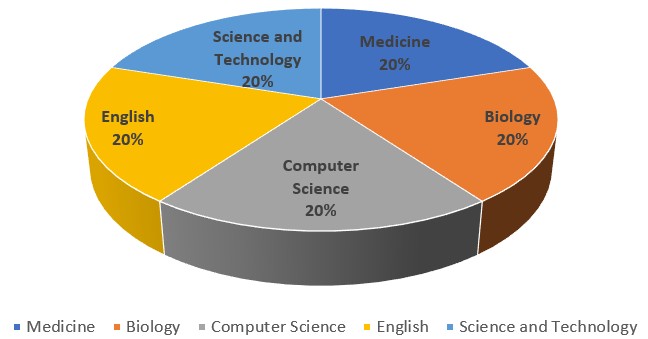
The equal representation of the five departments provides a balanced basis for describing the overall perceptions of AI-powered mobile applications among students from different disciplinary contexts.
Question 2: Age Distribution
The age distribution of the participants indicates that the majority of the 75 respondents were relatively young university students. As shown in Table 1, 42 participants (56%) were aged between 18 and 20 years, making this the largest age group. This was followed by 27 participants (36%) aged 21–23 years. A smaller proportion of the sample consisted of students aged 24–26, with 4 participants (5.3%), while only 2 participants (2.7%) were aged 27 or above.
Overall, 69 participants (92%) were between 18 and 23 years old, indicating that the sample was predominantly composed of young adults in the early stages of university education.
Table 1
Age distribution of the participants
| Age group | Frequency | Percentage |
| 18–20 | 42 | 56.0% |
| 21–23 | 27 | 36.0% |
| 24–26 | 4 | 5.3% |
| 27 or above | 2 | 2.7% |
| Total | 75 | 100% |
The predominance of participants aged 18–23 is also relevant to the study because this age group is generally familiar with smartphone-based technologies and may have greater exposure to emerging AI-powered applications in their academic and personal learning practices.
Question 3: Frequency of AI-Powered Application Use
The results reveal a very high frequency of AI-powered application use among the participants. As shown in Table 2, 70 students (93.3%) reported using AI-powered applications on their smartphones daily, whereas 5 students (6.7%) reported using them several times a week. No participants reported using AI applications once a week, occasionally, or rarely. Thus, all 75 participants (100%) use AI-powered applications at least several times a week, indicating a remarkably high level of engagement with AI technologies among the students surveyed.
Table 2
Frequency of AI-Powered Application Use among Participants
| Frequency of use | Frequency | Percentage |
| Daily | 70 | 93.3% |
| Several times a week | 5 | 6.7% |
| Once a week | 0 | 0% |
| Occasionally | 0 | 0% |
| Rarely | 0 | 0% |
| Total | 75 | 100% |
The findings suggest that AI-powered applications are already highly integrated into the participants’ everyday digital practices. This high level of exposure is particularly relevant to the present study, as frequent interaction with AI tools may provide students with greater opportunities to explore their potential for English language and speaking development.
Question 4: AI-Powered Applications Used by Participants
Question 4 asked participants which AI-powered applications they used to learn English and improve their speaking skills. The answers helped identify the applications most commonly used by the participants and provided useful information about their use of AI for English speaking practice. Participants reported using a variety of AI-powered applications to support their English speaking development, including ChatGPT, Google Gemini, Duolingo, ELSA Speak, Speak, and TalkPal. Among these, ChatGPT, Google Gemini, and Duolingo were mentioned by all participants, making them the most commonly used tools in the sample. Students reported using these applications in different ways, particularly to practise speaking, improve pronunciation, learn new vocabulary and expressions, simulate real-life speaking situations, practise spontaneous responses, and receive immediate feedback and correction. The other applications, including ELSA Speak, Speak, and TalkPal, were mentioned by some students and were also used to support speaking practice. Overall, the responses indicate that students use both general-purpose AI tools and language-learning applications as accessible and flexible resources for practising and improving their English speaking skills.
4.2. Section 2: Perceived Benefits of AI-Powered Mobile Applications for English Speaking Development
Table 3
Characteristics of included studies
| Dimension | Statement | Department | Strongly Disagree | Disagree | Neutral | Agree | Strongly Agree |
| Opportunities for Speaking Practice | AI-powered applications enable me to engage in spoken English practice outside the classroom setting. | Medicine | 0 | 0 | 0 | 13 | 2 |
| Biology | 0 | 0 | 0 | 14 | 1 | ||
| C S | 0 | 0 | 0 | 13 | 2 | ||
| ST | 0 | 0 | 0 | 15 | 0 | ||
| English | 0 | 0 | 0 | 14 | 1 | ||
| Total (N=75) | 0 (0%) | 0 (0%) | 0 (0%) | 69 (92.0%) | 6 (8.0%) | ||
| Using AI applications motivates me to increase the frequency of my English-speaking practice. | Medicine | 0 | 0 | 0 | 13 | 2 | |
| Biology | 0 | 1 | 0 | 10 | 4 | ||
| C S | 0 | 0 | 3 | 11 | 1 | ||
| ST | 0 | 0 | 4 | 10 | 1 | ||
| English | 0 | 0 | 2 | 11 | 2 | ||
| Total (N=75) | 0 (0%) | 1 (1.3%) | 9 (12.0%) | 55 (73.3%) | 10 (13.3%) | ||
| Pronunciation and Fluency Development | AI-supported speaking practice helps me to increase my awareness and notice and correct aspects of my English pronunciation. | Medicine | 0 | 1 | 1 | 10 | 3 |
| Biology | 0 | 1 | 1 | 13 | 0 | ||
| C S | 0 | 0 | 2 | 11 | 2 | ||
| ST | 0 | 0 | 2 | 11 | 2 | ||
| English | 0 | 0 | 4 | 9 | 2 | ||
| Total (N=75) | 0 (0%) | 2 (2.7%) | 10 (13.3%) | 54 (72.0%) | 9 (12.0%) | ||
| Frequent interaction with AI applications helps me communicate my ideas in English more naturally and fluently. | Medicine | 0 | 1 | 2 | 12 | 0 | |
| Biology | 0 | 0 | 3 | 11 | 1 | ||
| C S | 0 | 0 | 1 | 12 | 2 | ||
| ST | 0 | 1 | 3 | 10 | 1 | ||
| English | 0 | 0 | 0 | 15 | 0 | ||
| Total (N=75) | 0 (0%) | 2 (2.7%) | 9 (12.0%) | 60 (80%) | 4 (5.3%) | ||
| Vocabulary and Oral Expression | AI-supported conversations expose me to new vocabulary and expressions that I can incorporate into my spoken English. | Medicine | 0 | 0 | 1 | 7 | 7 |
| Biology | 0 | 0 | 0 | 8 | 7 | ||
| C S | 0 | 0 | 0 | 10 | 5 | ||
| ST | 0 | 0 | 0 | 11 | 4 | ||
| English | 0 | 0 | 0 | 9 | 6 | ||
| Total (N=75) | 0 (0%) | 0 (0%) | 1 (1.3%) | 45 (60.0%) | 29 (38.7%) | ||
| AI applications help me select more suitable words and expressions when communicating my ideas in English. | Medicine | 0 | 0 | 0 | 13 | 2 | |
| Biology | 0 | 1 | 0 | 10 | 4 | ||
| C S | 0 | 0 | 3 | 11 | 1 | ||
| ST | 0 | 0 | 4 | 10 | 1 | ||
| English | 0 | 1 | 1 | 7 | 6 | ||
| Total (N=75) | 0 (0%) | 2 (2.7%) | 8 (10.7%) | 51 (68.0%) | 14 (18.7%) | ||
| Interactive Speaking Engagement | AI applications provide opportunities to engage in simulated English-speaking situations that reflect a variety of communicative contexts. | Medicine | 0 | 0 | 0 | 15 | 0 |
| Biology | 0 | 0 | 0 | 15 | 0 | ||
| C S | 0 | 0 | 1 | 13 | 1 | ||
| ST | 0 | 0 | 0 | 15 | 0 | ||
| English | 0 | 0 | 0 | 14 | 1 | ||
| Total (N=75) | 0 (0%) | 0 (0%) | 1 (1.3%) | 72 (96.0%) | 2 (2.7%) | ||
| Interacting with AI encourages me to formulate spontaneous responses instead of relying mainly on memorised English sentences. | Medicine | 0 | 0 | 2 | 11 | 2 | |
| Biology | 0 | 0 | 0 | 13 | 2 | ||
| C S | 0 | 0 | 1 | 13 | 1 | ||
| ST | 0 | 0 | 0 | 14 | 1 | ||
| English | 0 | 0 | 0 | 15 | 0 | ||
| Total (N=75) | 0 (0%) | 0 (0%) | 3 (4.0%) | 66 (88.0%) | 6 (8.0%) | ||
| Confidence in Oral Communication | Practising spoken English through AI applications increases my willingness to communicate my ideas orally. | Medicine | 0 | 0 | 2 | 6 | 7 |
| Biology | 0 | 0 | 0 | 8 | 7 | ||
| C S | 0 | 0 | 1 | 8 | 6 | ||
| ST | 0 | 0 | 0 | 7 | 8 | ||
| English | 0 | 0 | 0 | 9 | 6 | ||
| Total (N=75) | 0 (0%) | 0 (0%) | 3 (4.0%) | 38 (50.7%) | 34 (45.3%) | ||
| AI-supported speaking activities enhance my readiness to use English in everyday communicative situations. | Medicine | 0 | 0 | 0 | 10 | 5 | |
| Biology | 0 | 0 | 1 | 9 | 5 | ||
| C S | 0 | 0 | 3 | 8 | 4 | ||
| ST | 0 | 0 | 2 | 8 | 5 | ||
| English | 0 | 0 | 0 | 10 | 5 | ||
| Total (N=75) | 0 (0%) | 0 (0%) | 6 (8.0%) | 45 (60.0%) | 24 (32.0%) | ||
| Self-Directed Speaking Practice | AI applications give me the flexibility to practise speaking English at times that suit my learning routine. | Medicine | 0 | 0 | 1 | 8 | 6 |
| Biology | 0 | 0 | 1 | 10 | 4 | ||
| C S | 0 | 0 | 1 | 9 | 5 | ||
| ST | 0 | 0 | 0 | 11 | 4 | ||
| English | 0 | 0 | 0 | 9 | 6 | ||
| Total (N=75) | 0 (0%) | 0 (0%) | 3 (4.0%) | 47 (62.7%) | 25 (33.3%) | ||
| AI applications enable me to direct my speaking practice towards the aspects of English that I need to develop. | Medicine | 0 | 0 | 1 | 3 | 11 | |
| Biology | 0 | 0 | 0 | 0 | 15 | ||
| C S | 0 | 0 | 0 | 0 | 15 | ||
| ST | 0 | 0 | 0 | 4 | 11 | ||
| English | 0 | 0 | 1 | 1 | 13 | ||
| Total (N=75) | 0 (0%) | 0 (0%) | 2 (2.7%) | 8 (10.7%) | 65 (86.7%) | ||
| Overall English Speaking Development | Using AI-powered applications has influenced the way I approach and practise spoken English. | Medicine | 0 | 0 | 0 | 12 | 3 |
| Biology | 0 | 0 | 0 | 13 | 2 | ||
| C S | 0 | 0 | 1 | 10 | 4 | ||
| ST | 0 | 0 | 0 | 11 | 4 | ||
| English | 0 | 0 | 0 | 10 | 5 | ||
| Total (N=75) | 0 (0%) | 0 (0%) | 1 (1.3%) | 56 (74.7%) | 18 (24.0%) | ||
| I view AI-powered mobile applications as a valuable addition to my efforts to develop my English speaking skills. | Medicine | 0 | 0 | 0 | 13 | 2 | |
| Biology | 0 | 0 | 2 | 12 | 1 | ||
| C S | 0 | 0 | 0 | 14 | 1 | ||
| ST | 0 | 0 | 0 | 11 | 4 | ||
| English | 0 | 0 | 0 | 11 | 4 | ||
| Total (N=75) | 0 (0%) | 0 (0%) | 2 (2.7%) | 61 (81.3%) | 12 (16%) |
The results show that students from the five departments—Medicine, Biology, Computer Science, Science and Technology, and English—generally held positive perceptions of AI-powered mobile applications for English speaking practice. Each department was represented by 15 students (N = 75). Across the seven dimensions, responses were mainly concentrated in the Agree and Strongly Agree categories, with very few negative responses. The strongest perceptions concerned opportunities for speaking practice, vocabulary development, interactive speaking, confidence, and self-directed learning.
Students particularly valued the flexibility and accessibility of AI applications. All participants (100%) agreed or strongly agreed that AI enabled them to practise spoken English outside the classroom, while 96.0% agreed or strongly agreed that AI provided flexibility in choosing when to practise. Similarly, 97.3% agreed or strongly agreed that AI allowed them to focus on areas they needed to improve. These results suggest that students appreciated the opportunity to practise independently and beyond regular classroom activities.
Positive responses were also found for vocabulary, interaction, and confidence. Almost all students (98.7%) agreed or strongly agreed that AI conversations exposed them to new vocabulary and expressions, while 98.7% agreed or strongly agreed that AI provided opportunities to practise simulated speaking situations. In addition, 96.0% agreed or strongly agreed that AI increased their willingness to communicate in English. These findings indicate that students perceived AI as useful for providing additional opportunities to use English and develop oral communication.
Perceptions of pronunciation and fluency were also positive, although slightly less strong than those for other areas. Overall, 84.0% agreed or strongly agreed that AI helped them become more aware of their pronunciation, while 85.3% agreed or strongly agreed that frequent interaction with AI helped them communicate more naturally and fluently. The relatively higher proportion of neutral responses on these items suggests that students were somewhat less certain about AI’s contribution to pronunciation and fluency than to other areas of speaking practice.
Overall, the findings indicate that students viewed AI-powered mobile applications as a useful supplementary resource for English speaking practice. However, these results reflect students’ perceptions rather than direct measures of speaking proficiency. The high levels of agreement should therefore be interpreted cautiously, particularly given the ceiling effects observed across several items.
4.3. Section 3: Perceived Challenges and Limitations of AI-Powered Mobile Applications for English Speaking Development
Table 4
Challenges of AI Applications in Speaking Development
| Dimension | Statement | Department | Strongly Disagree | Disagree | Neutral | Agree | Strongly Agree |
| Accuracy and Linguistic Constraints | AI applications do not always detect the pronunciation errors that I make when speaking English. | Medicine | 0 | 1 | 2 | 9 | 3 |
| Biology | 0 | 2 | 2 | 8 | 3 | ||
| Computer Science | 0 | 2 | 3 | 8 | 2 | ||
| Science and Technology | 0 | 2 | 2 | 8 | 3 | ||
| English | 0 | 2 | 2 | 9 | 2 | ||
| Total (N=75) | 0 (0.0%) | 9 (12.0%) | 11 (14.7%) | 42 (56.0%) | 13 (17.3%) | ||
| The language suggestions provided by AI may not always match the difficulties I face when expressing myself in English. | Medicine | 0 | 0 | 2 | 11 | 2 | |
| Biology | 0 | 0 | 2 | 11 | 2 | ||
| Computer Science | 0 | 0 | 2 | 11 | 2 | ||
| Science and Technology | 0 | 0 | 2 | 11 | 2 | ||
| English | 0 | 0 | 1 | 10 | 4 | ||
| Total (N=75) | 0 (0.0%) | 0 (0.0%) | 9 (12.0%) | 54 (72.0%) | 12 (16.0%) | ||
| Authenticity of AI-Mediated Communication | Speaking with AI can feel different from having a natural conversation with another person. | Medicine | 0 | 3 | 1 | 6 | 5 |
| Biology | 0 | 3 | 2 | 6 | 4 | ||
| Computer Science | 0 | 3 | 1 | 6 | 5 | ||
| Science and Technology | 0 | 3 | 2 | 6 | 4 | ||
| English | 0 | 3 | 1 | 6 | 5 | ||
| Total (N=75) | 0 (0.0%) | 15 (20.0%) | 7 (9.3%) | 30 (40.0%) | 23 (30.7%) | ||
| AI practice may not prepare me well for unexpected questions or responses in real conversations. | Medicine | 0 | 5 | 2 | 6 | 2 | |
| Biology | 0 | 5 | 2 | 6 | 2 | ||
| Computer Science | 1 | 5 | 2 | 5 | 2 | ||
| Science and Technology | 1 | 5 | 3 | 6 | 0 | ||
| English | 0 | 5 | 2 | 6 | 2 | ||
| Total (N=75) | 2 (2.7%) | 25 (33.3%) | 11 (14.7%) | 29 (38.7%) | 8 (10.7%) | ||
| AI Dependence and Learner Autonomy | Using AI too often for speaking practice may make it harder for me to speak English on my own. | Medicine | 2 | 4 | 2 | 3 | 4 |
| Biology | 2 | 4 | 2 | 3 | 4 | ||
| Computer Science | 3 | 4 | 1 | 3 | 4 | ||
| Science and Technology | 3 | 4 | 2 | 3 | 3 | ||
| English | 2 | 4 | 1 | 3 | 5 | ||
| Total (N=75) | 12 (16.0%) | 20 (26.7%) | 8 (10.7%) | 15 (20.0%) | 20 (26.7%) | ||
| I may rely on AI too much instead of trying to develop my own ways of communicating in English. | Medicine | 0 | 4 | 2 | 7 | 2 | |
| Biology | 0 | 4 | 2 | 7 | 2 | ||
| Computer Science | 1 | 4 | 2 | 7 | 1 | ||
| Science and Technology | 1 | 4 | 2 | 7 | 1 | ||
| English | 0 | 4 | 2 | 7 | 2 | ||
| Total (N=75) | 2 (2.7%) | 20 (26.7%) | 10 (13.3%) | 35 (46.7%) | 8 (10.7%) | ||
| Technical Accessibility and Engagement | Poor internet connection or technical problems can prevent me from practising English with AI applications. | Medicine | 0 | 0 | 0 | 8 | 7 |
| Biology | 0 | 0 | 0 | 8 | 7 | ||
| Computer Science | 0 | 0 | 0 | 8 | 7 | ||
| Science and Technology | 0 | 0 | 0 | 8 | 7 | ||
| English | 0 | 0 | 0 | 8 | 7 | ||
| Total (N=75) | 0 (0.0%) | 0 (0.0%) | 0 (0.0%) | 40 (53.3%) | 35 (46.7%) | ||
| I may find AI speaking activities less interesting than practising English with other people. | Medicine | 4 | 9 | 2 | 0 | 0 | |
| Biology | 4 | 9 | 2 | 0 | 0 | ||
| Computer Science | 4 | 10 | 1 | 0 | 0 | ||
| Science and Technology | 3 | 10 | 2 | 0 | 0 | ||
| English | 3 | 10 | 2 | 0 | 0 | ||
| Total (N=75) | 18 (24.0%) | 48 (64.0%) | 9 (12.0%) | 0 (0.0%) | 0 (0.0%) | ||
| Overall Constraints | AI applications cannot solve all the problems I may have when learning to speak English. | Medicine | 0 | 3 | 1 | 9 | 2 |
| Biology | 0 | 3 | 0 | 9 | 3 | ||
| Computer Science | 0 | 3 | 0 | 9 | 3 | ||
| Science and Technology | 0 | 2 | 0 | 9 | 4 | ||
| English | 0 | 2 | 1 | 9 | 3 | ||
| Total (N=75) | 0 (0.0%) | 13 (17.3%) | 2 (2.7%) | 45 (60.0%) | 15 (20.0%) | ||
| I still need opportunities to speak with real people even when I use AI applications for speaking practice. | Medicine | 0 | 0 | 0 | 1 | 14 | |
| Biology | 0 | 0 | 0 | 2 | 13 | ||
| Computer Science | 0 | 0 | 0 | 2 | 13 | ||
| Science and Technology | 0 | 0 | 0 | 2 | 13 | ||
| English | 0 | 0 | 0 | 2 | 13 | ||
| Total (N=75) | 0 (0.0%) | 0 (0.0%) | 0 (0.0%) | 9 (12.0%) | 66 (88.0%) |
The results also revealed several limitations associated with the use of AI-powered applications for English speaking practice. These included concerns about feedback accuracy, the naturalness of AI-mediated communication, possible overreliance on AI, technical problems, and the continuing need for human interaction.
Regarding accuracy, 73.3% of participants agreed or strongly agreed that AI does not always detect their pronunciation errors, while 88.0% reported that AI-generated language suggestions may not always match their individual difficulties. In addition, 70.7% felt that speaking with AI can differ from natural human conversation. Responses were more divided on whether AI can prepare students for unexpected questions in real conversations, with 49.4% agreeing or strongly agreeing and 36.0% disagreeing or strongly disagreeing.
Concerns about dependence were also present, although responses were more mixed. Nearly half of the participants (46.7%) agreed or strongly agreed that excessive AI use could make independent speaking more difficult, while 57.4% expressed concern about relying too much on AI. Technical problems were a clearer concern, with all participants (100%) agreeing or strongly agreeing that poor internet connections or technical difficulties could affect their ability to practise with AI.
Finally, students clearly recognized the importance of human interaction. Although 88.0% disagreed or strongly disagreed that AI activities were less interesting than practising with people, all participants agreed that they still needed opportunities to speak with real people. Overall, the findings suggest that students view AI as a useful supplementary tool, while recognizing its limitations in pronunciation feedback, authentic communication, independent speaking, and technical accessibility.
4.4. Section 4: Overall Perceptions of AI-Powered Mobile Applications
Table 5
Students’ Views on AI Applications
| Dimension | Statement | Department | Strongly Disagree | Disagree | Neutral | Agree | Strongly Agree |
| Perceived Value | I think AI-powered mobile applications are useful and a worthwhile resource for improving my English speaking skills. | Medicine | 0 | 0 | 0 | 4 | 11 |
| Biology | 0 | 0 | 0 | 5 | 10 | ||
| Computer Science | 0 | 0 | 0 | 5 | 10 | ||
| Science and Technology | 0 | 0 | 0 | 4 | 11 | ||
| English | 0 | 0 | 0 | 5 | 10 | ||
| Total (N=75) | 0 (0.0%) | 0 (0.0%) | 0 (0.0%) | 23 (30.7%) | 52 (69.3%) | ||
| Recommendation | I would recommend AI applications to other university students for practising English speaking. | Medicine | 0 | 0 | 0 | 2 | 13 |
| Biology | 0 | 0 | 0 | 2 | 13 | ||
| Computer Science | 0 | 0 | 0 | 2 | 13 | ||
| Science and Technology | 0 | 0 | 0 | 2 | 13 | ||
| English | 0 | 0 | 0 | 2 | 13 | ||
| Total (N=75) | 0 (0.0%) | 0 (0.0%) | 0 (0.0%) | 10 (13.3%) | 65 (86.7%) | ||
| Use in University Learning | I think AI-powered mobile applications should be used to support English learning at university. | Medicine | 0 | 0 | 0 | 1 | 14 |
| Biology | 0 | 0 | 0 | 1 | 14 | ||
| Computer Science | 0 | 0 | 0 | 1 | 14 | ||
| Science and Technology | 0 | 0 | 0 | 1 | 14 | ||
| English | 0 | 0 | 0 | 0 | 15 | ||
| Total (N=75) | 0 (0.0%) | 0 (0.0%) | 0 (0.0%) | 4 (5.3%) | 71 (94.7%) | ||
| Future Use | I plan to continue using AI-powered applications to improve my English speaking skills. | Medicine | 0 | 0 | 0 | 0 | 15 |
| Biology | 0 | 0 | 0 | 0 | 15 | ||
| Computer Science | 0 | 0 | 0 | 0 | 15 | ||
| Science and Technology | 0 | 0 | 0 | 0 | 15 | ||
| English | 0 | 0 | 0 | 0 | 15 | ||
| Total (N=75) | 0 (0.0%) | 0 (0.0%) | 0 (0.0%) | 0 (0.0%) | 75 (100.0%) |
The findings presented in Section 4 show a highly positive overall perception of AI-powered mobile applications among the 75 participants. All participants agreed or strongly agreed that AI applications are useful for improving English speaking skills, would recommend them to other university students, and support their use in university English learning. In addition, all participants strongly agreed that they intended to continue using AI applications for speaking practice. These results indicate strong acceptance of AI as a supplementary resource for English speaking development. However, the complete or near-complete agreement across all four statements also indicates a ceiling effect, so these results should be interpreted cautiously as evidence of students’ positive perceptions rather than direct evidence of AI effectiveness.
4.5. Section 5 : Open-ended questions
Table 6
Emerging Themes Regarding AI Applications and English Speaking Development
| Question | Emerging Themes | Some Participants’ Quotations |
| Q1. How does practising English speaking with AI applications differ from practising with a teacher, classmates, or other people? | Flexibility and Accessibility | “I can use AI anytime.” “I can practice at home when I have time.” |
| Reduced Anxiety and Greater Comfort | “I feel less afraid when I speak with AI.” “I am not shy when I make mistakes.” | |
| Individualized and Repeated Practice | “I can practice many times.” “I can practice what I need.” | |
| Immediate Feedback and Correction | “AI corrects my mistakes quickly.” “I can know my mistakes directly.” | |
| Naturalness of Human Interaction | “Speaking with people is more natural.” “Talking with my teacher feels more real.” | |
| Spontaneity of Human Communication | “People can ask me different questions.” “I need to think quickly when I speak with people.” | |
| Q2. How effectively do AI applications meet your English speaking development needs when complemented by interaction with human speakers? | Meeting Individual Speaking Needs | “AI helps me with my weak points.” “I can practice the things I need.” |
| Providing Additional Speaking Practice | “AI gives me more time to speak.” “I can practice when I have no partner.” | |
| Improving Speaking Confidence and Fluency | “AI helps me speak with more confidence.” “I can speak better after more practice.” | |
| Supporting Human Communication | “AI helps me before I speak with people.” “It helps me, but I still need real people.” | |
| Combining AI Practice with Real-Life Interaction | “We need AI and real speaking.” “AI is good, but we need to speak with people too.” | |
| Q3. What suggestions would you give to university students or teachers regarding the effective use of AI applications for developing English speaking skills? | Students: Regular and Responsible Use of AI | “Students should use AI regularly.” “We should not depend too much on AI.” |
| Students: Combining AI with Human Interaction | “We should use AI and speak with people too.” “AI cannot replace real communication.” | |
| Students: Checking AI Feedback | “We should check AI corrections.” “Sometimes AI can make mistakes.” | |
| Students: Individualized Use of AI | “Each student can use AI for his needs.” “I use AI for the things I need to improve.” | |
| Students: Regular Speaking Practice | “Students should practice every day.” “We need to practice speaking often.” | |
| Teachers: Integrating AI into English Teaching | “Teachers can use AI in English classes.” “AI can give us more speaking activities.” | |
| Teachers: Guiding Students in Using AI | “Teachers should show us how to use AI.” “Teachers can help us choose good AI applications.” | |
| Teachers: Combining AI with Classroom Interaction | “Teachers can use AI and then let us speak together.” “We should use AI and speak with classmates.” | |
| Teachers: Monitoring AI-Based Activities | “Teachers should check our AI work.” “Teachers should see if we really practice.” | |
| Teachers: Promoting Responsible AI Use | “Teachers should tell students how to use AI well.” “Students should use AI for help, not for everything.” |
Q1. Differences between AI-based and human speaking practice
The responses indicate that students perceive AI-based speaking practice as more flexible and accessible, allowing them to practise at their own time and pace. They also associate AI practice with greater comfort and reduced anxiety, as students may feel less pressure when making mistakes. AI further provides opportunities for individualized and repeated practice, enabling learners to focus on their specific needs and repeat activities as necessary. Another perceived advantage is immediate feedback and correction, particularly during pronunciation and language practice. However, students also recognize clear advantages of human interaction. Speaking with teachers, classmates, and other people is perceived as more natural and spontaneous, offering unpredictable exchanges and interpersonal elements that AI cannot fully reproduce. Thus, AI appears to offer greater convenience and individualized practice, whereas human interaction provides a more authentic communicative experience.
Q2. Effectiveness of AI when combined with human interaction
The responses suggest that AI applications can effectively support students’ English speaking development when used alongside interaction with human speakers. AI can help students address their individual speaking needs and provide additional opportunities for oral practice beyond regular classroom interaction. This additional practice may contribute to greater confidence and fluency. At the same time, students recognize that AI works most effectively when it supports rather than replaces communication with real people. Combining AI practice with real-life interaction allows students to benefit from the accessibility and practice opportunities offered by AI while maintaining authentic communication with teachers, classmates, and other speakers.
Q3. Suggestions for students and teachers
The responses provide several recommendations for the effective use of AI applications. For students, the responses emphasize the importance of regular and responsible use, combined with opportunities to communicate with real people. Students are also encouraged to check and evaluate AI feedback rather than accepting every correction automatically. In addition, AI should be used according to individual speaking needs and accompanied by regular speaking practice.
For teachers, the responses emphasize the value of integrating AI into English teaching while maintaining classroom interaction. Teachers are encouraged to guide students in using AI effectively, select appropriate activities, and combine AI-supported tasks with communicative classroom activities. They should also monitor AI-based activities and promote responsible use so that AI serves as a learning support rather than a replacement for teacher guidance and human communication.
5. Discussion
The findings of this study show that students generally had a positive view of AI-powered mobile applications as tools for developing their English speaking skills. Many students reported using these applications regularly and considered them useful for practising English. One possible reason for this positive perception is the flexibility that mobile applications offer. Students can practise when and where they want, without having to wait for a class or find someone to practise with. This was particularly important in the present study, as students appreciated having opportunities to practise speaking outside the classroom. A similar finding was reported by Ericsson and Johansson (2023), who found that conversational AI gave learners additional opportunities to practise English speaking and allowed them to engage in spoken interaction in a relatively low-pressure environment. This suggests that the accessibility and flexibility of AI applications may be important factors in students’ willingness to use them for speaking practice.
The students also placed considerable value on having more opportunities to practise speaking. They reported that AI applications allowed them to practise repeatedly and at their own pace. This is particularly useful for students who may not have many opportunities to speak English during regular classes. The findings are in line with Ericsson and Johansson (2023), who found that conversational AI could provide additional opportunities for sustained speaking practice. More recently, Al-khresheh and Alruwaili (2026) reported positive speaking outcomes among Saudi EFL students who participated in ChatGPT-supported speaking activities. Their study suggests that AI can be useful when it is incorporated into structured speaking activities alongside classroom instruction. Although the present study did not measure students’ speaking performance directly, the participants’ responses show that they clearly value AI for giving them more chances to practise.
Another important finding was the positive perception of AI in relation to students’ confidence in speaking English. The students seemed to appreciate being able to practise without the pressure they might feel when speaking in front of teachers or classmates. They could repeat an activity, make mistakes, and try again without feeling embarrassed. This may help explain why many students reported greater confidence when using AI for speaking practice. Similar findings have been reported by Tai (2024), who found that interaction with an intelligent personal assistant could support learners’ willingness to communicate and speaking confidence. Yildiz (2024) also found positive changes in EFL learners’ speaking self-efficacy following ChatGPT-supported communicative activities. In addition, Celik et al. (2025) reported that students who used ChatGPT as a virtual speaking tutor appreciated the opportunity to practise in a supportive environment. These findings are similar to those of the present study and suggest that the possibility of practising repeatedly and with less immediate social pressure may contribute to learners’ confidence. However, in the current study, confidence was based on students’ own perceptions and was not measured through a separate speaking-confidence scale or performance test.
The results concerning vocabulary and oral expression were also encouraging. Students felt that AI applications helped them develop their vocabulary and express their ideas more easily. This may be because AI can provide alternative words and expressions during interaction and respond immediately to students’ questions or attempts to communicate. The present finding is consistent with Al-khresheh and Alruwaili (2026), who reported positive effects of ChatGPT-supported speaking practice on different aspects of students’ oral performance. Celik et al. (2025) similarly found that learners valued the feedback and individualized practice provided by ChatGPT. These findings suggest that students may benefit from using AI not only to practise speaking itself but also to explore different ways of expressing their ideas in English.
Students also viewed AI positively in relation to pronunciation and fluency, although their responses in these areas were somewhat less consistent. This difference is worth noting. While students may find AI useful for practising pronunciation and fluency, they may also be aware that automated feedback is not always completely reliable. This concern is important because pronunciation feedback depends on the ability of the application to recognize and evaluate spoken language accurately. Al-khresheh and Alruwaili (2026) reported positive effects of guided ChatGPT-supported speaking practice on students’ oral performance, including fluency-related aspects. However, the more cautious responses in the present study suggest that students may still prefer to have human feedback when they need to confirm whether their pronunciation or spoken production is accurate. AI can therefore provide useful additional practice, but it may not always be sufficient on its own.
Learner autonomy was another positive aspect that emerged from the findings. Students appreciated being able to choose when to practise, how often to practise, and which areas of speaking they wanted to work on. In this sense, AI applications give students more control over their learning. This finding is similar to the observations of Ericsson and Johansson (2023), who found that conversational AI could provide learners with individualized opportunities for speaking practice. Celik et al. (2025) also reported that learners appreciated being able to use ChatGPT according to their own learning needs. However, the present study also revealed a possible problem with this increased independence. Some students were concerned that relying too much on AI could make them dependent on automated suggestions. This is an important point because autonomy does not simply mean using technology independently; it also means being able to make decisions and communicate without depending completely on technological support.
One of the clearest findings in the study was that students did not see AI as a replacement for human communication. Although they appreciated practising with AI, they still considered interaction with real people necessary for developing English speaking skills. Students recognized that conversations with human speakers involve spontaneous responses, emotions, unexpected situations, and interpersonal relationships that an AI application cannot fully reproduce. This finding is particularly interesting because it shows that students’ positive attitudes towards AI do not mean that they consider human interaction unnecessary. This is similar to the findings of Tai (2024), who examined both intelligent personal assistant–human interaction and human–human interaction. The study showed that AI could support learners’ willingness to communicate, but human interaction remained a distinct form of communication. The present participants seem to have reached a similar understanding: AI can help them prepare and practise, but it cannot completely replace real conversations with other people.
This point is also reflected in the study by Al-khresheh and Alruwaili (2026), where ChatGPT-supported activities were used together with classroom speaking activities rather than as a replacement for them. Their approach suggests that AI can work alongside teachers and classroom interaction. This is also consistent with the participants in the present study, who viewed AI mainly as a complementary resource. In other words, students appear to see the greatest value of AI when it gives them additional opportunities to practise between or alongside their interactions with teachers and other learners.
Technical problems were the main practical limitation reported by the students. Internet connectivity and other technical difficulties could interrupt their speaking practice and make it difficult to use AI consistently. This finding is important because even when students are interested in using AI, they still need reliable access to the necessary technology. In the present study, students generally did not describe AI activities as boring or uninteresting. Instead, technical access was a more noticeable problem. This suggests that the successful use of AI in higher education depends not only on students’ attitudes towards the technology but also on the conditions in which they use it.
Taken together, the findings suggest that students see AI-powered mobile applications as useful additional tools for English speaking practice. They value these applications because they provide more opportunities to practise, allow repeated practice, support vocabulary and oral expression, and give learners greater flexibility and control over their learning. These findings are broadly similar to those reported by Ericsson and Johansson (2023), Tai (2024), Yildiz (2024), Celik et al. (2025), and Al-khresheh and Alruwaili (2026). At the same time, the present study highlights several concerns, particularly the reliability of pronunciation feedback, possible dependence on AI, technical difficulties, and the need for real human interaction.
The results show that students from all five departments had generally positive views of AI-powered mobile applications for English speaking practice. English students showed slightly higher positive responses on some items, but the differences between departments were small. Students from Medicine, Biology, Computer Science, and Science and Technology also reported that AI applications were useful for practicing English speaking. This suggests that the usefulness of AI was not limited to English students and could also support students from scientific and technical fields. However, students from all departments also reported some limitations, such as problems with pronunciation feedback, differences between AI conversations and real human conversations, possible overuse of AI, and the need for communication with real people. Therefore, the results suggest that students generally see AI as a useful additional tool for English speaking practice, rather than a replacement for human interaction.
The very high levels of agreement should be interpreted with some caution. Although the responses suggest that students generally viewed AI-powered applications positively, the high concentration of responses in the “agree” and “strongly agree” categories may indicate a ceiling effect. The results are based on students’ self-reported perceptions and therefore do not directly demonstrate improvement in speaking proficiency. The responses may also have been influenced by factors such as students’ enthusiasm toward new AI technologies, social desirability, or the context in which the questionnaire was administered. Therefore, the findings are better understood as evidence of students’ positive perceptions of AI-supported speaking practice rather than as direct evidence of its effectiveness.
The highly positive response pattern may also reflect the increasing familiarity and use of AI-powered tools among university students. In the Algerian higher education context, students may already be using AI applications on their mobile devices for learning, communication, and other academic purposes. This familiarity may have contributed to their positive perceptions of AI-supported English speaking practice. However, this interpretation should be treated cautiously because the present study did not directly measure the extent of AI use among Algerian university students beyond the reported patterns of use among the participants.
Overall, the findings suggest that students do not view AI as a replacement for teachers, classmates, or real communicative situations. Rather, they see it as a practical resource that can give them more chances to practise English. This may be especially valuable for university students who have limited opportunities to speak English outside the classroom. However, the findings should be interpreted carefully because the study focused on students’ perceptions and reported experiences rather than directly measuring changes in their speaking proficiency. The results therefore show that students perceive AI applications as useful for supporting their speaking development, but they do not by themselves demonstrate that AI use leads to measurable improvement in speaking proficiency. In the context of Algerian higher education, the findings support the use of AI as a complementary resource, while maintaining the important role of teachers, peers, and authentic human communication.
6. Limitations of the Study
This study has some limitations that should be considered when interpreting the findings. First, the study involved 75 students from only one university. Although students from five different disciplines were included, the findings may not fully represent the experiences of students in other Algerian universities. Second, the study was based mainly on students’ own perceptions and experiences. While many participants reported that AI applications helped them with pronunciation, vocabulary, fluency, and confidence, the study did not directly measure changes in their actual speaking ability. Another limitation is that students used different AI applications and may have used them in different ways and for different amounts of time. As a result, it is difficult to determine whether some applications or specific ways of using them were more beneficial than others. Finally, AI technology is developing very quickly, and the applications used by students may change over time. Therefore, the findings reflect students’ experiences during the period of the study and may not apply to future versions of these technologies. Future research could address these limitations by involving larger samples from different universities and by combining students’ perceptions with direct assessments of their speaking performance.
7. Conclusion
This study examined university students’ perceptions of AI-powered mobile applications for developing English speaking skills in Algerian higher education. The findings revealed an overwhelmingly positive perception of these applications. Students particularly valued AI for providing flexible and accessible speaking practice, supporting pronunciation and fluency, expanding vocabulary, increasing confidence, and allowing individualized practice beyond the classroom. At the same time, students recognized important limitations, including inaccuracies in AI feedback, technical problems, possible overreliance on AI, and differences between AI-mediated and natural human communication. Most importantly, all participants emphasized the continued need for interaction with real people. The qualitative findings similarly showed that students viewed AI as a useful additional resource rather than a replacement for teachers, classmates, or other speakers. Overall, the study suggests that AI-powered mobile applications can make a valuable contribution to English speaking development when used responsibly and in combination with authentic human interaction.
Declarations
Funding. None.
Conflict of interest. The authors declare that there is no conflict of interest.
Ethics approval and informed consent. The study complied with standard ethical research principles. As the questionnaire was anonymous and non-sensitive, formal ethical approval was not required. Participation was voluntary, with informed consent implied by completion and submission of the questionnaire.
Author contributions: The authors confirm responsibility for the conception, design, data collection, analysis, interpretation, and writing of the manuscript.
Use of AI Tools: Generative AI (ChatGPT, OpenAI) was used to assist in identifying relevant literature and in language editing and proofreading. All references were verified by the authors against the original sources, which were critically reviewed and analysed prior to inclusion in the manuscript. The authors take full responsibility for the content and integrity of the manuscript.
Originality Statement: The authors declare that the manuscript is original, has not been published previously, in whole or in part, and is not under consideration for publication elsewhere.
References
Al-khresheh, M.H., Alruwaili, S.F. Examining ChatGPT-supported speaking practice among Saudi EFL students: a quasi-experimental study. Humanit Soc Sci Commun 13, 1433 (2026). https://doi.org/10.1057/s41599-026-08106-x
Álvarez Martínez, J. A., Gómez, J. F., & Restrepo Botero, J. C. (2025). Mobile-assisted language learning (MALL) for improving English language teaching and learning in higher education: A systematic literature review. Knowledge Management & E-Learning, 17(2), 258–277. https://doi.org/10.34105/j.kmel.2025.17.012
Amara, N. (2025). Implementing English as a medium of instruction in Algerian higher education: Facts and challenges. Atras Journal, 6(1), 34–45. https://asjp.cerist.dz/en/article/262175
Benhamlaoui, M., & Benzadri, Z. (2024). Attitudes of Algerian university teachers and students towards English as a medium of instruction: A comparative analysis with Arabic and French. Akofena, 3(12), 261–276. https://doi.org/10.48734/akofena.n012.vol.3.23.2024
Boumaraf, A. (2019). Developing students’ oral performances through the use of authentic materials: The case of second year LMD students of English at Batna-2 University [Doctoral dissertation, Université de Batna 2].
Boumaraf, A. (2026). AI-assisted writing: A boon or a bane for EFL students? Afak for Sciences Journal, 11(3), 270–283. https://asjp.cerist.dz/en/article/293760
Burston, J. (2015). Twenty years of MALL project implementation: A meta-analysis of learning outcomes. ReCALL, 27(1), 4–20. https://doi.org/10.1017/S0958344014000159
Celik, B., Yildiz, Y., & Kara, S. (2025). Using ChatGPT as a virtual speaking tutor to boost EFL learners’ speaking self-efficacy. Australian Journal of Applied Linguistics, 8(1), Article 102418. https://doi.org/10.29140/ajal.v8n1.102418
Chen, Z., Chen, W., Jia, J., & An, H. (2020). The effects of using mobile devices on language learning: A meta-analysis. Educational Technology Research and Development, 68(4), 1769–1789. https://doi.org/10.1007/s11423-020-09801-5
Djebbari, H. (2024). Empowering educators with 21st century skills: Adopting English as a means of instruction in the Algerian universities. ALTRALANG Journal, 6(2), 312–322. https://doi.org/10.52919/altralang.v6i2.489
Du, J., & Daniel, B. K. (2024). Transforming language education: A systematic review of AI-powered chatbots for English as a foreign language speaking practice. Computers and Education: Artificial Intelligence, 6, Article 100230. https://doi.org/10.1016/j.caeai.2024.100230
Ericsson, E., & Johansson, S. (2023). English speaking practice with conversational AI: Lower secondary students’ educational experiences over time. Computers and Education: Artificial Intelligence, 5, Article 100164. https://doi.org/10.1016/j.caeai.2023.100164
Fryer, L. K., & Carpenter, R. (2006). Bots as language learning tools. Language Learning & Technology, 10(3), 8–14. https://doi.org/10.64152/10125/44068
Ghouali, K., & Haddam Bouabdallah, F. (2024). Englishisation of Algerian higher education through EMI: Expectations versus reality. Aleph, 11(4–2), 629–642. https://asjp.cerist.dz/en/article/256502
Goh, C. C. M., & Burns, A. (2012). Teaching speaking: A holistic approach. Cambridge University Press.
Haddaoui, S. (2026). Navigating AI-mediated English learning: Algerian EFL students’ perceptions and experiences with ChatGPT. Journal of Science and Knowledge Horizons, 6(2), 215–236. https://doi.org/10.34118/jskp.v6i2.4630
Horwitz, E. K., Horwitz, M. B., & Cope, J. (1986). Foreign language classroom anxiety. The Modern Language Journal, 70(2), 125–132. https://doi.org/10.1111/j.1540-4781.1986.tb05256.x
Huang, W., Hew, K. F., & Fryer, L. K. (2022). Chatbots for language learning—Are they really useful? A systematic review of chatbot-supported language learning. Journal of Computer Assisted Learning, 38(1), 237–257. https://doi.org/10.1111/jcal.12610
Jia, J. (2009). CSIEC: A computer assisted English learning chatbot based on textual knowledge and reasoning. Knowledge-Based Systems, 22(4), 249–255. https://doi.org/10.1016/j.knosys.2008.09.001
Jiang, M. Y. C., Jong, M. S. Y., Lau, W. W. F., Chai, C. S., & Wu, N. (2023). Effects of automatic speech recognition technology on EFL learners’ willingness to communicate and interactional features. Educational Technology & Society, 26(3), 37–52. https://doi.org/10.30191/ETS.202307_26(3).0004
Khenioui, N., & Boulkroun, M. (2023). Exploring the implementation of English-medium instruction in Algerian higher education: Motivations, challenges, and strategies for success. Afaq for Sciences, 8(5), 50–73. https://asjp.cerist.dz/en/article/234911
Kukulska-Hulme, A. (2020). Mobile-assisted language learning. In The concise encyclopedia of applied linguistics. Wiley.
Kukulska-Hulme, A., & Viberg, O. (2018). Mobile collaborative language learning: State of the art. British Journal of Educational Technology, 49(2), 207–218. https://doi.org/10.1111/bjet.12580
Lai, W. Y. W., & Lee, J. S. (2024). A systematic review of conversational AI tools in ELT: Publication trends, tools, research methods, learning outcomes, and antecedents. Computers and Education: Artificial Intelligence, 7, Article 100291. https://doi.org/10.1016/j.caeai.2024.100291
Larbaoui, M. (2026). The politics of language policy: English-medium instruction in Algerian higher education. Madarat Siyasiyya, 10(1), 29–43. https://asjp.cerist.dz/en/article/295391
Law, L. (2024). Application of generative artificial intelligence (GenAI) in language teaching and learning: A scoping literature review. Computers and Education Open, 6, Article 100174. https://doi.org/10.1016/j.caeo.2024.100174
Lo, C. K., Yu, P. L. H., Xu, S., Ng, D. T. K., & Jong, M. S. Y. (2024). Exploring the application of ChatGPT in ESL/EFL education and related research issues: A systematic review of empirical studies. Smart Learning Environments, 11(1), Article 50. https://doi.org/10.1186/s40561-024-00342-5
MacIntyre, P. D., Clément, R., Dörnyei, Z., & Noels, K. A. (1998). Conceptualizing willingness to communicate in a L2: A situational model of L2 confidence and affiliation. The Modern Language Journal, 82(4), 545–562. https://doi.org/10.1111/j.1540-4781.1998.tb05543.x
Metruk, R. (2024). Mobile-assisted language learning and pronunciation instruction: A systematic literature review. Education and Information Technologies, 29, 16255–16282. https://doi.org/10.1007/s10639-024-12453-0
Mingyan, M., Noordin, N., & Razali, A. B. (2025). Improving EFL speaking performance among undergraduate students with an AI-powered mobile app in after-class assignments: An empirical investigation. Humanities and Social Sciences Communications, 12, Article 370. https://doi.org/10.1057/s41599-025-04688-0
Mizab, M. (2024). Cross-linguistic influence of English on French: A study in primary schools of Tebessa, Algeria. Akofena, 1, 139–148. https://doi.org/10.48734/akofena.n012.vol.1.13.2024
Noh, Y. (2024). The impact of ChatGPT-assisted learning on English speaking proficiency of Korean university students. The New Studies of English Language & Literature, 89, 89–114. https://doi.org/10.21087/nsell.2024.11.89.89
Ouarniki, O. (2023). Exploring teachers’ perspectives on the implementation of English as a medium of instruction (EMI) in Algerian higher education institutions: Challenges and opportunities. Afaq for Sciences, 8(3), 176–192. https://doi.org/10.37167/1677-008-003-012
Rha, K. H. (2024). Exploring exploitability of ChatGPT as a learning platform for EFL college students’ speaking. Studies in Linguistics, 72, 199–223. https://doi.org/10.17002/sil..72.202407.199
Senouci, M., & Gacem, M. (2024). English as a medium of instruction in Algerian higher education: Issues and new avenues. Global Journal of Foreign Language Teaching, 14(3), 186–200. https://doi.org/10.18844/gjflt.v14i3.9261
Shadiev, R., Liu, T., & Hwang, W. Y. (2020). Review of research on mobile-assisted language learning in familiar, authentic environments. British Journal of Educational Technology, 51(3), 709–720. https://doi.org/10.1111/bjet.12839
Skehan, P. (2009). Modelling second language performance: Integrating complexity, accuracy, fluency, and lexis. Applied Linguistics, 30(4), 510–532. https://doi.org/10.1093/applin/amp047
Smutny, P., & Schreiberova, P. (2020). Chatbots for learning: A review of educational chatbots for the Facebook Messenger. Computers & Education, 151, Article 103862. https://doi.org/10.1016/j.compedu.2020.103862
Tai, T. Y. (2024). Comparing the effects of intelligent personal assistant-human and human-human interactions on EFL learners’ willingness to communicate beyond the classroom. Computers & Education, 210, Article 104965. https://doi.org/10.1016/j.compedu.2023.104965
Thornbury, S. (2005). How to teach speaking. Pearson Education.
Tseng, W. T., Chen, S., Wang, S. P., Cheng, H. F., Yang, P. S., & Gao, X. A. (2022). The effects of MALL on L2 pronunciation learning: A meta-analysis. Journal of Educational Computing Research, 60(5), 1220–1252. https://doi.org/10.1177/07356331211058662
Yang, H., & Kyun, S. (2022). The current research trend of artificial intelligence in language learning: A systematic empirical literature review from an activity theory perspective. Australasian Journal of Educational Technology, 38(5), 180–210. https://doi.org/10.14742/ajet.7492
Yıldız, C. (2024). ChatGPT integration in EFL education: A path to improved speaking self-efficacy. Novitas-ROYAL (Research on Youth and Language), 18(2), 167–182. https://doi.org/10.5281/zenodo.13861137
Zhai, C., & Wibowo, S. (2023). A systematic review on artificial intelligence dialogue systems for enhancing English as foreign language students’ interactional competence in the university. Computers and Education: Artificial Intelligence, 4, Article 100134. https://doi.org/10.1016/j.caeai.2023.100134
Zhang, C., Meng, Y., & Ma, X. (2024). Artificial intelligence in EFL speaking: Impact on enjoyment, anxiety, and willingness to communicate. System, 121, 103259. https://doi.org/10.1016/j.system.2024.103259
____________________
Authors’ Biographies
Noura Boumaraf
Batna 1 University, Algeria
 https://orcid.org/0009-0008-5516-9168
Dr. Noura Boumaraf holds a Doctorate in Contemporary Algerian History and is an academic researcher at Batna1 University, Algeria. Her research interests include research methodologies, cultural and historical studies, digital pedagogy, and innovations in education. She is also a member of the Laboratory of Studies in History, Culture, and Society.
Amel Boumaraf
Abbes Laghrour University, Khenchela, Algeria
amel.boumaraf@univ-khenchela.dz – corresponding author
https://orcid.org/0009-0005-4954-7482
Dr. Amel Boumaraf is an Associate Professor of Applied Linguistics in the Department of English at Abbes Laghrour University, Khenchela, Algeria. She is a member of the Scientific Committee of the Faculty of Letters and Foreign Languages and the Faculty Scientific Council. Her research interests include English-Medium Instruction (EMI), English for Specific Purposes (ESP), digital pedagogy, educational technology, artificial intelligence in language education, intercultural communication, discourse analysis, sociolinguistics, and second language acquisition.
____________________
Received: 6.09.2026. Accepted: 3.10.2026
© Noura Boumaraf & Amel Boumaraf, 2026. This open access article is distributed under the terms of the Creative Commons Attribution Licence CC BY, which permits unrestricted use, distribution, and reproduction in any medium, provided the original author and source are credited:
Citation:
Boumaraf, N., & Boumaraf, A. (2026). Exploring the Role of AI-Powered Mobile Applications in English Speaking Development among Cross-Disciplinary University Students in Algerian Higher Education. Journal of Digital Pedagogy, 5(1) 125-145. Bucharest: Institute for Education. https://doi.org/10.61071/JDP.2692